Opposition Necropolitics: The Lie as a Weapon against the People
Internet
Published at: 31/07/2026 05:54 PM
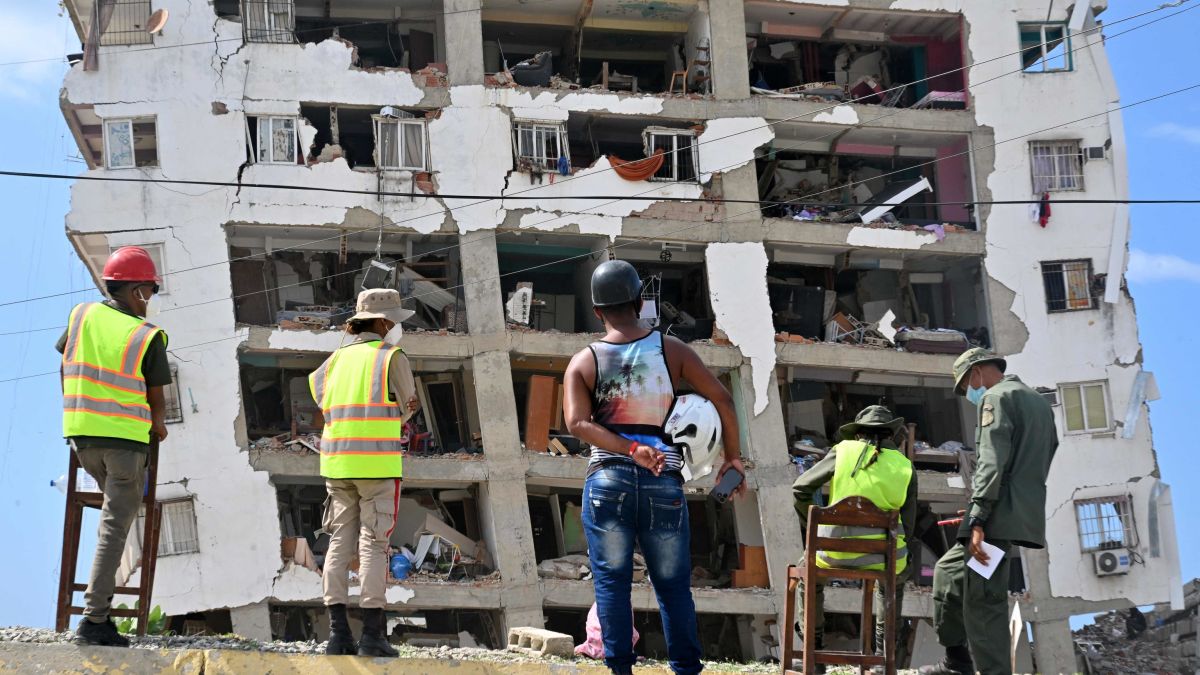
On June 24, 2026, in Venezuela, while we were facing thousands of deaths and structural collapses, several creators of digital content, together with some journalists, inside and outside the country, resorted to hate speech or information manipulation to gain notoriety, promoting fear in the midst of a tragedy never experienced before in our country.
It hadn't been an hour after the double earthquake, when we saw how, in addition to the national pain for what happened, the Venezuelan suffered another attack: that of journalists and so-called influencers associated with the Venezuelan right, making burlesque content, promoting accusations, blaming and encouraging hate speech towards victims, rescuers, soldiers and Venezuelan security forces for the response to the devastation of the double earthquake.
For this reason, they published videos that caused mass repudiation by taking advantage of the collapse of buildings in Caracas and La Guaira to make morbid “jokes” about bodies trapped in the cracks of structures; which caused citizen campaigns on social networks to report and massively overthrow their accounts for promoting hate speech in the midst of national mourning.
These actions are not accidental, they are directed and accompanied by political leaders of the Venezuelan right, who use political necrophilia as a tool of defamation against their adversaries. This type of practice is not new, it is a philosophical and political concept that defines the use of social and political power to determine who should live and who should die.
The term necropolitics was coined by the Cameroonian philosopher and historian Achille Mbembe in his homonymous essay published in 2003, which points out how governments and corporations exercise sovereignty through the administration of death and suffering; thus, the use of necropolitics in the Venezuelan case refers to infusing messages that validate the death of the opposite, and that anyone who is Chavista or everything the Bolivarian Government does is bad, harmful and must be eliminated.
Some examples of the acts of necropolitics that we have seen in recent days, in connection with the double earthquake are the following:
- Instilling panic and false tsunami alerts : these matrices were created from Miami, where artists such as Dany Ocean and digital channels broadcast early warnings of tsunamis on the coasts of the north of the country. This caused massive, chaotic and unnecessary evacuations that paralyzed the critical work of firefighters and rescuers, forcing them to divert human resources to control panic instead of removing debris.
- Criticism of militarization in the face of the alleged lack of equipment : Opposition news accounts and citizens on the ground went viral videos reporting that, at various rescue points, the authorities took days to arrive. The main narrative accused the Government of deploying officials “with more rifles than shovels”, hindering and even stopping the work of volunteer civilian rescuers who had been digging with their hands for days due to the lack of state heavy machinery.
- Complaints of international negligence : Foreign influencers and communicators outside Venezuela, with viralized testimonies from Canada and Mexico, spread the opinion matrix that the real tragedy was not the earthquake, but rather previous governmental negligence. They argued that the lack of chronic structural maintenance, in addition to the precarious hospital and fire infrastructure, multiplied the death toll exponentially.
The Venezuelan people were victims of a double catastrophe: the devastating physical impact of the double earthquake of June 24, 2026 and an aggressive and immediate wave of disinformation that collapsed digital channels, sowed mass panic and sabotaged the perception of humanitarian aid. As thousands of families desperately searched for their loved ones under the rubble, social networks were flooded with falsehoods that increased collective anguish.
The use of necropolitics was divided into three false information fronts that directly hit the mental health and security of citizens:
The imaginary
blockade and the falsehood about international rescuers
The hoax of refusing aid : Images created with Artificial Intelligence (AI) circulated on digital platforms designed to install the opinion matrix that Venezuelan authorities were preventing foreign rescuers from entering. In contrast, international verification agencies such as Verifica RTVE demonstrated that international cooperation had indeed been received and mobilized. In fact, organizations such as the Costa Rican Red Cross and health brigades from various nations actively cooperated, even rescuing people alive days after the earthquakes.
Use of foreign tragedies and emotional manipulation of victims
Imported debris : The digital morbid was fueled by massive videos, which accumulated millions of views, showing brutal building collapses or explosions that did not occur in Venezuela. Controlled demolitions in Turkey in 2023, earthquakes in the Philippines in 2026 and accidents in the Caracas Metro in 2021 were disseminated as if they were lost of the moment, multiplying fear of the environment.
Cases of false orphans : Pain was exploited through photos taken out of context, an image showing a newborn in a Venezuelan medical center went viral around the world, claiming that she had been orphaned in La Guaira because of the earthquake. Later, local investigations showed that the baby was healthy with her mother, but the photo had already been used to collect false monetary donations.
False weather alerts that paralyzed rescues
Terror due to non-existent tsunamis : Old videos of the 2011 tsunami in Japan were released claiming that the sea was creeping into the coasts of La Guaira and Sucre. This unfounded rumor caused entire communities to run in fear to the highlands, and public roads collapsed. Public panic physically prevented ambulances and fire trucks from reaching the landslide areas in time to search for survivors at critical times, where time meant life or death.
The earthquake destroyed
infrastructure, but disinformation attacked the emotional stability of a
country in mourning, forcing citizens to doubt which reports were
real and which humanitarian aid was truly available.
Behind the creation and dissemination of false news during a tragedy of this magnitude there is not a single motivation, but a network of economic, political and psychological interests. Those who generate disinformation take advantage of the fact that fear and uncertainty override people's critical thinking, turning desperation into an extremely valuable resource.
In conclusion, the disinformation in the earthquake in Venezuela was not an accident; it was a mechanism of exploitation where human pain was transformed into currencies, votes and followers.
AMELYREN BASABE/Mazo News Team