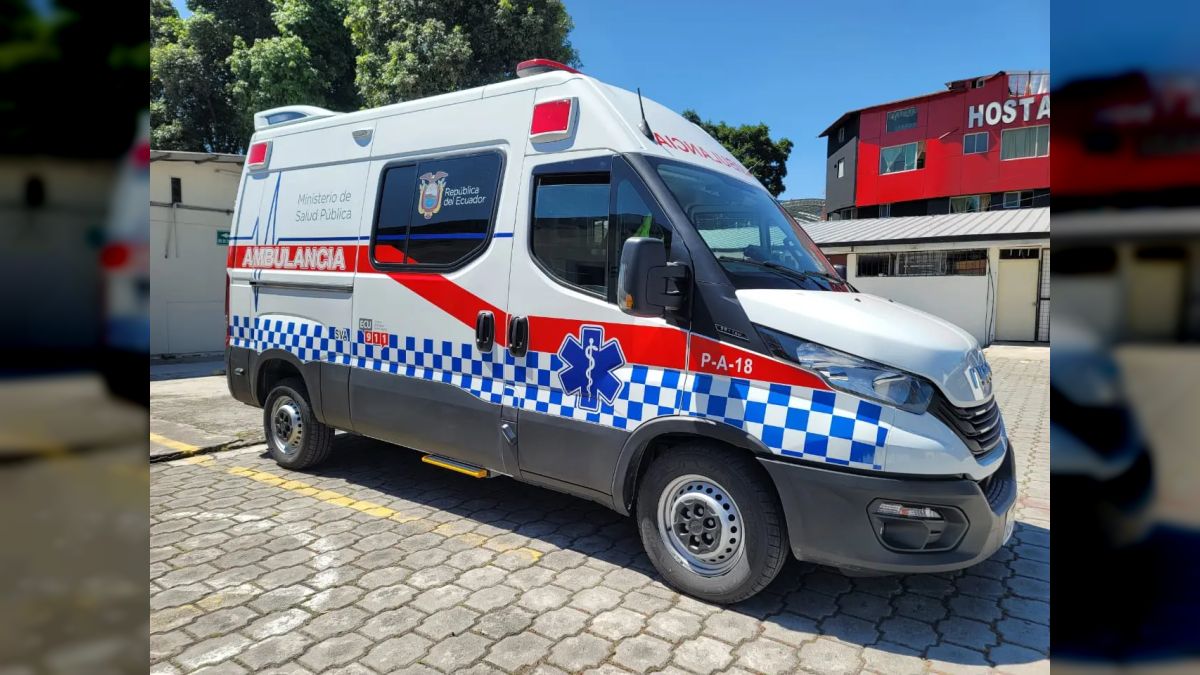
Public health in Ecuador collapses due to lack of ambulances and personnel
Internet
Published at: 01/09/2026 04:34 PM
Ecuador's Mobile Health Care Service is facing an institutional collapse characterized by the inoperability of more than 50% of its ambulances and a severe lack of trained personnel, a situation that violates the right to timely medical care in the country's most disadvantaged communities.
According to the Institutional Strategic Plan 2025-2029 of the Ministry of Public Health (MSP), in May 2026, only 130 of the 279 ambulances under continuous monitoring were operational nationwide, representing 53% of the fleet paralyzed due to mechanical damage, lack of spare parts, absence of insurance policies and bureaucratic delays in paying deductibles to workshops, Telesur reported.
The paralysis of the pre-hospital system hits rural and popular areas especially hard, since in the Amazonian province of Orellana, all the operating units were out of service, while in districts of high social vulnerability such as Guayaquil, Manabí and Guayas, inoperability levels exceeded 60%, leaving entire families helpless in situations of vital risk.
In addition to the shortage of mobile units, there is a deficit of 476 health workers, distributed between 277 paramedics and 199 drivers, with the largest territorial gaps concentrated in northern provinces such as Carchi, Imbabura, Esmeraldas and Sucumbíos, in addition to rural coastal areas, where communities face historical geographical and economic barriers to accessing the public hospital network.
The MSP's own technical diagnosis recognizes that the constant turnover of personnel, the lack of technological tools and the scarce state investment compromise national coverage. Despite the formal incorporation of 188 vehicles between 2023 and 2025 through agreements with international cooperation, the net inventory of the fleet did not increase, evidencing an institutional patching policy that does not solve the underlying problem.
Mazo News Team