
THE DEATH PITS IN THE STATE OF ZULIA
Published at: 11/11/2026 08:00 PM
THE DEATH WELLS IN THE STATE OF ZULIA
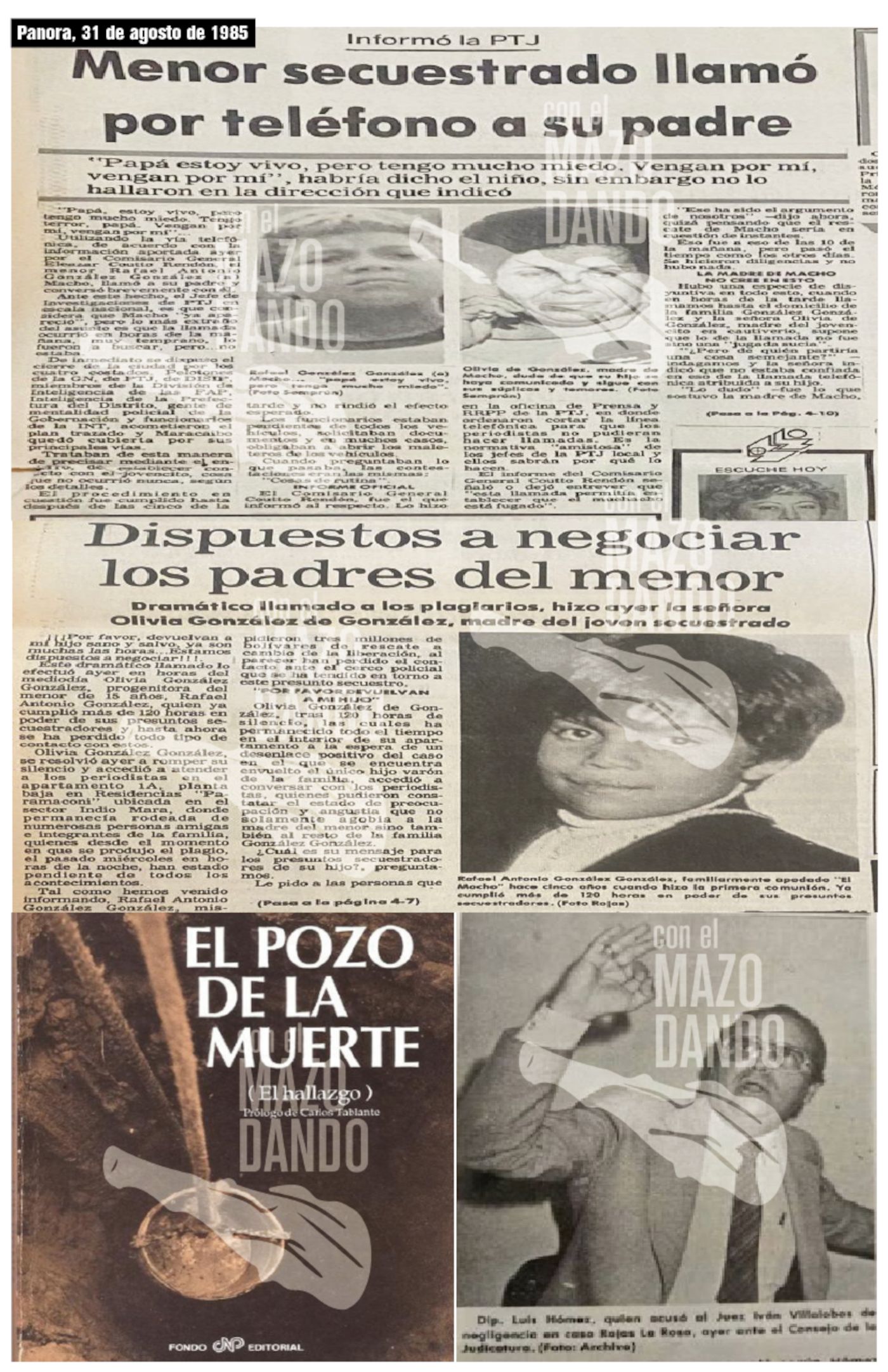
(The Well of Death, author: Luis Hómez, Panorama, August 31, 1985 and El Diario de Caracas, May 2, 1986)
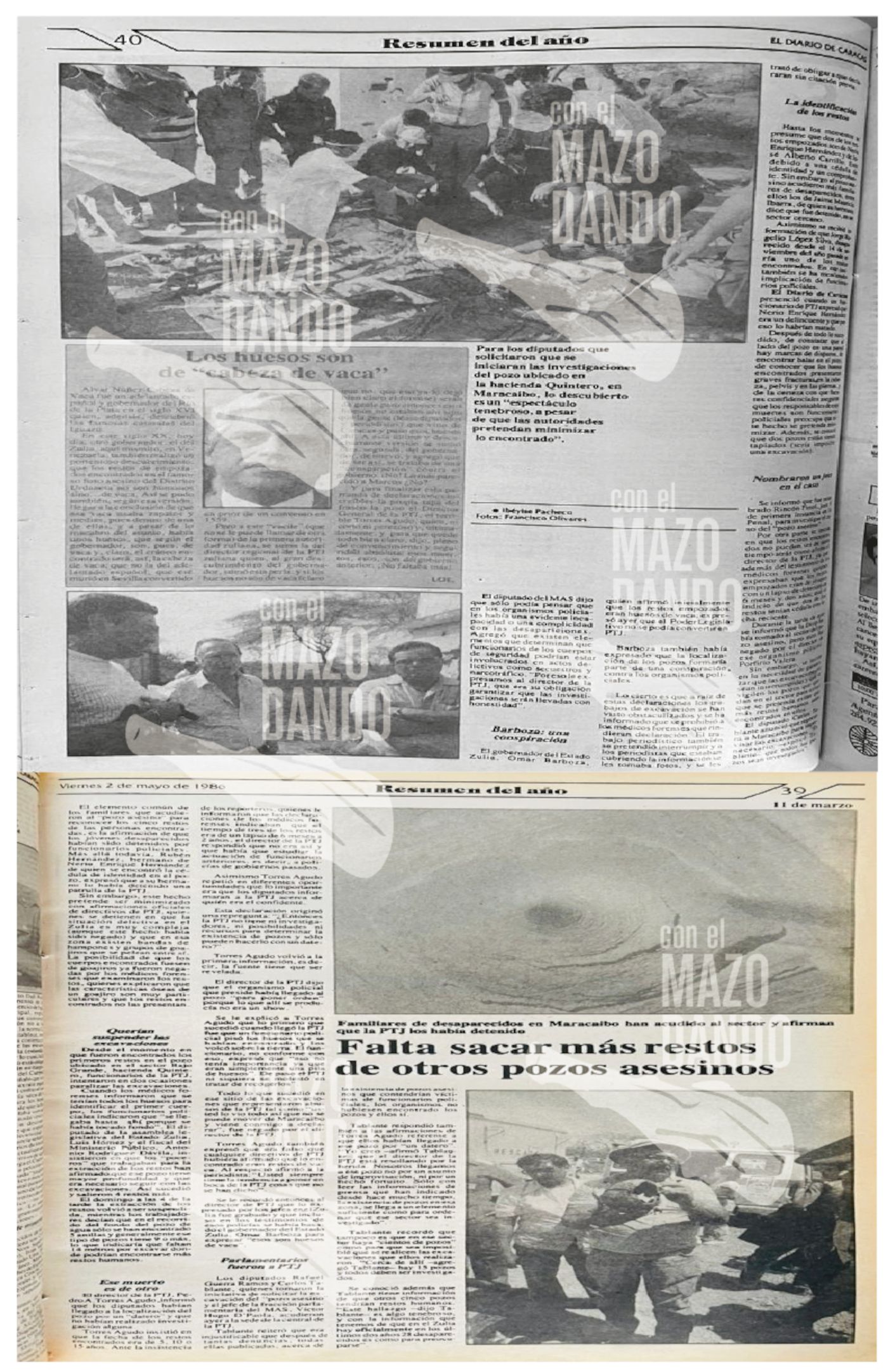
- Between 1985 and 1989, during the administration of Jaime Lusinchi, more than 600 missing persons were detected in the state of Zulia, mostly victims of police officers who used old abandoned wells, trenches or recent graves, some more than 50 meters deep, to throw their remains to the bottom and erase all traces of the murders committed.
- Among them, there is a minor whose murder shocked all of Venezuela, because of the follow-up that could be made of his disappearance, due to the fight that his desperate parents fought on all counts:
- On August 7, 1985, the minor, Rafael Antonio “Macho” González, 15, went missing. This young man suffered the same fate as many others who, in police custody, were victims of extrajudicial executions in the state of Zulia, when Omar Barboza was governor.
- Faced with the discovery of more than 600 human bones, certified by forensic anthropologists, located in different locations in the Edo. Zulia, the then governor of that entity, Barboza, declared: “These are cow bones deposited by slaughterhouses.”
- Contrary to what Barboza said, these human bone dumps were actually old reservoirs, trenches or new graves dug by the Edo's police forces. Zulia to try to disappear the mortal remains of the victims they were executing.
- According to investigations led by the leader Luis Hómez, a member of the Legislative Assembly for the Movement for Socialism (MAS) and parliamentarians of an (ad hoc) commission composed of senators and deputies to the National Congress, it was possible to conclude that “there was not the slightest doubt of the complicity of police agencies in these disappearances. ”.
- For the parliamentarians who requested investigations of the well located in the Bajo Grande sector of the Quintero farm in Maracaibo, what was discovered was “a dark spectacle, despite the fact that the authorities intend to minimize it”.
- Barboza, for his part, to avoid all responsibility, added that “if the broken bones were not cow bones then it was a conspiracy against law enforcement agencies.” Later, recognizing that they were human, he said that these were crimes prescribed by law because the bodies dated more than 10 years after their burial.
- The truth is that as a result of his statements, all excavations were hampered and the governor used all his power to prevent the continuation of these investigations.
- The governor also banned forensic doctors from giving evidence about the autopsies performed.
- Journalists and photojournalists were evicted from the area, their cameras confiscated. Not being able to cover the news or obtain information about the graves discovered.
- However, El Diario de Caracas managed to publish some of the photos of the remains of the executed victims and the identification of two of the 600 missing; these were:
- Nelson Enrique Hernández and José Alberto Carrillo, whose respective identity cards were found in their pockets.
- Additionally, in that same report, the bones of Jaime Mauricio Ibarra and Jorge Rogelio López were identified.
- One of the police officers stationed there to hinder the investigations told the Diario de Caracas that “these were criminals and that's why they had been killed.”
- Later, it was found that the governor was a partner in more than one shady business of the then president Jaime Lusinchi, and that he escalated his rise to the first judiciary of Zulia thanks to the sponsorship of Zuliano billionaire Beto Finol, a great beneficiary of RECADI's preferential dollars. Owner of North Ridge Bank-Miami, in which Lusinchi even deposited 6 million dollars.
- It was thanks to the efforts of the deputy for the MAS, Luis Homez, that investigations were carried out to clarify some cases, among the hundreds of people who were shot by the State security forces.
- To sabotage the investigations, the judges charged under the orders of the regional mafias ordered the wells to be sealed with rubble and cement, in addition to demolishing the walls where the shootings had been carried out with gunshots of grace.
- Witnesses were persecuted, journalists were threatened with death, private investigators were jailed and all press publications in this regard were ordered to be suspended.
- However, despite the obstructive tactics, the body of Rafael González “El Macho” appeared two years later on a farm, 45 minutes from La Cañada.
- Forensic medical expertise was able to determine that the young man was executed the same day he was kidnapped after being shot in the back of the head by a farm employee in the presence of the police officers who arrested him.
Mazo News Team