
THE INTERVENTION OF LEOPOLDO CASTILLO AND GONZÁLEZ URRUTIA IN THE WAR IN EL SALVADOR
Published at: 18/11/2026 08:00 PM
THE INTERVENTION OF LEOPOLDO CASTILLO AND GONZÁLEZ URRUTIA IN THE WAR IN EL SALVADOR
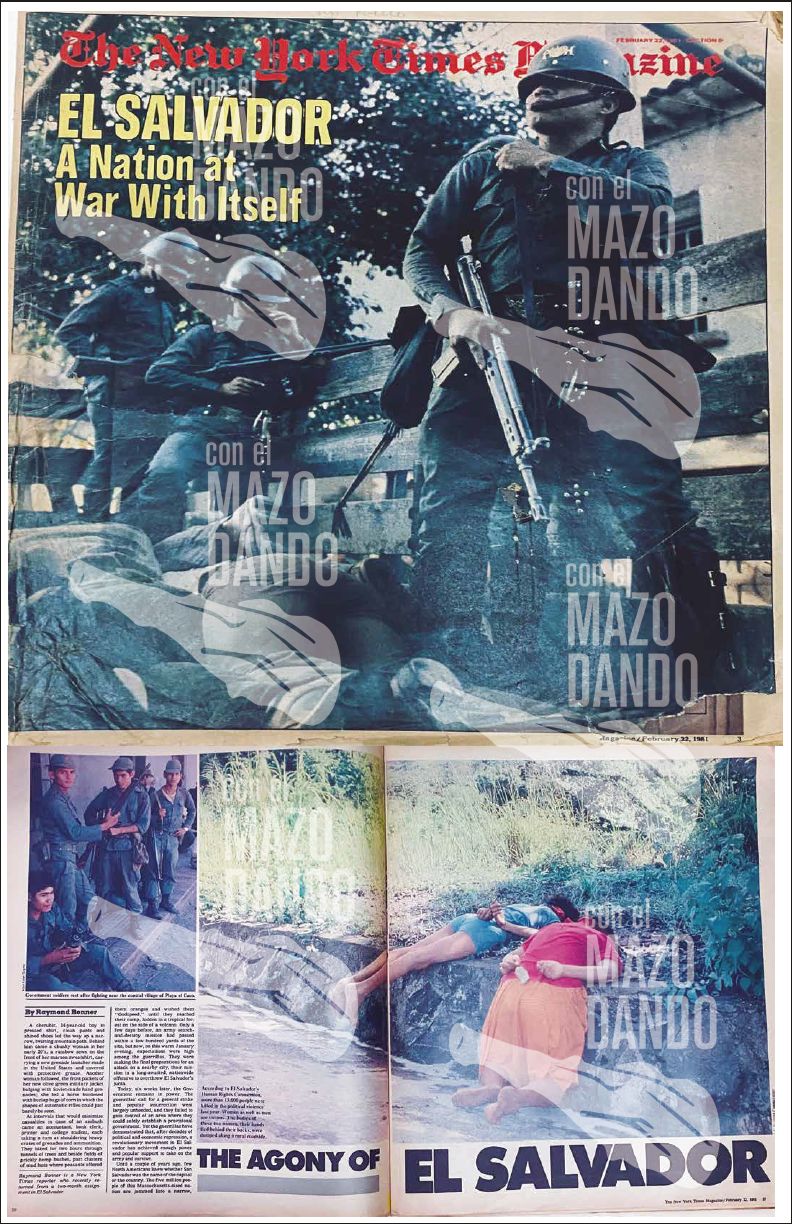
(New York Times, February 22, 1982; Diario de Caracas, June 12, 1980; VEA, December 15, 2009; The Mandinga Papers, July 8-11, 2005)
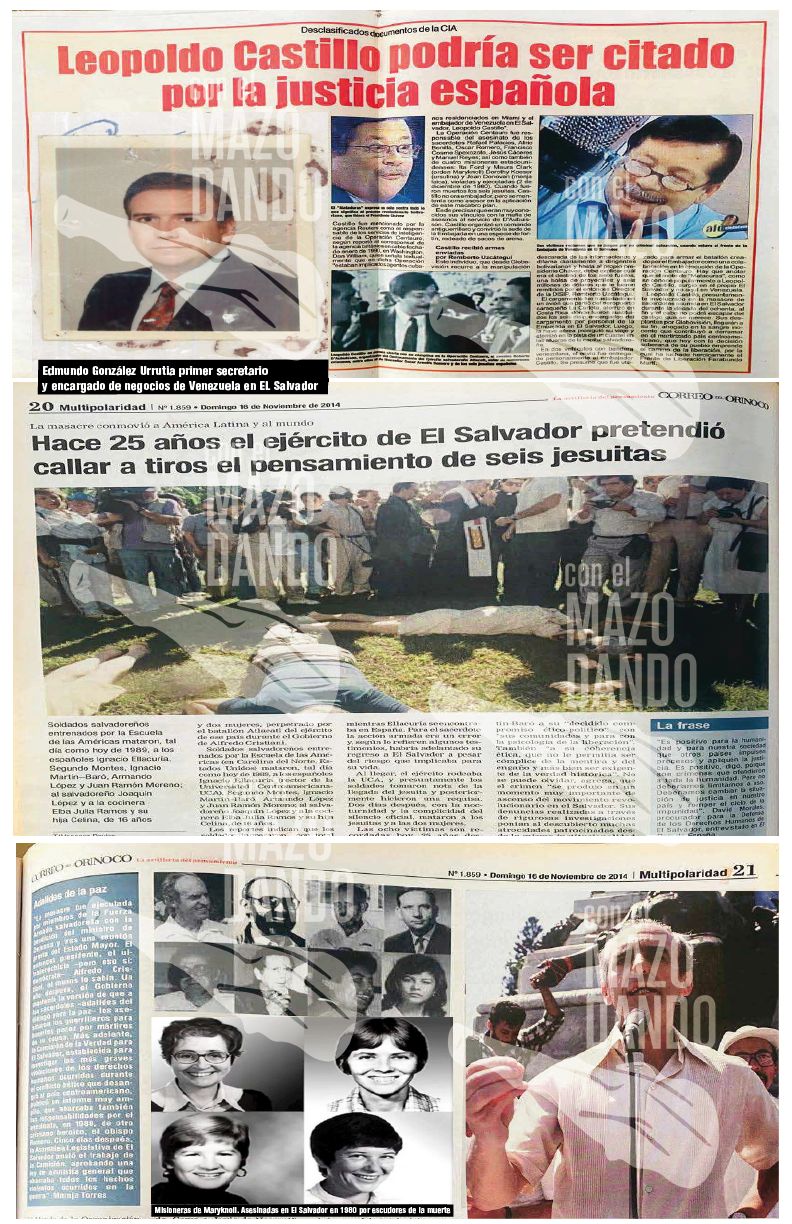
- During the civil war in El Salvador, Leopoldo Castillo and Edmundo González Urrutia were involved in the formation, financing and performance of the elite groups of that nation's Armed Forces known as the “Death Squads”.
- This complaint first appeared in the Diario de Caracas of June 12, 1980, in the following terms: “In Europe, they are stunned and alarmed by the economic, military and political support that the Venezuelan government and its diplomatic officials are giving to the Salvadoran junta to massacre young students, peasants, workers, women and children from that country who are fighting for freedom.” This is the result of the official statement of the Venezuelan Foreign Ministry published in Madrid, admitting the Salvadoran military's support for official terrorism.
- Initially, the scandal broke out when weapons of the Venezuelan Army were found in the hands of death squads in that Central American country, while they were carrying out extermination operations.
- “The intervention of the Luis Herrera Campins government in El Salvador is shameful, because there is a clear violation of human rights,” said the spokespersons of a group of Venezuelan parliamentarians, namely, Carlos Canache Mata of Democratic Action (AD) and José Vicente Rangel of the Movement for Socialism (MAS), who were also European congressmen who were meeting in Madrid.
- The Venezuelan weapons, eventually discovered, were sent to the paramilitary leader Roberto D'Aubisson by private plane, along with several thousand dollars in cash, by that hate gendarme named Remberto Uzcátegui, a very social Christian, who served as Director of the Intelligence and Prevention Directorate (DISIP).
- On October 15, 1979, through a coup d'etat orchestrated by the military extreme right with reactionary sectors of Salvadoran Christian Democracy, a military dictatorship ensued that began a civil war, which lasted until January 16, 1992, leaving 75,000 dead, 550,000 internally displaced and 500,000 refugees in other countries.
- In declassified CIA documents, in February 2009, Leopoldo Castillo is mentioned several times as co-responsible for the coordination, intelligence and financing of Operation Centauro.
- On November 16, 1989, as part of that Operation Centaur, six Jesuit priests and two women were massacred at the University of Central America (UCA), where they were shot down: Ignacio Ellacuria, Armando López, Juan Ramón Moreno, Ignacio Marti-Baró, Segundo Montes, Joaquín López, Julia Ramos and his 15-year-old daughter Celina Mariceth Ramos.
- During the years that Castillo and González Urrutia were in charge of that diplomatic headquarters (1980-1984), the army and death squads killed 13,194 civilians and religious, including: Saint Oscar Arnulfo Romero, four nuns of the American religious congregation Maryknoll; and priests Rafael Palacios, Alirio Bonilla, Francisco Cosme, Jesús Cáceres and Manuel Reyes.
- Other crimes against humanity committed by the “Death Squad” that coincide with the management of Castillo and González Urrutia are:
- In June 1981, the New York Times reported the death of 200 civilians killed from an army helicopter that launched a hail of rockets and hand grenades on women, children and the elderly as they tried to cross the border with Honduras to take refuge in the town of La Virtudad (El Universal, 9-6-81).
- In July of that year, 50 Salvadoran civilians were killed by death squads in the town of Las Vueltas. All those executed showed signs of torture (El Nacional, 7-7-81).
- The squads that year killed about 40 school teachers. The National Association of Educators of El Salvador reported that five other educators were killed during that month (El Nacional, 19-7-81. UPI-AP cable).
- A UCA study revealed that as a result of the massacres and persecution directed from the Venezuelan embassy, some 300,000 Salvadorans, mostly peasants, had to migrate to other rural areas to escape the terrorist actions of these ultra-right gangs (El Nacional, 17-7-81. UPI cable).
- On July 5, 1981, 96 people were massacred by the Salvadoran army, including 46 children, in the town of El Chaparral (El Universal, August 13, 1981). Cable AP, SJ Costa Rica).
- During those years, a report was published that established that toxic gases, white phosphorus and bacteriological weapons were thrown on rural areas (El Nacional, 13-8-81. AP Costa Rica cable).
- On August 14, 1981, the allegations made by Monsignor Jerónimo Rivera Damas were published in the New York Times about seventy people who were forcibly removed from their homes and then found dead with serious signs of torture... He also deplored in his homily the massacre of 28 peasants that occurred at the Mettayate Bridge (El Nacional, 14-8-81 and The NYT).
- Monsignor Rivera y Damas later denounced the actions of the death squads when they beheaded 83 people, including children up to the age of 13 (El Nacional, 25-8-81. UPI—AP cable).
- According to official church spokespersons, death squads committed 80% of crimes in El Salvador (El Nacional, 28-8-81. UPI cable).
- The “Mazote Massacre”: 1200 civilians shot down by the Salvadoran army and the Death Squad, on December 11, 1981.
- “Operation Rescue”: paramilitary and army deployment carried out as a “cleansing” measure in March 1982, which resulted in the death of hundreds of civilians.
- “The Copapayo Massacre”: massacre carried out in November 1982 by the army as a cleansing operation to eliminate peasant population and eradicate guerrilla influence.
- “The Massacre of El Calabozo”: Between August 21 and 22, 1982, in the sandy area of the Amatitán River, more than 300 people, mostly peasants, women, the elderly and children, were rounded up and shot down at close range, while Air Force helicopters bombed and strafed hamlets, conucos and peasant villages.
Mazo News Team