Venezuela calls on the UN to transform economies and build resilient societies
MERCI
Published at: 24/09/2026 02:19 PM
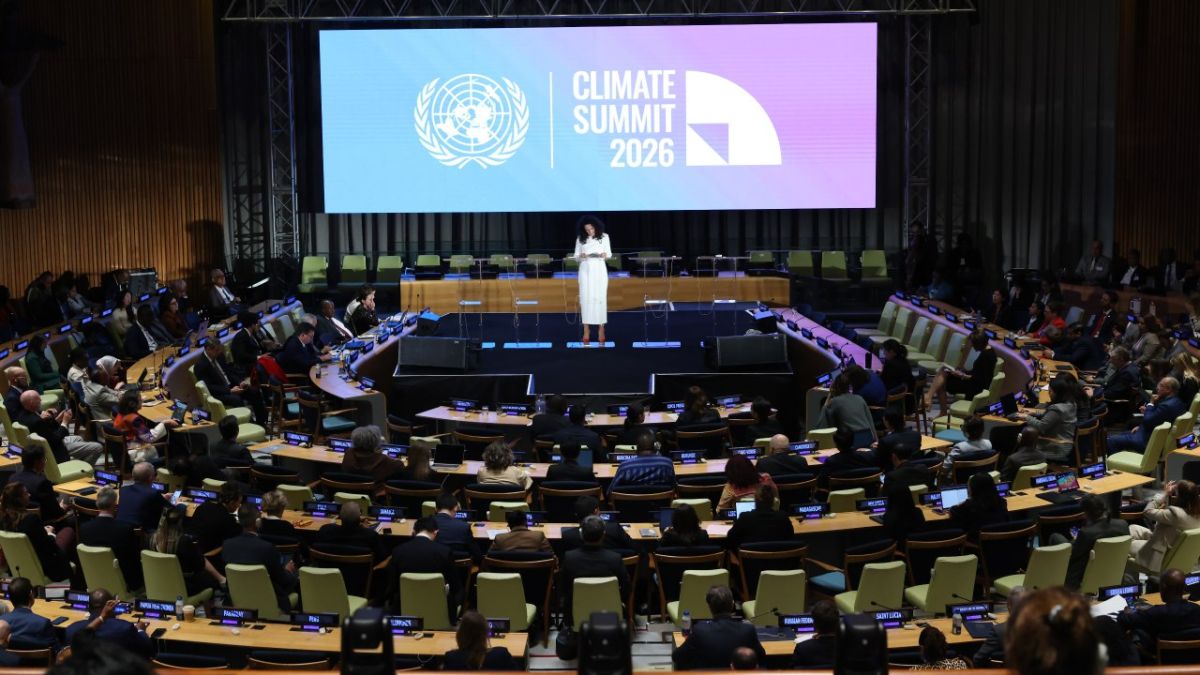
During the high-level event convened by the Secretary General of the United Nations (UN), António Guterres, on “Climate Action and Just Transition”, the Deputy Minister for Asia, the Middle East and Oceania of the Ministry for Foreign Affairs and International Trade, Eduardo Ramírez, said that the opportunity must be generated to transform economies, generate new productive capacities and build more resilient societies.
In the activity that is part of the agenda of the 81st session of the UN General Assembly, held in New York, United States, the Venezuelan spokesman indicated that although it is true that the effects of climate change are increasingly evident and that not all countries have contributed in the same way to generating them, much less have the same capacities to deal with them, it is necessary to generate a collective response based on equity and the principle of common responsibilities, but differentiated.
In the case of Venezuela, Ramírez assured that a just transition must reconcile climate ambition and the right to development, as well as contribute to reducing emissions, eradicating poverty, generating opportunities, protecting employment and ensuring that no nation is left behind, recognizing that each people starts from a different reality and must be able to define, in sovereignty and in accordance with their national priorities, the most appropriate path to progressively transform their economy and matrix energetic.
According to the Deputy Minister, there is a need for new, additional, adequate, predictable and accessible climate finance, greater availability of concessional resources and mechanisms capable of mobilizing investment towards resilient infrastructure, cleaner energy and productive transformation without deepening the debt burdens of developing countries.
Venezuela, as a country that produces hydrocarbons and has the largest oil reserves in the world, he said, assumes that reality with responsibility and with a vision of the future.
In this context, he noted that it is imperative to remove obstacles that hinder cooperation, such as unilateral coercive measures that restrict access to finance, technologies and investments necessary to advance precisely these transformations.
MERCI