Venezuela strengthens relations with the International Alliance of Big Cats in India
MPPRE Press
Published at: 18/09/2026 03:12 PM
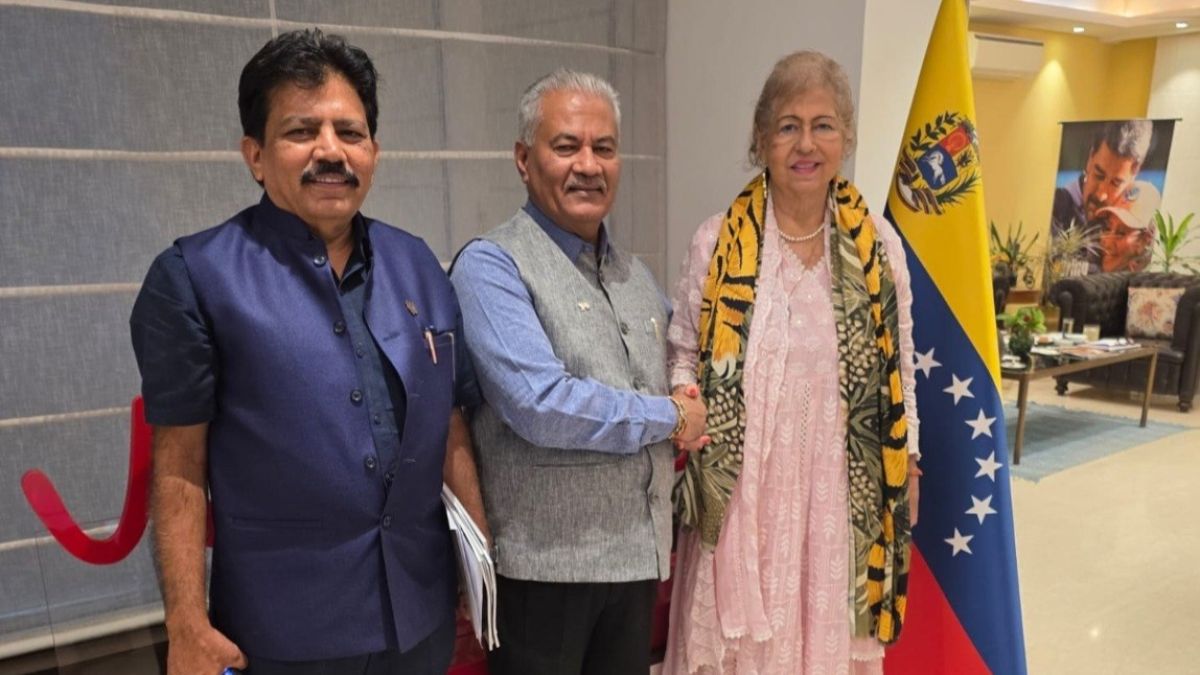
The ambassador of the Bolivarian Republic of Venezuela to the Republic of India, Capaya Rodríguez González, received at the headquarters of the Diplomatic Mission in New Delhi the directors of the International Big Cat Alliance (IBCA), with the purpose of strengthening the ties that unite the South American nation with this international initiative of the Indian Government, which seeks to coordinate conservation efforts for the world's main big cats: tiger, lion, leopard, snow leopard, cheetah, jaguar and puma.
The CEO, S.P. Yadav, and the Deputy Director General, Juglal Singh, received with great enthusiasm the expected news of the incorporation of Venezuela into the Alliance, as announced by the President of the Republic, Delcy Rodríguez.
On August 27, the National Assembly approved the Framework Agreement for the Establishment of the IBCA, and the first president enacted the Law Approving the Framework Agreement on September 5, which was published in the Official Gazette on that same date, thus completing the procedure required to give legal validity to this bilateral instrument.
The International Big Cat Alliance was formally established by the Government of India on March 2, 2024, through the National Tiger Conservation Authority (NTCA). On January 23, 2025, the corresponding Framework Agreement came into force and the IBCA became an international intergovernmental organization based on a treaty, with international legal personality and headquarters in the Republic of India.
The central objective of the Alliance is to create a global platform for cooperation between the countries that host these species, to ensure viable populations and conserve their habitats. This important Indian initiative is not limited to those countries where big cats currently exist, since countries that do not host these species but wish to contribute to their conservation can also be incorporated.
During the meeting, Ambassador Rodríguez emphasized to senior officials of the IBCA that the incorporation of Venezuela into that Alliance adds another area, specifically the environmental one, to the growing cooperation between the two nations, as evidenced in the framework of the visit of President Delcy Rodríguez to the Republic of India, last June.
The diplomat stated that Venezuela's entry into the International Big Cat Alliance is very important because her country has jaguar and puma populations, two of the seven species considered a priority by that organization, in addition to having a considerable diversity of wild felines, so joining the IBCA allows it to access mechanisms for scientific cooperation, training, exchange of experiences and mobilization of resources for their conservation.
Mazo News Team/MPPRE