72 years ago Sabaneta de Barinas saw the birth of a Giant: Hugo Chávez Frías
Internet photo
Published at: 28/07/2026 08:12 AM
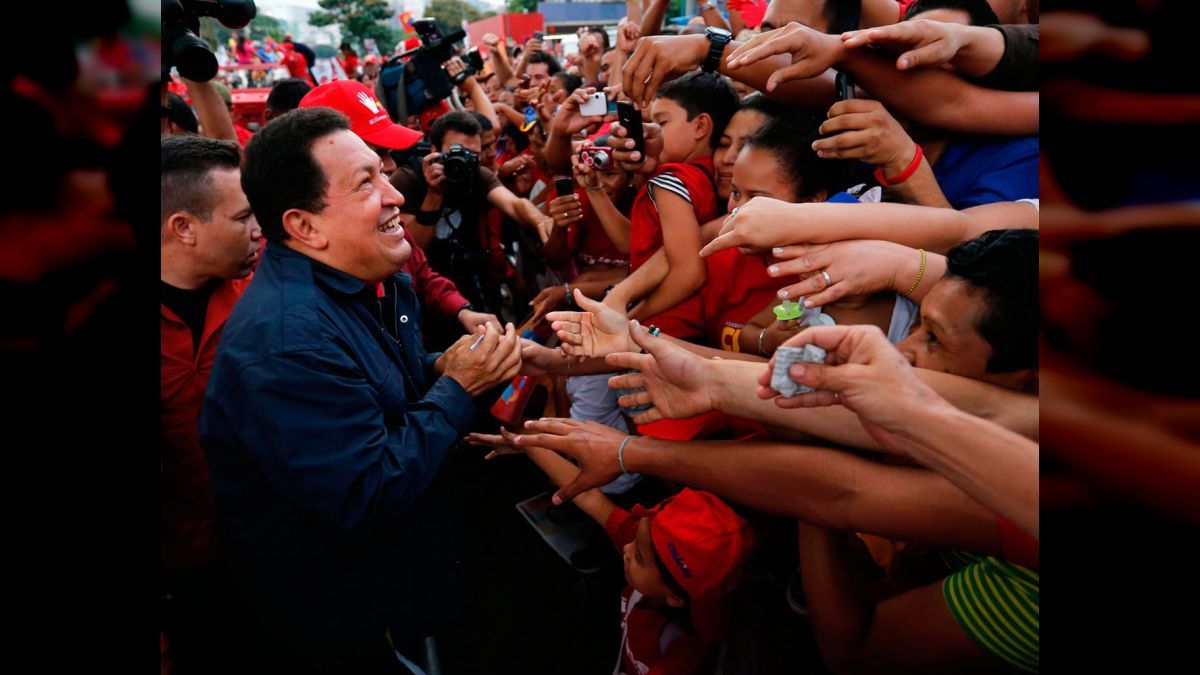
Every July 28, the Venezuelan people commemorate the birth of the Leader of the Bolivarian Revolution, Hugo Chávez Frías, who was born in 1954 in Sabaneta de Barinas.
Chávez marked the history of Venezuela because of his love for the people, his political and social vision, and he paved the way for the transformation of the Homeland by tracing the path of Bolivarian Socialism.
The Commander, as people affectionately call him, was the son of a married couple of elementary school teachers: Hugo de los Reyes Chávez and Elena Frías, the second of six siblings. His Indian grandmother, Rosa Inés Chávez, took care of the two older siblings, so it was she who taught little Hugo to read and write, while the boy helped the family economy by selling milky candies, known as “spiders”.
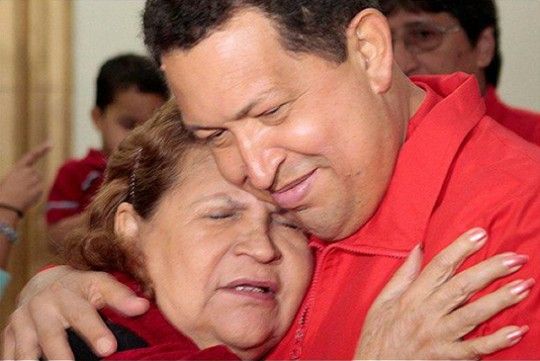
In several interviews he recalled her as “a grandmother who was called the black woman Inés. A stunning black woman, famous all over the plain. Almost a hundred years have passed and poets from the plain still remember her: 'La Negra Inés, the one in the house of the semeruco, near the church'. That sounds like a beautiful, deep and distant memory,” said Chávez.
In 1966, he studied primary education at the Julián Pino School Group and later studied high school at the Daniel Florentino O'Leary High School in the same state of Llanera, where he obtained a Bachelor of Science degree in 1971.
Three weeks after graduating, he entered the Army School of the Venezuelan Military Academy, where he received a degree in Military Sciences and Arts.
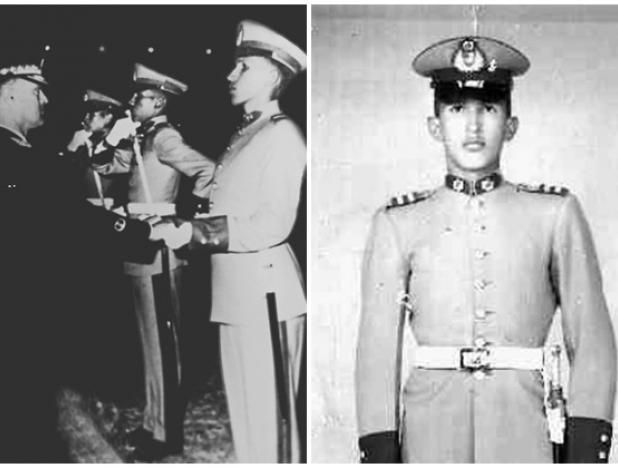
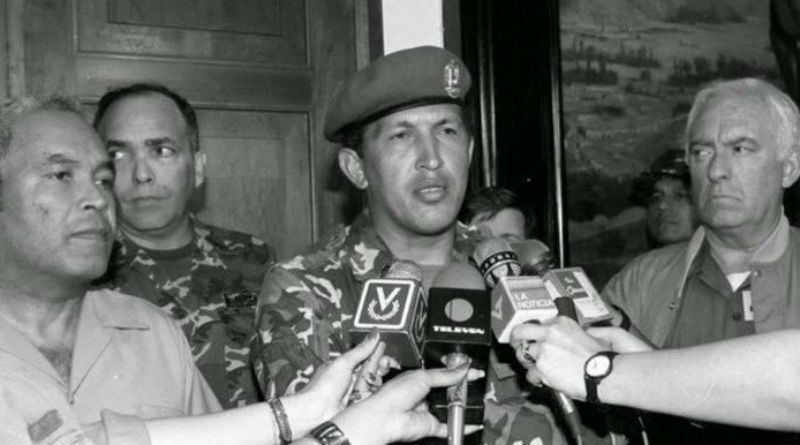
Chávez is remembered for the most crucial moments in the recent history of our Homeland. This is demonstrated by his action, when he undertook in 1982 (bicentenary year of the birth of El Libertador) the creation of the Bolivarian Army 200 (EB-200) through the symbolic oath of three captains of the Simon Bolivar Promotion (Jesús Urdaneta Hernández, Felipe Acosta Carlés and Hugo Chávez Frías), at the foot of the Samán de Güere, symbol of the three roots: Bolivarian, Robinsonian and Zamoran, of the Revolution. In 1989, after the insurrection of February 27, the Bolivarian Army (EB-200) was transformed into the Bolivarian Revolutionary Movement (MBR-200), a civic-military group that participated at the head of the movement of February 4, 1992, according to Yvke Mundial.
The popular sentiment, which characterized it, became evident on December 6, 1998, when 56.24% of the voters elected Hugo Chávez Frías, Constitutional President of the then Republic of Venezuela.
This fact was considered by renowned analysts, both domestic and foreign, as one of the most momentous achievements in the country's contemporary political history.
Then, on December 3, 2006, the National Executive was ratified in office through the will of the Venezuelan people, confirming before the world their position as one of the most emblematic figures of the late 20th century and the beginning of the 21st century.
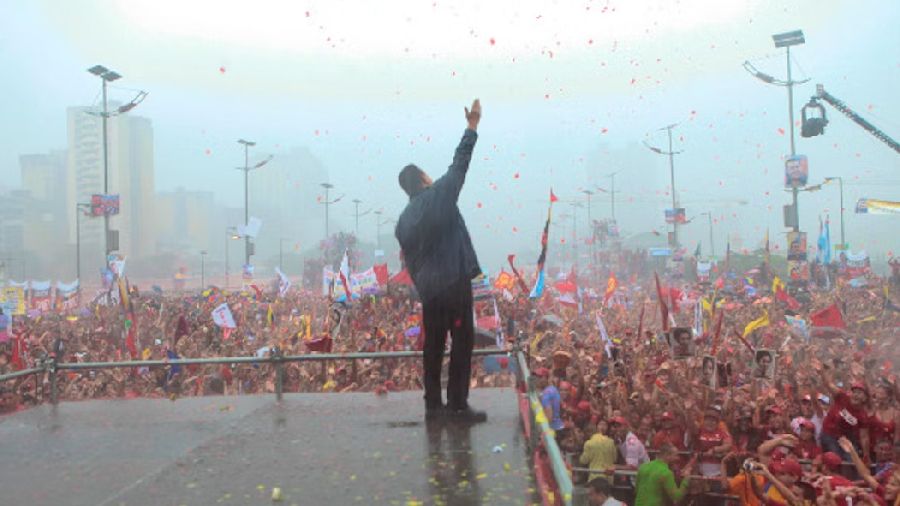
In 2012, he became Chávez Invicto when he was re-elected as president and becoming increasingly entrenched in the hearts of Venezuelans, which is why his name alone is synonymous with Homeland and dignity.
Throughout all the years of his public life, Commander Hugo Chávez showed an impressive multifaceted skill that we will recall below:
Soldier Forever
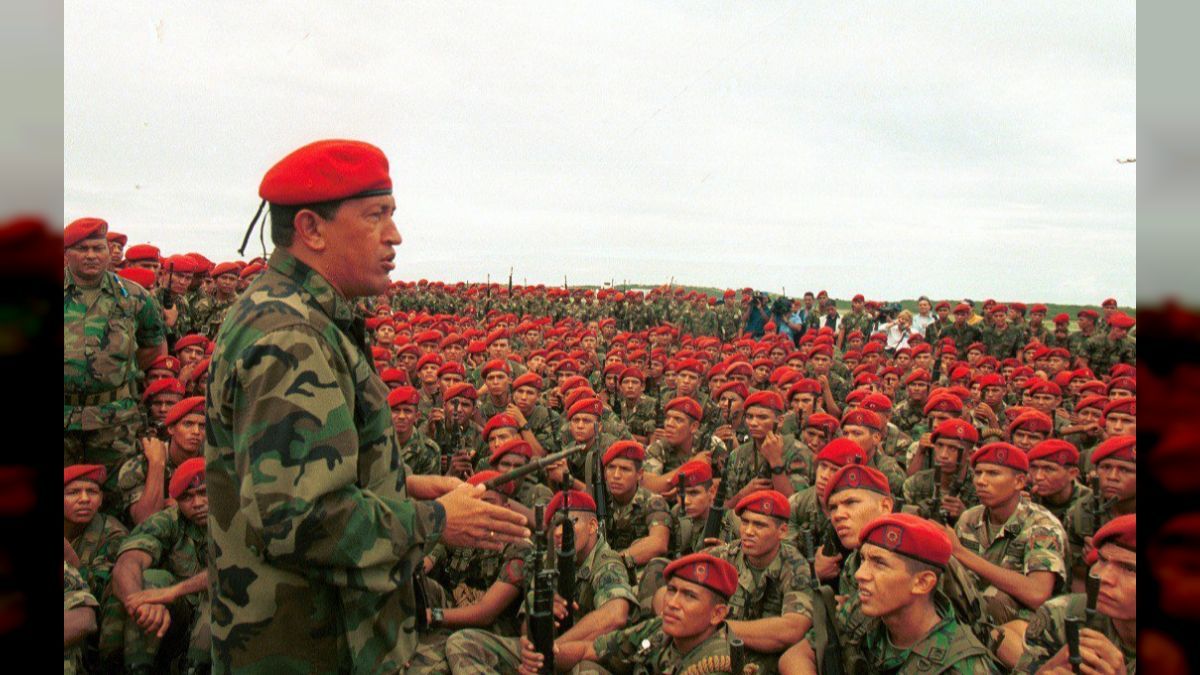
On February 4, 1992, he showed his anti-imperialist character by leading a Bolivarian Military Movement against the oppressive government of Carlos Andrés Pérez, who served the interests of the people. In addition, his love for the Bolivarian National Armed Forces was present when he vindicated those men and women who defend the country's sovereignty every day.
In 2009, Chávez founded the Bolivarian National Militia, which today is recognized as the fourth component of our FANB. There are more than 4 million patriotic men and women who, guided by the legacy of the Supreme Commander, have decided to voluntarily prepare themselves for the armed defense of our sacred territory, the heritage of our liberators.
“I am a soldier, that is my essence, a soldier and as a revolutionary soldier I recognize and will always recognize the People as my leader,” he said January 20, 2009.
Anti-Imperialist World Leader
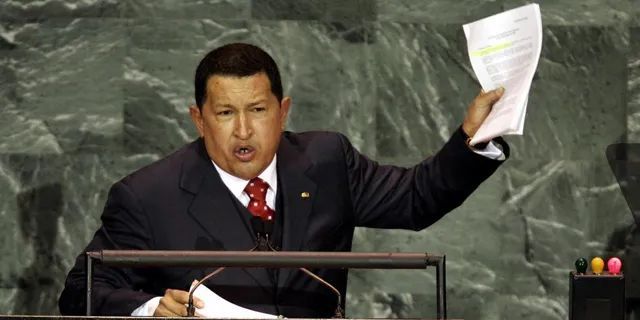
On September 20, 2006, Commander Hugo Chávez, during the 61st Assembly of the United Nations (UN) held in New York City, showed his anti-imperialist character by stating: “Yesterday the Devil came here, yesterday the Devil was here, in this very place. This table where I had to speak still smells of sulfur.”
In this emblematic speech, Commander Chávez denounced the terrorist policy of George W. Bush at that time President of the United States.
“Yesterday ladies, gentlemen, from this very rostrum the President of the United States, whom I call “The Devil”, came here speaking as master of the world...”, said Chávez.
Solidarity with Brother Peoples
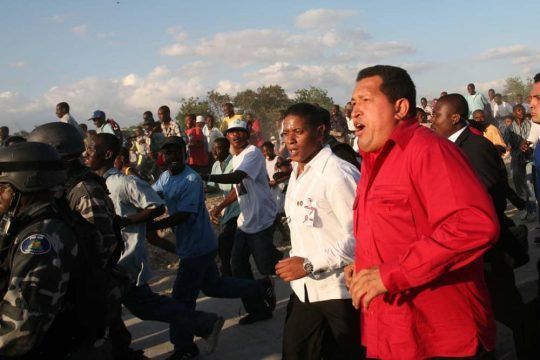
Commander Hugo Chávez recalled his visit to Haiti on March 12, 2007, where thousands of that country's citizens expressed their love for the Leader of the Bolivarian Revolution.
“That town on the street with joy, hope, magic, misery. I remember a phrase that came out of my soul, I said to my closest companion: Look companion at the gates of hell inhabited by black angels, because it's a town full of that, it's an angelic people (...) The Venezuelan people's greatest commitment is to the people of Haiti, to their pain, to their tragedy, to their hope,” said Chávez.
Commander Chávez also recognized that the people of Haiti shook hands with Venezuela when no one else did to achieve the emancipatory project against the Spanish yoke.
Chávez player
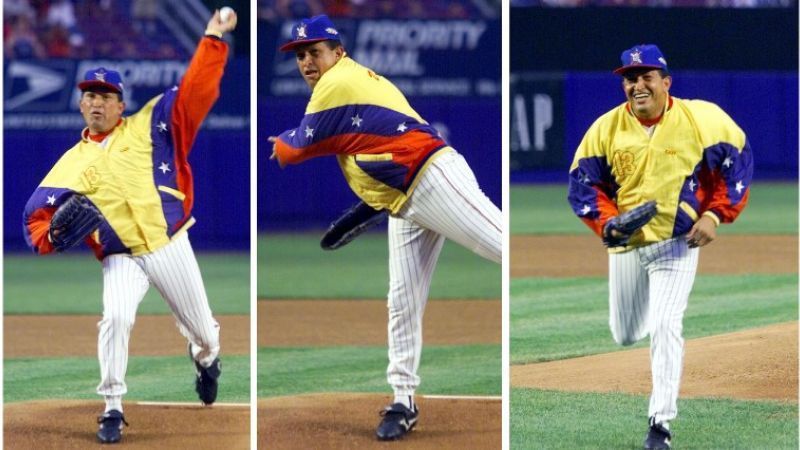
On June 9, 1999, Commander Hugo Chávez was a special guest and threw the first ball of the New York Mets and Toronto Blue Jays game at Shea Stadium in the Big Apple.
With a national tricolor jacket, pants and baseball shoes, Commander Chávez rode on the edge of the field of play and in the midst of a large crowd he poked his famous filthy tail with his left arm, the ball was received by the second baseman of the then Mets, the Venezuelan Edgardo Alfonzo.
In addition, it marked a historic milestone in supporting and promoting Venezuelan athletes
Chávez Communicator
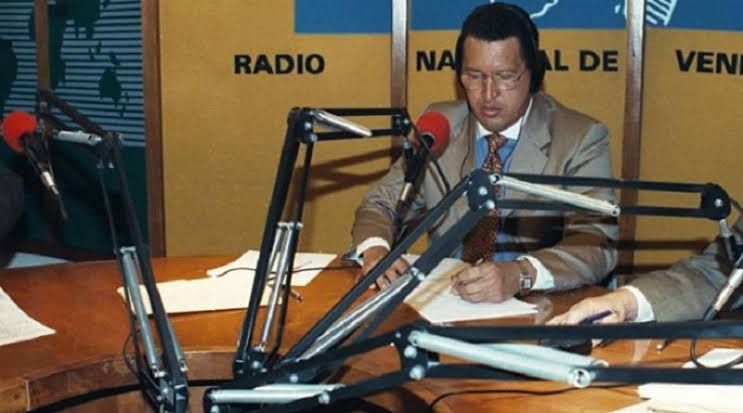
“RNV, the voice of Venezuela presents: Hello President!” , this is how this broadcasting space in Venezuelan history began on May 23, 1999 , under the direction of Commander Hugo Chávez, where the people established a direct dialogue for the first time with the Head of State.
“To bring the voice, to bring the truth, to bring our anguish and impressions to all of you my dear compatriots,” said Commander Chávez from the headquarters of Radio Nacional de Venezuela (RNV) in Caracas.
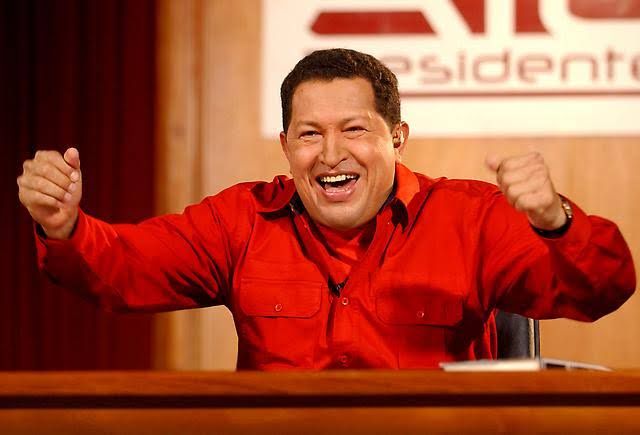
Aló Presidente was a program carried out by Commander Chávez out of love for his people, where 378 lines of action were left to revolutionaries and revolutionaries for the construction of 21st Century Socialism.
In addition, his way of speaking achieved a great connection with his people in a unique way.
Chávez Amoroso
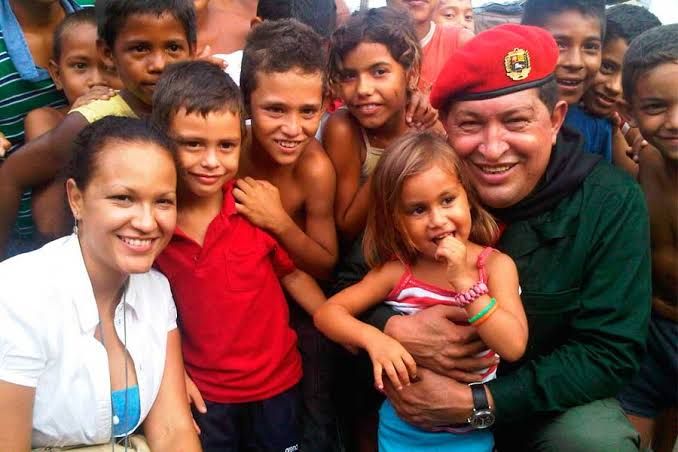
On November 15, 2010, the leader of the Bolivarian Revolution, Hugo Chávez, from the Teresa Carreño Theater in Caracas, gave a demonstration of the loving connection with children.
“Long live the children!” , exclaimed Commander Chávez, while talking with Jonás, a boy from Yare, in the meantime, he read letters expressing the infants' affection for.
In the midst of an atmosphere of laughter and games, the Bolivarian leader strolled through moments he lived in Yare, and anecdotes from his childhood. “They called me Coco and I got angry when they told me back in Sabaneta.”
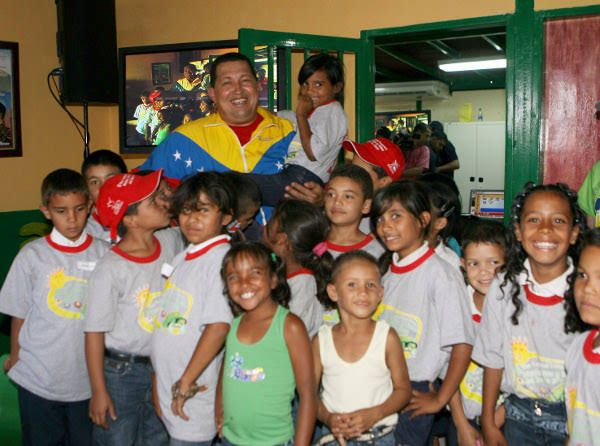
Chávez was a father, a friend, a close family member who is still in the hearts of Venezuelans and the entire world.
On March 5, 2013, he departed into eternity. His remains were veiled at the Military University of Bolivariana, where for a week they received the fervent love of a people who love him and still admire him, in one of the greatest demonstrations of all time, with lines of tens of kilometers to say goodbye to modern hero.
His body went out in procession to the Mountain Barracks, where he rests while his grateful people raise the slogan: “Chávez didn't die, he multiplied”, and he repeats with conviction: “We have a homeland!” , while gallantly defending his greatest legacy: The Bolivarian Revolution.
Mazo News Team