Minister Héctor Rodríguez: The goal of the new school year is to guarantee 200 days of classes
Internet
Published at: 14/09/2026 11:01 PM
The Minister of Popular Power for Education, Héctor Rodríguez, announced that the goal for the 2026-2027 School Year will be to strictly comply with 200 days of classes, with the objective of consolidating educational quality and recovering teaching time in the country.
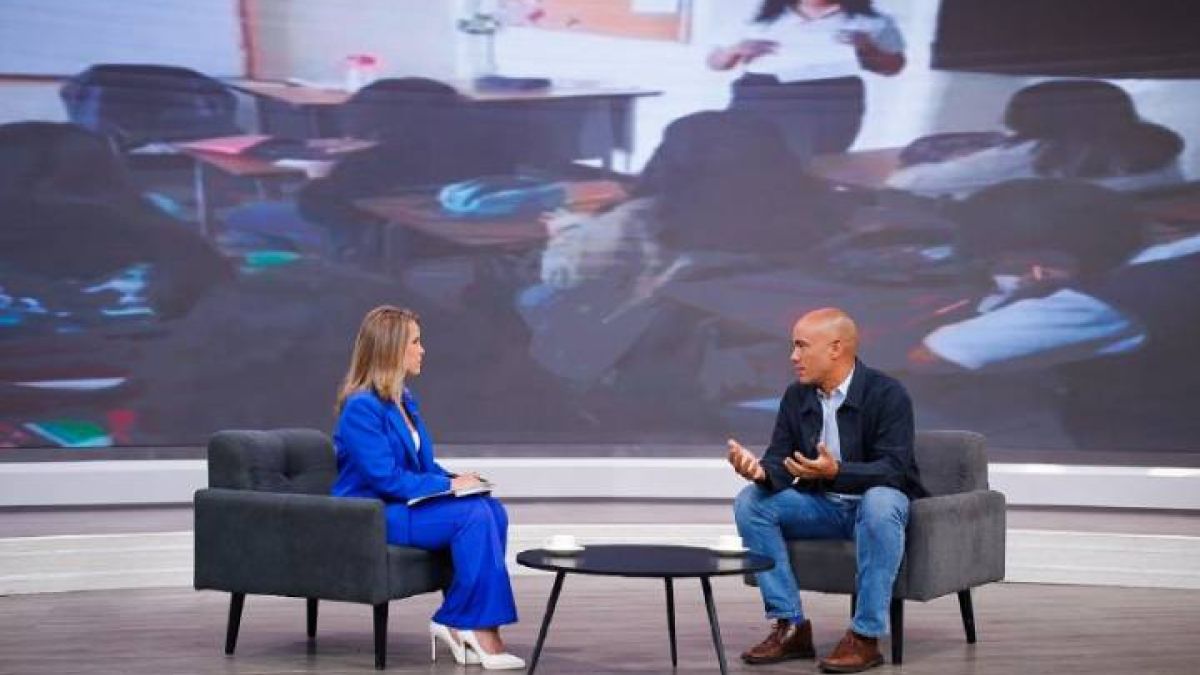
During an interview with Venezolana de Televisión (VTV), she indicated that at the beginning of the new school term, an attendance of 83% of students was reported in the morning shift and 76% in the afternoon.
“It has been a positive start, we are going to work to reach 100% by tomorrow and to maintain high class attendance, which is decisive,” he said.
He explained that compliance with 200 academic hours has been affected by factors such as the COVID-19 pandemic, the implementation of the mosaic schedule and, recently, by the earthquakes of last June 24 that affected more than a thousand schools in the country.
“We have fought a battle to recover school time; the Venezuelan Education Law and also the international recommendations tell us about a minimum of 200 days, but they also tell us about 60 days of vacation for teachers,” he said after explaining that the reduction of these hours impairs the quality of education.
Rodríguez also explained that enrollment behavior is monitored weekly by the educational office. In this regard, he pointed out that those entities where attendance falls below 85% will receive the direct approach of a vice-minister, with the purpose of taking the necessary corrections to guarantee school continuity and permanence.
As part of the objectives to guarantee education, he explained that, as a contingency measure in the face of infrastructure damage, between 83,000 and 86,000 students were rezonated to the campuses closest to their homes, enabling double shifts and adjusting teacher staff to ensure pedagogical continuity.
In addition, he indicated that teachers were equipped with tools for the psychoemotional care of children and that seismic simulations were permanently incorporated into the school calendar as part of the pedagogical process.
He reported that a clear instruction has been given to all school directors to enroll children regardless of whether they have documents; in case of missing notes, ID or birth certificate, the data will later be updated in coordination with the Administrative Service for Identification, Migration and Aliens (SAIME), the National Electoral Council (CNE) or through the Ministry's own database, which records grades year after year.
He emphasized that it is “absolutely forbidden” to deny a student's enrollment due to lack of documents, stressing that the right to education must prevail over bureaucracy.
He also urged parents and representatives to make public complaints in case of difficulties, ensuring that the Ministry of Education constantly monitors social networks to address any situation related to educational access.
In this regard, he stressed that schools have been instructed to inform the organized community and families about the environment, beyond direct representatives, to ensure that no student is left out of the system.
He noted that last week many parents went to the institutions affected by the earthquake to find out about their new assignment, and that the Ministry will remain active throughout the week and the school year to deal with lagging cases, which also includes those children who return from migratory processes or changes of residence.
In the same way, Rodríguez said that teams of engineers were deployed who determined that more than 900 schools affected by the earthquakes did not suffer structural damage, so they are able to receive girls and boys during the 2026-2027 School Year.
“Only 87 were declared unfit for structural defects, “it may be that no cracks can be seen, but according to the technical inspection it was determined that their columns were affected,” he explained.