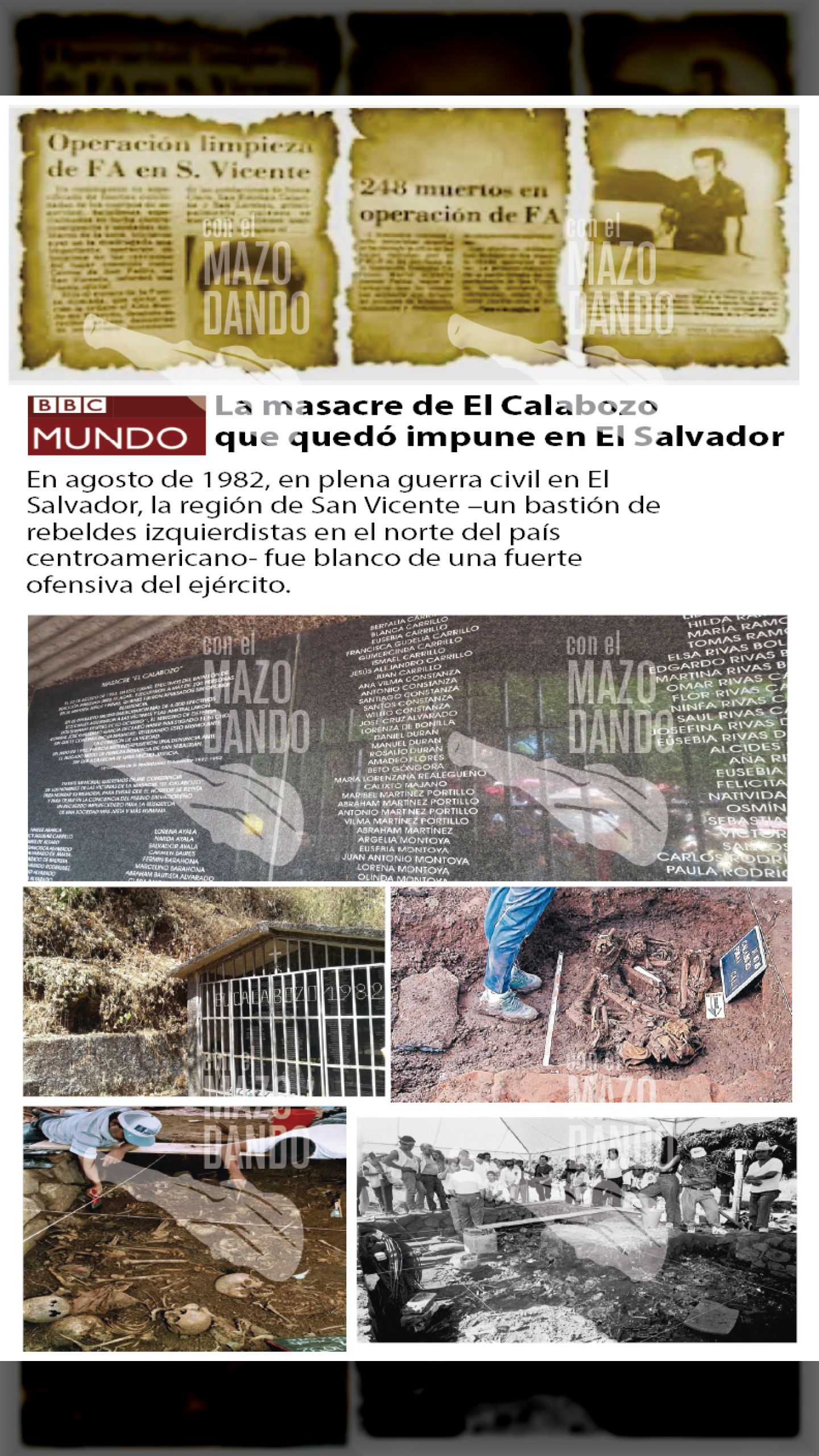
The Dungeon Massacre
Published at: 26/08/2026 09:00 PM
44 years ago
The Dungeon Massacre
(BBC, August 22, 2012)
- Between August 21 and 22, 1982, the El Calabozo massacre occurred in El Salvador. Death squads (whose leader Roberto D'Aubisson met frequently with Leopoldo Castillo and Edmundo González Urrutia at the headquarters of the Venezuelan embassy) and elite groups of the Salvadoran Army stained blood on the banks of the Amatitán River, located in the municipality of San Esteban Catarina, department of San Vicente.
- Venezuela was in the fourth year of the administration of Luis Herrera Campins, whose foreign policy was marked by the formation, training and funding of death squads in Central America.
- Diplomats Leopoldo Castillo, ambassador and Edmundo González Urrutia, were appointed to carry out this disastrous policy of exterminating left-wing and progressive religious groups as first secretary and chargé d'affaires.
- Between August 21 and 22, more than 300 people, mostly peasants, women, the elderly and children, were rounded up and shot down at close range, while Salvadoran Air Force helicopters bombed and strafed hamlets, conucos and peasant villages.
- This operation was known as “Lieutenant Colonel Mario Alberto Azenón Palma” and carried out jointly by special battalions of the Armed Forces of El Salvador (FAES), death squads and combat air units, writing with innocent blood the darkest pages of the history of that Central American country.
- The military deployment began on August 18, 1982 and covered both the north and south of San Vicente during the last days of that month.
- The reconstruction of the genocide, carried out by anthropologists and experts from the National Search Commission (CNB), determined that the offensive was meticulously planned.
- The action combined attacks from the air and the mainland, incursions by elite units such as the Atlacatl Battalion, and a systematic sweep of rural communities.
- The military forces used bombing, artillery and siege tactics, justifying the action as a maneuver against the insurgent groups of the Farabundo Martí National Liberation Front (FMLN).
- The military siege left hundreds of peasants who were trying to flee the bombings and incursions without escape.
- The testimonies collected by the CNB and the Committee for the Search for the Disappeared narrate how entire families sought refuge on the banks of the Amatitan, only to be destroyed by military fire.
- The attack was totally indiscriminate: no distinction was made between civilians and suspected combatants.
- Many victims were executed at point-blank range, while others suffered sexual violence and their bodies were thrown into the river or dissolved with acid, making it impossible to identify them later.
- After the massacre, the official version denied the facts. The then Defense Minister, José Guillermo García, assured that there was no such massacre, despite evidence documented by the Truth Commission and various human rights organizations.
- While these crimes against humanity were taking place, none of the above-mentioned diplomats raised their voices to denounce them.
- “The Matacuras”, as Castillo and González Urrutia were known, continued to coordinate meetings with the genocidal D'Aubisson from the embassy, to ensure the successful elimination of the Salvadoran insurgency within the framework of the so-called “Operation Centaur”.
- The drama of the disappeared: One of the most dramatic aspects of the El Calabozo massacre is the disappearance of boys and girls. According to Pro-Búsqueda and the National Search Commission (CNB) records, at least 17 minors (11 girls and 6 boys) disappeared during the military operation.
- Until now, after 44 years, dozens of the bodies of massacred women, elderly and children have not been recovered; river and military procedures erased evidence and identities, leaving only lists of names and the certainty of emptiness.
- Subsequently, the approval of an Amnesty Act in 1993 blocked any judicial investigation for years. Only after its repeal, in 2016, was the case reopened and arrest warrants issued against former military leaders.
- The Inter-American Court of Human Rights ordered the Salvadoran State to adopt reparation measures for victims and their families. However, impunity persists and access to data contained in military archives remains restricted.
Mazo News Team