VENEZUELA, A TERRITORY FREE OF ILLICIT DRUG CROPS AND A LEADER IN THE GLOBAL FIGHT AGAINST DRUG TRAFFICKING
Published at: 02/09/2026 09:00 PM
VENEZUELA TERRITORY FREE OF ILLICIT DRUG CROPS AND LEADER IN THE GLOBAL FIGHT AGAINST DRUG TRAFFICKING
(United Nations World Drug and Crime Report, June 26, 2026)
- In the midst of the fight against drug trafficking and the eradication of illicit drug crops, Venezuela once again demonstrated its moral solvency and police efficiency in all areas of the frontal battle that the Bolivarian government has waged against this terrible scourge that plagues humanity.
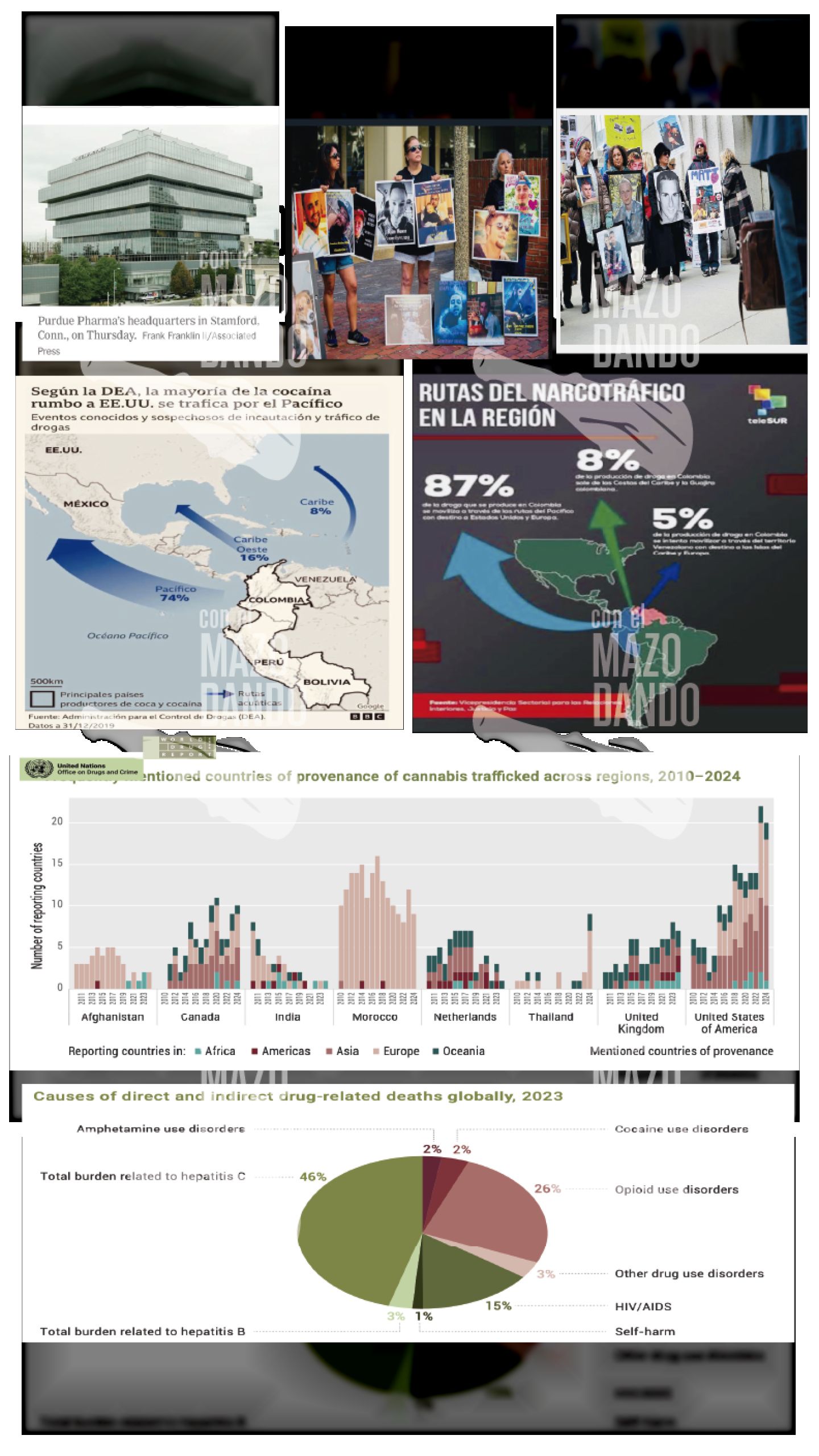
- In the annual report published on June 26, the United Nations (UN) recorded the record number of more than 67 metric tons of drugs (67,000 kilos) seized by Venezuelan State security agencies, through intelligence and counterintelligence mechanisms coordinated by the Ministry of People's Power for Internal Relations, Justice and Peace.
- To be more effective, the Bolivarian Government has also eradicated the vestiges of criminal organizations (mule trains) dedicated to using our territory as a means of passage for the transit of cargo to the Caribbean Sea to the main centers of world consumption: the United States, Canada and Europe. Reducing to 5% the traffic that flows to these clandestine markets by sea mules.
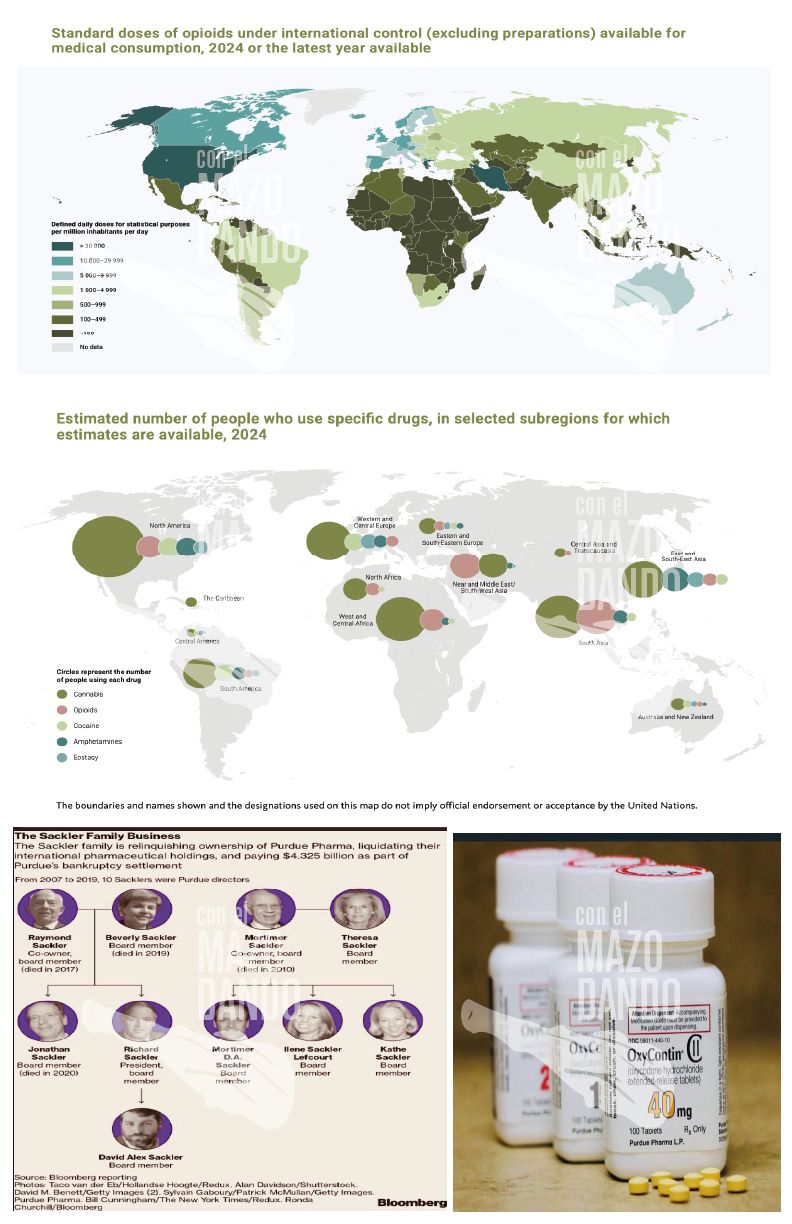
- Anecdotally, the World Drug Report 2026, issued by the United Nations Office on Drugs and Organized Crime (UNODC), states that the current opioid and fentanyl pandemic affecting major industrial powers such as the United States, Canada and Europe, began in the 90s as a result of the irresponsible practice of thousands of doctors to issue prescriptions of powerful analgesics (Oxycontin) to patients who came to a doctor's office for treatment of ailments that did not require such a prescription.
- It is estimated, according to official sources, that since 1990 more than 4 million people have died from overdoses of Oxycontin (Purdeu Pharma Laboratories) and other opioids prescribed by medical doctors in the United States, Canada, Australia and Europe at the rate of 90,000 deaths per year.
- Tipping point in the opioid market: The document notes that drug prohibition in Afghanistan, established in 2022, has continued to severely limit the illicit production of opium and heroin.
- Although production in Myanmar (formerly Burma) increased, from 420 tons in 2021, to more than 1,000 in 2025, that increase does not compensate for the drop recorded in Afghanistan, which produced more than 6,000 tons of opium in 2022.
- UNODC indicated that the increasing availability of new synthetic opioids, such as fentanyl and its more potent analogs, nitazenes and morphines, suggests that traffickers are looking for alternatives to heroin.
- The report warns that a shift from natural plant-based opioids to synthetic ones could cause a permanent change in the global opioid market, with new forms of consumption and greater health risks.
- The United Nations Office on Drugs and Crime (UNODC) warned that global drug markets are undergoing an accelerated transformation, driven by the use of technology, the emergence of new substances, global instability and the ability of traffickers to adapt routes, trade methods and expansion strategies.
- The warning was made in the World Drug Report 2026, published this June 26 in Vienna, on the occasion of the International Day against Drug Abuse and Illicit Trafficking.
- According to the agency, traffickers are taking advantage of technological changes and global instability to introduce new drugs, experiment with different distribution routes and expand into emerging markets.
- Alert for more potent and dangerous drugs: The executive director of UNODC, Mónica Juma, said that the world has witnessed an unprecedented increase in new types of drugs, some of them more potent or dangerous than those previously known.
- Monica Kathina Juma, stated: “We are already suffering the consequences: millions of premature deaths and years of healthy life needlessly lost; drug trafficking networks that are collapsing economies; the destruction of lives, communities and livelihoods; the increase in insecurity and violence,” she said.
- Juma argued that the need to dismantle organized crime groups is more urgent than ever, so he called for intensified deterrence efforts, increased intelligence sharing, coordinating joint operations and investing more in prevention and treatment.
- The world population, in 2022, reached 8,331 million inhabitants. The report estimates that 6.2% of the world's population (516,522 million people) between the ages of 12 and 64 regularly use drugs, of which 10% (5.1 million people) are at risk of dying from an overdose.
- The figure represents an increase compared to 5.2% recorded in 2014, which shows a sustained expansion in consumption over the last decade (3.45 per year).
- In addition, the document highlights that in the United States, Australia, Canada and Europe, 75 million people require urgent care, which establishes the need to strengthen access to rehabilitation, treatment, prevention and community support services.
- The report reports that cocaine is the queen of the most commonly used drugs in Europe, while opioids reign in the United States, Canada and Australia.
- The report also exposes inequalities in access to treatment for people with drug use disorders. In several regions, men receive treatment at a higher rate than women, evidencing barriers to access, stigma and limitations in the availability of specialized services.
- Traffickers continue to innovate: UNODC warned that manufacturers of illicit drugs continue to create synthetic substances to evade regulations and avoid detection.
- According to the report, in 2024, five times more types of drugs were found in seizures than those produced before the year 2000.
- In addition, the number of new psychoactive substances circulating in the markets reached 755 in 2024, of which 118 were reported for the first time.
- This phenomenon represents a challenge for health systems, security agencies, forensic laboratories and public policies, because many of these substances may be more potent, more difficult to detect and more dangerous for users.
- Methamphetamine is expanding on a global scale: this updated report also points out that the methamphetamine market has become global, due to new trafficking routes and the progressive expansion of clandestine laboratories for its production.
- Seizures increased by an average of 13% per year, driven mainly by quantities recorded in East and Southeast Asia.
- Although Myanmar remains the main country of origin of methamphetamine, high demand has boosted its production in North America (the US).
- UNODC also warned that methamphetamine from North America is crossing the Pacific Ocean to countries on the West Bank, leading to increased trafficking and consumption in Pacific islands.
- The stimulant map shows that there is no single global pattern. In some regions, cocaine predominates as the most commonly used stimulant, while in others, amphetamines, methamphetamine, synthetic cathinones or other stimulant-type substances are more common.
- Changing the perception of cannabis: Statistics indicate that the production, trafficking and consumption of cannabis sativa is evolving, probably due to changes in the perception of this drug and to the legalization or decriminalization policies adopted in several jurisdictions, especially in North America.
- The report also warns of the sustained growth in cocaine production, which continued to increase in 2024 and increased more than fourfold in the last ten years, to more than 4,000 tons in its pure state.
- This increase, according to UNODC, has been driven mainly by increases in productivity and cultivated area. Colombia has increased its plantations to 269,000 hectares, followed by increases in Peru and Bolivia.
- Organized crime groups continue to ship larger quantities of cocaine to established and emerging markets, with the goal of expanding their benefits and reaching new consumers beyond Western and Central Europe, North America and Oceania.
- Drugs, violence and safety: UNODC warned that drug use can often be associated with homicides, acquisitive crimes, family and social violence, as well as the victimization of people who use substances.
- However, the report clarifies that these results are also influenced by factors such as poverty, homelessness, mental health problems, the community context and the lack of access to drug addiction treatment and social services.
- Prevention, treatment and international cooperation: The report concludes that global drug markets are undergoing a phase of accelerated transformation, so governments must respond with greater international cooperation, shared intelligence, prevention, treatment and people-centered policies.
- UNODC insists that tackling the problem requires dismantling criminal networks, but also investing in health services, evidence-based prevention, stigma reduction, timely treatment and attention to social factors that increase people's vulnerability.
Mazo News Team