Bolivarian Government confiscated forest products for violating Organic Environmental Law and Forest Law
Ministry of People's Power for Ecosocialism
Published at: 20/10/2025 10:42 PM
The Bolivarian Government closed three carpentry shops for violating the Organic Law of the Environment and the Law on Forests, which are the legal frameworks that protect and manage the country's natural resources, as a result of Environmental Supervision and Control operations, which are carried out weekly at the national level, reported the Ministry of Popular Power for Ecosocialism.
In his account on the social network Instagram, he specified that two of the carpentry shops, located in the state of Anzoátegui, Simón Bolívar municipality, did not have prior environmental control instruments for their operation and ensure the protection and sustainable use of resources for industries of this type.
In addition, the Sucre company, located in the municipality of Bermúdez, did not have authorization for activities that affect the environment, such as the operation of forest industries, as established by law.
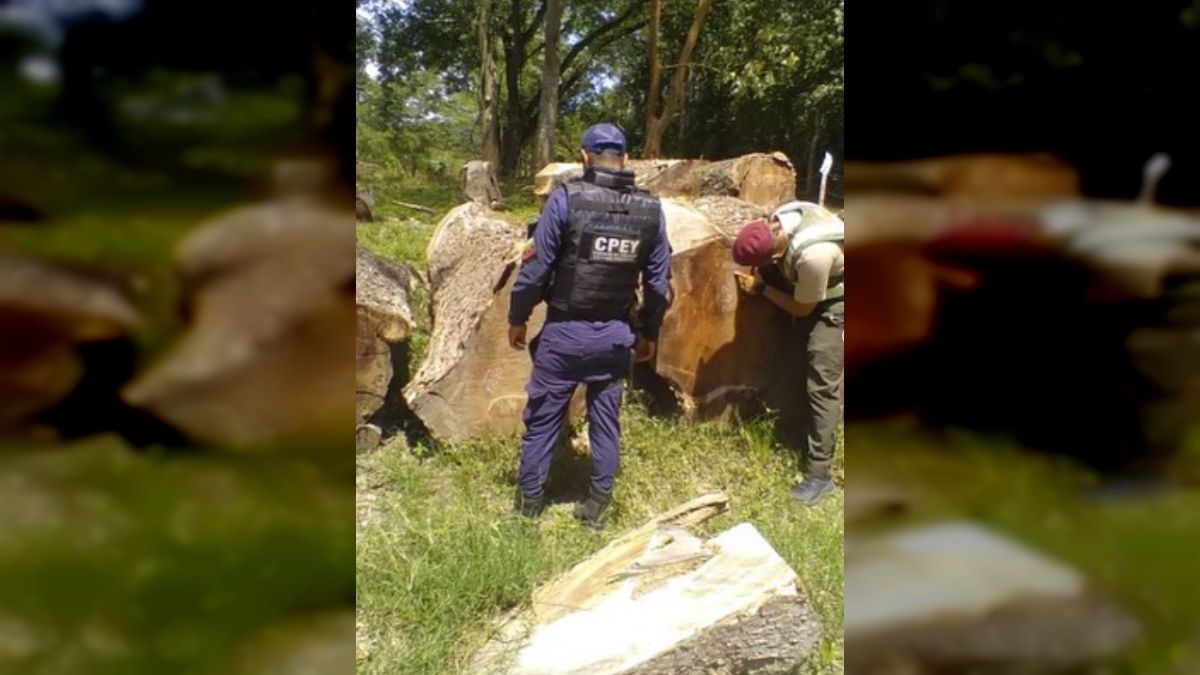
On the other hand, the commissions deployed in Cojedes retained 0.73 cubic meters of sawn wood of the Samán species (approximately 500 kilograms), a protected species. The country's laws restrict their felling, reserving it for special cases, since they are trees of great ecological, cultural value and slow growth.
In the state of Táchira, eight pieces of estantillos derived from apamate were confiscated because they did not have adequate permits. This is a necessary action to combat illegal trade.
In total, the inspectors visited 78 establishments. They verified circulation guides, forest harvesting sites, sawmills, carpentry shops, forest product warehouses and vegetable production furnaces. Six administrative records were drawn up and summonses were issued to 42 people.
During the operations, 129 officials intervened between the Ministry of Popular Power for Ecosocialism; Bolivarian National Guard (GNB); Civil Park Guard Corps of the National Park Institute (INP); Bolivarian National Police (PNB) and the Public Ministry (MP).