Venezuela raises its voice in defense of heritage and cultural rights at MONDIACULT 2025
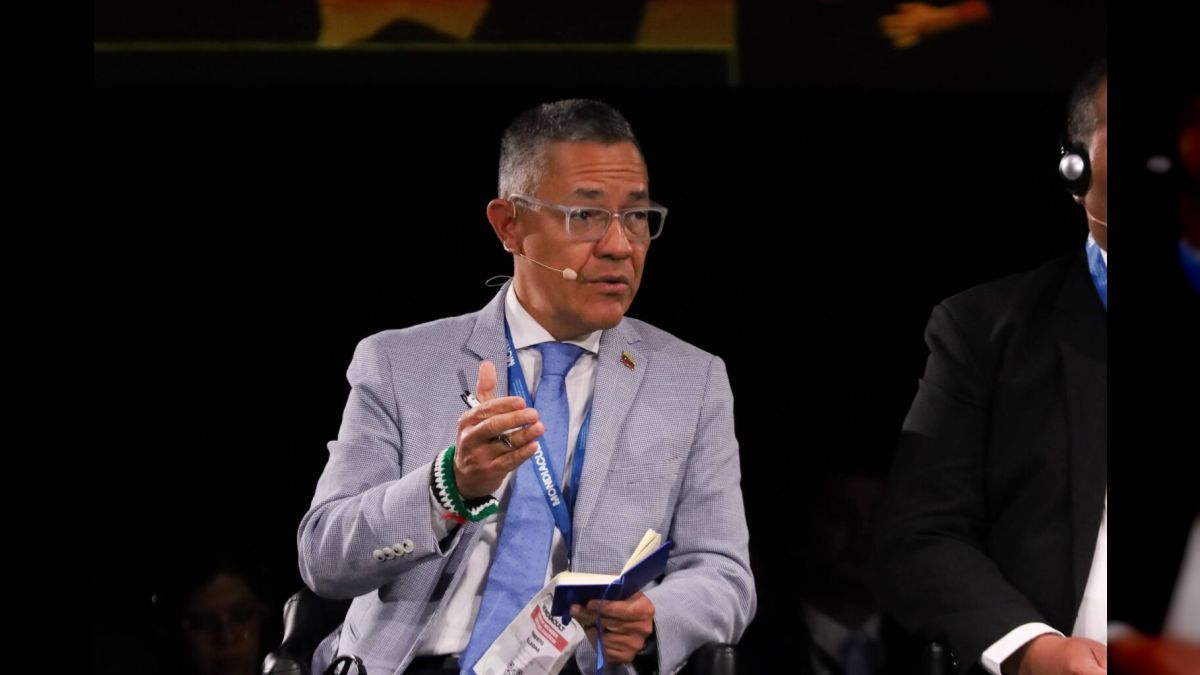
MINCULTURA Photos
Published at: 30/09/2025 03:28 PM
This Tuesday, September 30, the Minister of Popular Power
for Culture, Ernesto Villegas, highlighted the need to create an international
instrument for the protection of the Tangible and
Intangible Cultural Heritage of countries that are victims of unilateral coercive measures.
During his speech at the panel “Culture and Climate Action + Cultural
Heritage and Crisis” of the III UNESCO World Conference on Cultural
Policies and Sustainable Development (MONDIACULT) 2025, held in
Barcelona, Catalonia, Spain, Villegas stressed that it is necessary to extend the 1954 Hague
Convention to protect cultural assets in times
of unconventional aggression.
“They have done a lot of damage to the peoples of the world in
terms of heritage and cultural rights,” he said, denouncing the current siege that Venezuela is
suffering with the deployment of
U.S. warships in the Caribbean Sea.
At the same time, he denied the argument of the North American nation
about the fight against drug trafficking, citing figures from the
United Nations that indicate that 87% of the illegal drugs that enter the United States from South America move through the
Pacific Ocean and not through the Caribbean Sea.
He recalled the irreparable damage to
Iraq's cultural heritage, after being invaded by the United States, under the false accusation of possessing chemical weapons of mass destruction.
“If a military aggression by the United States against
Venezuela takes place, cultural heritage will not be protected as was
the cultural heritage of Iraq. I warn here about this imminent threat and
call for reflection,” he said.
On the other hand, he reaffirmed the country's position against illegal
trafficking in works of art, noting that Venezuela was recognized “for good
practices in this area by UNESCO” when 197 pieces of its archaeological heritage were
returned to Costa Rica in 2018. In addition, he recalled
the repatriation of grandmother Kueka from Germany to Venezuela after years of
struggle by the Pemon people.
He mentioned the donation from Belgium, by King Leopold, of art pieces from the Democratic Republic of the Congo to Venezuela in the 1950s. “Initially, these pieces were placed in the Museum of Natural Sciences next to objects of anthropological curiosities. We have transferred them to the Museum of Fine Arts to give them the treatment they deserve. In addition, we have offered the Democratic Republic of the Congo to restore that part of the cultural heritage that was plundered by colonialism,” he explained.
Regarding climate change, he highlighted that the Chuquisaca decree inspires the eco-socialist policy of the Bolivarian Government of Venezuela headed by President Nicolás Maduro.
He also invited people to follow and learn the details of the
World Congress in Defense of Mother Earth, which will be held from October 8 to 10
in Caracas; this event has a theme that responds to part of the
concerns about climate change raised by several countries
participating in this panel.
He also showed those present a sculpture of the deity
María Lionza “goddess of the mountains, of the waters, she is the spiritual component
that our peoples develop around life in nature”. “I also
claim that contribution because it is not only a matter of technicians, of
experts, but it is also a matter fundamentally of the peoples who live
in those ecosystems in harmony with nature,” he said.
Venezuela is participating in MONDIACULT 2025 as a sovereign State seeking to strengthen ties of cultural cooperation between member countries, promote the exchange of experiences and good practices, and promote joint projects that promote intercultural dialogue and diversity.
Mazo News Team