What happens in a country after a U.S. invasion? (1- Iraq)
Internet
Published at: 21/11/2025 06:10 PM
Under the false excuse that Iraq possessed weapons of mass destruction, on March 20, 2003, the United States, under the
presidency of George W. Bush, began a bombing of Baghdad whose real objective was to take control of the world's fifth oil reserve.
But this story didn't start there.
Saddam Hussein
came to power in 1979 and turned Iraq into one of the most
prosperous countries in the Middle East, modernized education, boosted the oil
industry, built hospitals, roads and schools when
much of the Arab world was mired in a social crisis.
He also ruled with an
iron fist, a behavior that was supported by the West, which for years
armed him and used him as a barrier against Iran, until he stopped serving him.
In 1990, Iraq invaded Kuwait for reasons associated with disputes over
a series of oil wells located on the border between the two countries
and from there, the United States became their enemy, starting with
sanctions, propaganda against the country and accusations of possessing weapons of mass
destruction, which gave way to the invasion.
After the invasion
in March 2003, Bush described it as a “mission to
liberate the Iraqi people and eradicate weapons of mass destruction.” Hussein's
government was overthrown in 26 days. Two years later,
the chief weapons inspector of the Central Intelligence Agency (CIA), David Kay, reported that arsenals of nuclear, chemical or
biological weapons were never found.
For Iraqis, the trauma
of subsequent violence is undeniable: according to the Watson Institute for
International and Public Affairs at Brown University, an
estimated 300,000 Iraqis died between 2003 and 2023, as did more than
8,000 American military, contractors and civilians. The period was
marked by unemployment, displacement, sectarian violence and
terrorism, combined with years without reliable electricity or other public services.
The war broke what had
been a unified state in the heart of the Arab world, created a power vacuum
and left Iraq, rich in oil, like a wounded nation in the
Middle East, vulnerable to a power struggle between Iran, the Arab States of the
Gulf, the United States, terrorist groups and the sects and rival parties of the
country.
What seemed like a
quick victory for US-led forces was illusory: the greatest
loss of life occurred in the months and years that followed. The occupation fueled
tenacious guerrilla resistance, bloody struggles for control of the countryside and
cities, a protracted civil war and the rise of the
Islamic State group, which sowed terror beyond Iraq and Syria, across
the Middle East , Africa, Asia and Europe.
The long and costly
experience in Iraq highlighted the limitations of America's ability
to export democracy but, at least temporarily, moderated Washington's
approach to foreign relations.
In Iraq, its democracy has not yet
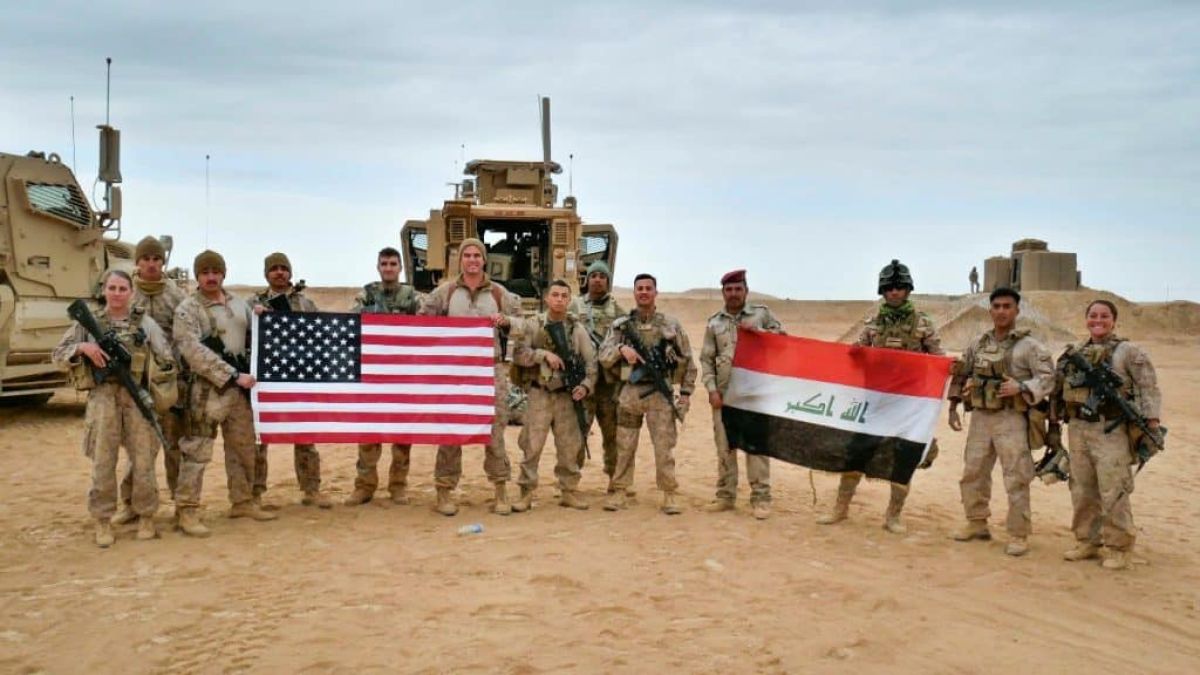
been defined. The latent conflict involves Kurdish fighters, Iraqi army troops
and some 2,500 U.S. military advisors who are still in the country.
“After the fall of the president,
Iraqis expected that the change of their authoritarian regime would lead to a new
state, based on democracy and the equitable distribution of wealth,” an Iraqi academic,
told the news outlet Anadolu, on
condition of anonymity, for fear of reprisals, who added that “we had
high hopes that the U.S. administration would fulfill its promises to
establish a democratic system as an alternative to Hussein's 35
years of rule.”
After two decades, the
reality is that the political process is marked by “corruption,
sectarian quotas and the distribution of resources between influential powers and most Iraqis live with poor services, uncontrolled weapons and organized
crime gangs,” said the academic.
In the same way,
journalist Wissam Al-Mulla also told Anadolu
that “according to statistics from the Iraqi Ministry of Planning in early 2023.
Poverty affects 25% of the total
population of Iraq, which exceeds 42 million people, and the most significant
repercussions of the U.S. invasion are the state of
shock experienced by the Iraqi streets due to the situation in the country.”
Al-Mulla added that “after
20 years, we aim to overthrow the ruling political class and achieve a
change that will lead to a genuinely democratic system similar to those of the world's civilized countries.”
Iraq is the world's
fifth largest oil reserve, and despite its vast wealth and
significant revenues from oil exports, the country
is struggling to meet the basic energy needs of its
population. The severe shortage of energy supply has left many homes
with just a few hours of electricity a day and without access to drinking water.
Today, after twenty years of war,
the promise of being a prosperous and democratic country has not yet
materialized. The legacy of the US-led war has been
characterized by political instability, sectarian violence, corruption,
and the inability to establish a sustainable and responsible government.
A transparent and responsible system has not yet been
established, leaving the Iraqi people in
a permanent struggle to rebuild and establish a functioning democracy.
The lack of security and
political stability not only devastated the
country's economy, infrastructure and social fabric, but also prevented Iraq from attracting
significant foreign investment, condemning its citizens to a sustained silent war
that impedes the normal development of daily life.
AMELYREN BASABE/Mazo News Team