What happens in a country after a U.S. invasion? (2 - Libya)
Internet
Published at: 28/11/2025 05:36 PM
In March 2011, the United States, the United Kingdom and France, member countries of the North Atlantic Treaty Organization (NATO), launched, through this organization, a military operation with air and naval attacks against the forces of President Muamar Gaddafi, this time with a media montage about a confrontation that took place in the Green Square in the city of Tripoli.
Two days before the first attack, the United Nations Security Council authorized NATO member states to “take all necessary measures to protect civilians from attack by the Libyan government” and established a no-fly zone over Libya.
The National Transitional Council (CNT), formed by the opposition to the Libyan government, which by then controlled the east of the country, had fully requested and supported the imposition of a no-fly zone and international military action against Gaddafi's forces. According to NATO figures, the air and naval military campaign lasted seven months, included more than 9,700 attack missions and destroyed more than 5,900 military objectives.
Then, in April 2011, U.S. President Barack Obama, British Prime Minister David Cameron and French President Nicolas Sarkozy issued a joint statement stating that it was impossible to protect Libyan civilians without accepting the CNT's request. NATO forces helped the Libyan rebels by weakening the Gaddafi government's military forces and maintaining an exclusion zone that nullified the government's air force. On the morning of August 20, 2011, French air strikes attacked the last military assets before the president's execution. The US president, Barack Obama, defended this intervention and argued that eliminating the jihadist group ISIS was a matter of “national security”.
It was all a setup
One of the voices that were raised in the face of such an attack was that of the president of Venezuela, Hugo Chávez, who denounced that the takeover of the Green Square in Tripoli by insurgents was the product of a media montage and, for this reason, referred to a report by the news outlet Russia Today, in which it was revealed that the images broadcast by Al Jazira and Al Arabiya television stations were filmed in Qatar with professional actors.
President Chávez, who maintained his solidarity with the Libyan leader Muamar Gaddafi, added that “even the so-called leaders of the hordes who tried to end the Libyan government recognized that the takeover of the Green Square was a setup. Let's be careful what the world's media say,” said the Venezuelan president.
He also explained that it became known that Mustafa Abdul Yalil, one of the heads of the CNT, who after the assassination of Gaddafi, was minister of justice, confirmed to journalists that the images released on the Green Square were a lie that allowed the Libyan army troops to be deceived.
Libya after the invasion
The Libyan invasion highlighted that after the application of the United Nations (UN) tool called Responsibility to Protect (R2P), the country was left to its fate, because this rule states that “the international community has an obligation to intervene when a State does not protect its own population from mass atrocious crimes : genocide, war crimes, crimes against humanity and ethnic cleansing”, does not contemplate the responsibility of rebuilding the country and does not promise to guarantee civil rights in the long term.
In 2021, a decade after the invasion, the UN carried out an evaluation of the country's social and economic progress, showing that Libya was left to its fate once the conflict ended. With a subsequent plan to help the country recover from post-conflict circumstances, long-term protection of the rights of the Libyan people may have been possible. The international community that joined the intervention, after it, did not assume any responsibility for helping to rebuild the country.
In January of this year, Andrew Byers, a researcher at the Albritton Center for Grand Strategy at the University of Texas, published a document on the website of the Daily Economy organization in which he detailed: “The US-led intervention in Libya it was strategically wrong and, ultimately, harmful, which served as an example for future US foreign policy. It would have been better if the Obama administration did nothing before setting off a disastrous descent into chaos.”
Currently, Libya is divided between two rival factions: the Government of National Unity (GNU), based in Tripoli, which controls parts of the west of the country, and the Government of National Stability (GNS), backed by the House of Representatives (HoR), which operates in eastern and southern Libya.
Byers stressed that “the US-led intervention, which assassinated Muammar Gaddafi in 2011, is the direct cause of Libya becoming a failed state. If the goal was simply to overthrow a president, he succeeded. If the objective was to end the Libyan civil war, alleviate the suffering of civilians, transform a dictatorship into a democracy, or demonstrate that Western military power could be a force for good in the world and all the objectives proclaimed by the Western powers involved, then it failed miserably.”
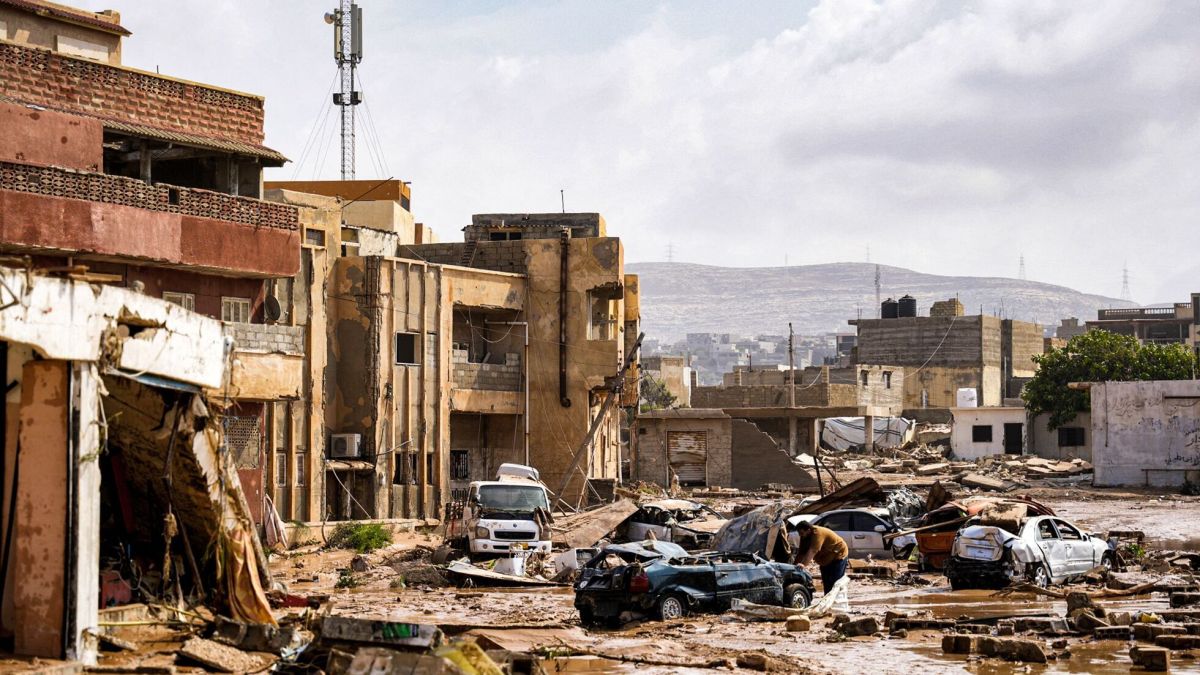
Today, 14 years after the intervention, Libya is still devastated by war and the average citizen's quality of life is much lower today than under Gaddafi's rule. Millions of people have been displaced, many of whom have flooded Europe, poverty has increased (more than 800,000 people need humanitarian assistance from a population of less than seven million), food security and the availability of basic services have drastically decreased. These critiques, taken together, describe an intervention that had serious and unforeseen negative consequences for that country and the region in general.
In Libya, as in Iraq, the ideology opposed to governments prevailed over national interests and replaced them with American ones, resulting in a series of failures for all those involved. The interests of the United States and Western Europe, not to mention those of ordinary Libyans, were not at all favored by the overthrow of Gaddafi.
AMELYREN BASABE/Mazo News Team