Brazilian Association of Jurists: There are no elements to question President Maduro's re-election
Internet
Published at: 27/08/2024 11:08 PM
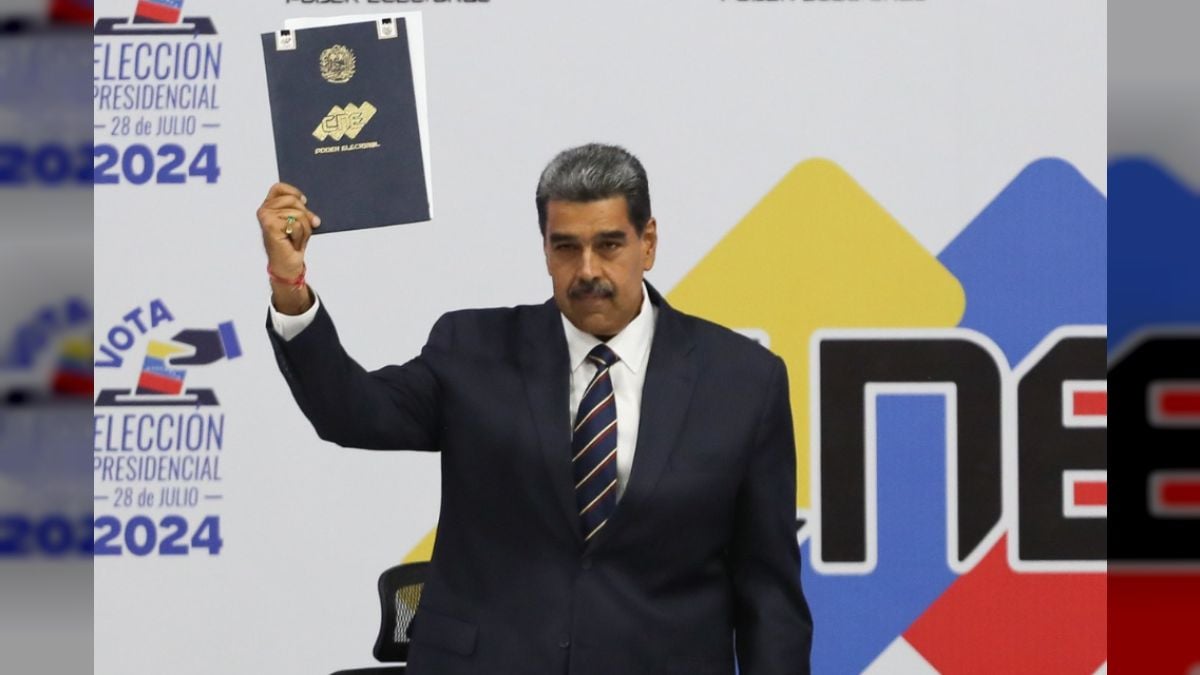
The Brazilian Association of Jurists for Democracy (ABJD) published a document informing how the elections took place in Venezuela and asking for “respect for the results” released by the country's National Electoral Council (CNE).
According to the text, published on the website of the aforementioned association, so far there are no elements to question the re-election of President Nicolás Maduro.
The ABJD sent four lawyers linked to the institution's Secretariat of International Relations to monitor the complaint. According to the report prepared by them and published on Sunday (25), the elections took place in an “orderly environment of total freedom”. They visited 23 electoral centers in Caracas and spoke with electoral inspectors from both the government and the opposition, who reported that they had “nothing to complain about the electoral process and system.”
Each party can have an election witness follow the election at a voting station and pick up a copy of the printed election report at the end of the vote. More than 1,200 international observers followed the Venezuelan elections.
The group described how the voting process works at the Venezuelan ballot box and indicated that, so far, the publication of results conforms to Venezuela's electoral rules for the publication of results in the Electoral Gazette. The CNE has 30 days to do so after the candidates are announced on July 29.
According to the document, both voters and participating political organizations were able to “control voter expression several times during the election, making election results difficult to manipulate.” Therefore, according to the ABJD, it is possible to conclude that “there was no objective legal proof of any act, element or fact that could raise doubts about the integrity of the electoral voting process and system”, nor is it possible to have any evidence of any element that could “raise doubts about the authority of the CNE”.
The group also cites the hacker attack suffered by the electoral system on election day and mentions the analysis of the American website Netscout. According to the platform created in 1984 that evaluates the performance of Internet pages, there was an “unusual increase” in the number of denial of service attacks in Venezuela on election day, which also extended to the day after the elections. According to Netscout, the number of attacks per second was 690 times higher on July 28 than the previous day.
Denial of service (or DDoS, as they are called) attacks are a way of congesting a system with a large volume of access requests, forcing it to collapse. In other words, many computers try, at the same time, to access the same website and make the same requests, creating an unbearable flow for a given online page.
The ABJD states that the National Electoral Council took longer than expected to complete the vote and than “normally occurred in other elections” due to the attacks. This complaint was evaluated by the Supreme Court of Justice (TSJ), which confirmed the veracity of the attacks. The CNE website, however, is still offline even 30 days after the attacks.
The text ends by stating that the members of the ABJD delegation considered that Venezuela's electronic voting process is “sufficiently reliable, as it is auditable in all its phases,” and meets all the requirements implemented in Venezuelan electoral law. The organization also talks about acts of public disturbance against the elections and their results” promoted by the opposition the day after the elections.
Martonio Mont'Alverne Barreto was one of the representatives of the ABJD in the Venezuelan elections. According to him, one of the points observed that could improve for the country's next elections is precisely the security of the electronic system.
“Electronic voting in Venezuela is a safe vote. What could be done is to have a greater security system, limit the possibility of attacks and respond more quickly,” de Fato told Brazil.
The opposition ignored the result of the election and questioned the data released so far by the CNE, claiming to have more than 80% of the records that supposedly indicate the victory of Edmundo González Urrutia. Even before the results were known, former ultra-liberal deputy María Corina Machado had already said that “González Urrutia had 70% of the votes and Nicolás Maduro had 30%”.
Other countries request the publication of electoral records. Under Venezuelan electoral law, the CNE has no duty to publish the minutes. The CNE website is used precisely to publish the detailed results of each voting station, but without a copy of the official document, and presents the historical disaggregated data of all the elections held in the country.
Barreto says that, so far, it is not possible to assert that there was fraud. The opposition published the alleged minutes collected on two websites, but the government points out inconsistencies in these documents. For the lawyer, the publication of the results in the Electoral Bulletin will guide how this process will develop.
“I have no objective element in this regard as a lawyer. If the CNE does not publish this documentation within 30 days, I imagine they will provide some justification. If the CNE publishes acts contrary to those of the opposition, it must give credit to the government, which is the electoral authority that has the power to carry out the investigation. The opposition does not have this competence. If the opposition and the government say they have the real records, I have to give credit to the electoral body, unless evidence is presented,” he said.
The Venezuelan electoral process went through a legal dispute. The opposition contested the election of Nicolás Maduro for a third term. This, together with the report of a hacker attack by the CNE, led Maduro to request an investigation by the courts. The Supreme Court investigated the alleged aggressions, collected all the body's electoral material and listened to nine of the ten candidates who ran for election. Only the opponent Edmundo González Urrutia did not attend.
After comparing the electoral records with the results collected by the electronic system, the Court validated Nicolás Maduro's victory and confirmed the existence of hacker attacks, but required the CNE to publish the disaggregated results. The electoral body responded in a statement this Monday (26) stating that it will publish it within 30 days after the elections, which were held on July 28.
The group led by former ultra-liberal deputy María Corina Machado claims to have collected more than 80% of the electoral records and that the sum of those results would give Edmundo González Urrutia the victory. But they did not send the full list of minutes to the Venezuelan courts or file a lawsuit asking that the election results be reviewed or challenged.
González Urrutia did not appear before the Supreme Court and sent the governor of Zulia, Manuel Rosales, as his representative. In a speech after the hearing, Rosales said that the opposition “does not need to deliver anything” and demanded that the CNE submit the electoral records.
The lawyer of the ABJD, Alexandre Guedes, also followed the elections and affirms that this whole context also limits the opposition's capacity to oppose.
“Legally, it is an issue that has already been resolved, just as the Supreme Court issued the verdict after carrying out the technical expertise. The problem is that the opposition talks a lot and acts little, within Venezuela's domestic legislation. They use a tool that is not provided for in Venezuelan electoral law. This part of the opposition did not even participate in the judicial process of the elections. Even if it participates in the elections, this opposition needs to formalize the challenge of this result, and not just question it in statements,” de Fato told Brazil.