Geoscientists evaluate in La Guaira the geological consequences left by the seismic doublet
MINCYT
Published at: 13/07/2026 11:31 AM
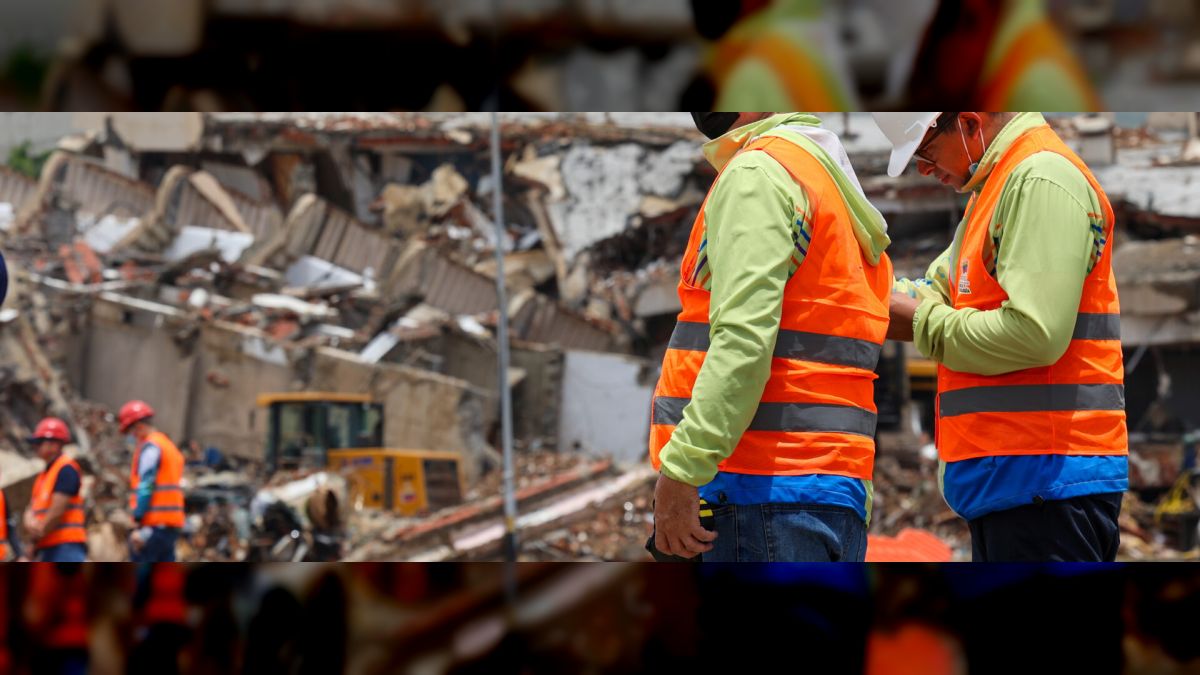
Specialists from the Ministry of Science and Technology (MINCYT) and the University of Los Andes inspect the state of La Guaira, to analyze the geological consequences left by the earthquakes of last June 24, whose origin is attributed to the San Sebastian Fault.
Professor Francisco Bongiorno, a member of the geoscientific commission of Fundacite Mérida, indicated that the group focuses its tasks on the measurement and orientation of cracks and deformations in the Earth's surface, according to a MINCYT press release.
The team has managed to consolidate between 40 and 50 metric records over a five-kilometer stretch, information that will serve to model the relationship of these fractures with the main fault system and to understand why certain buildings suffered more severe damage than others.
Bongiorno added that the research is aimed at collecting every trace left by the earthquake in order to establish a direct correlation between the data obtained and the behavior of the fault.
The geoscientist warns that the appearance of aftershocks is a normal consequence after an earthquake of magnitude 7.5, given that the terrain requires a period of readjustment that could last for weeks or months, even until next year.
The first observations reveal that certain soil strata and filling materials performed differently than expected in the face of an event of this magnitude, which motivates the carrying out of complementary technical tests in the following days.
Bongiorno highlighted the risk of liquefaction in the coastal area, a process where saturated soil loses firmness in the face of a violent shock and expels water to the surface, creating conditions of instability that require constant vigilance.
The deployment of this brigade, under the governing ministry for science and technology, confirms the will of national academic and scientific institutions to provide knowledge tools for disaster prevention and citizen protection.
Mazo News Team