
JUSTICE ELECTROCUTED - 4 REAL-LIFE CASES
Published at: 05/08/2026 09:00 PM
JUSTICE ELECTROCUTED - 4 REAL-LIFE CASES
A long list of “police crabs” shocked the national conscience between 1958 and 1998. In each case, automatic solidarity between the media and the judicial mafias closed ranks to lull the public to sleep behind a smokescreen and a cloak of impunity for the criminals of each of the powers involved, freeing a long list of thugs, rich children, priests, military officials, parliamentarians, kidnappers, kleptocrats and murderers, protected by the judicial tribes, in complicity with the national press.
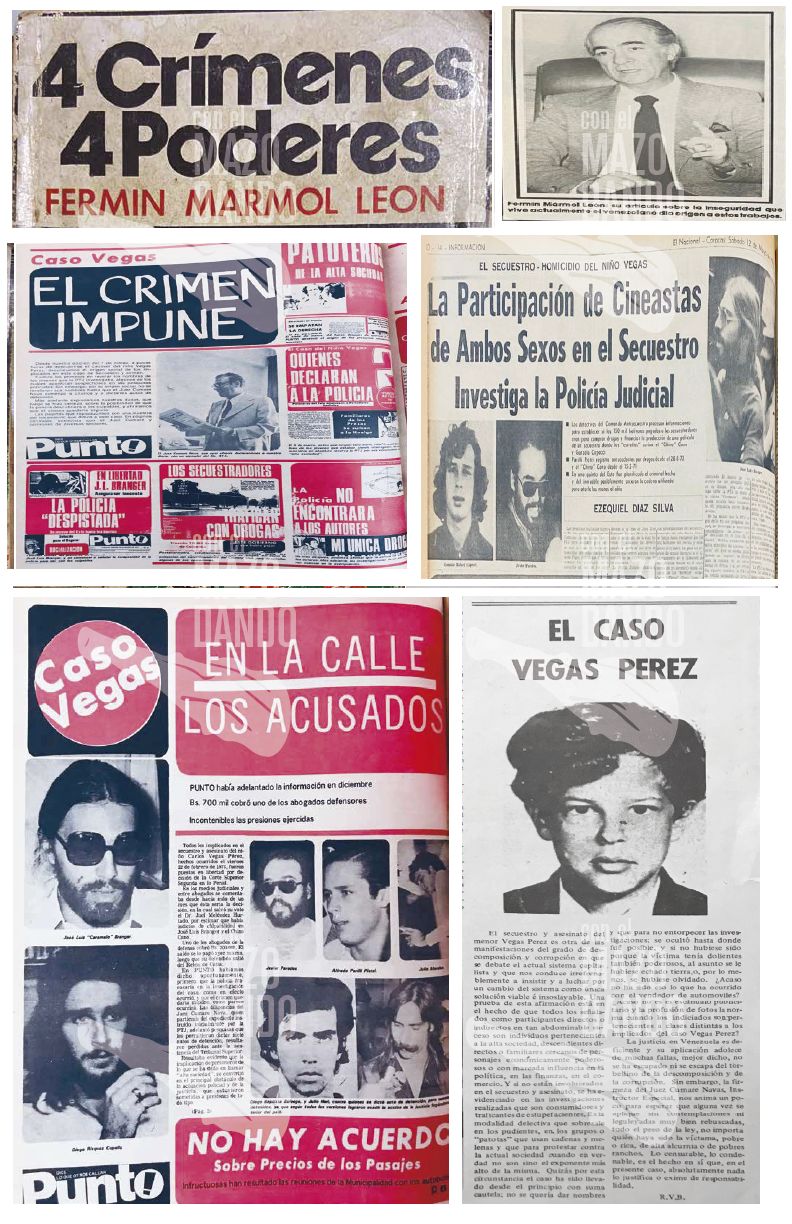
The “Golden Crabs” are four cases electrocuted in the electric chair of the owners of the powers that be in that wasteful Venezuela, the drug addicts of influential parents, the wealthy elites, the lascivious priests and the government scrounger, whose summary files were shelved and are currently better documented, summarized in the work “Four Crimes, Four Powers” by the lawyer, criminologist and former police commissioner Fermín Mármol León. All four were fictionalized and brought to the screen under fictitious names, but based on real-life characters and events:
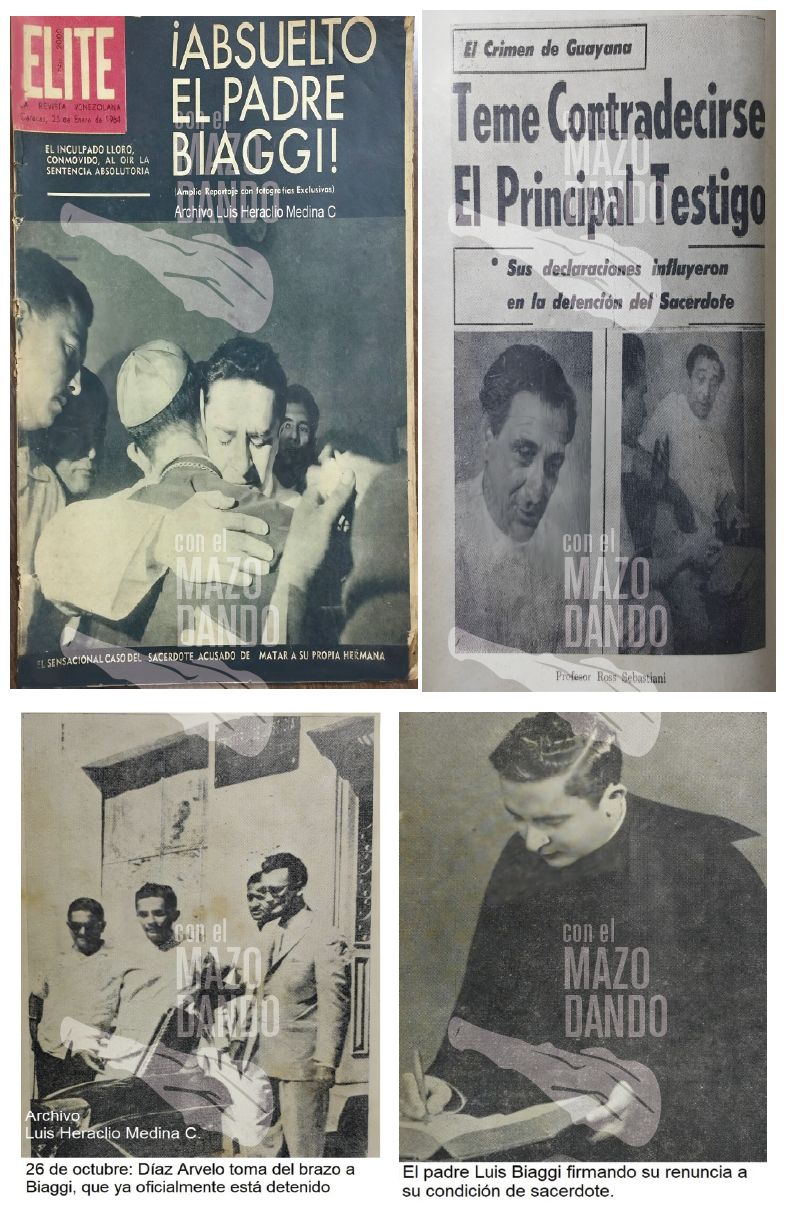
- CRAB I: On October 15, 1961, between 200 and 300 a.m., Lesbia María Biaggi Tapia, 24, former secretary of the Chamber of Commerce of Ciudad Bolívar, was raped and murdered. She was the adopted daughter and therefore the non-biological sister of priest Luis Ramón Biaggi Tapia, 32, pastor of the Church of Santa Ana and Chaplain of the Vista Hermosa Prison in that city.
- The autopsy forensic doctor, Dr. Humberto Bartoli, determined that the assailant of Lesbia María used a double-edged knife (stylet), with which he inflicted four wounds, one of them fatal, in the seventh left intercostal space; that she suffered from blenorrhagia and that the girl fought against it before she died, scratched it and tore hair from various parts of her body and head. All samples were thoroughly collected and analyzed by the laboratories of the Judicial Technical Police (PTJ) in Caracas.
- The patterns of bloody, barefoot footprints coming out of Lesbia Biaggi's room coincided with the priest's last.
- The absence of screams, noises, forced doors or windows determined that Lesbia María knew the aggressor and that he entered the room without any violence.
- Father Biaggi was visibly upset and resisted the evidence, claiming that it was an offence to his priestly dignity to carry out experiments on his blood and semen. Inevitably, he had to agree to it. The murder weapon never appeared.
- The investigations showed that the priest suffered from blenorrhagia, that he had sometimes beaten the victim and that he exercised excessive control over her as to the suitors or boyfriends he had. He went so far as to slap her for wearing clothing that he considered inappropriate.
- On October 25, 1961, the case was closed by the police, after having agreed to carry out all the tests. The court in the Ciudad Bolívar case issued an arrest warrant and Venezuela was appalled to learn of the abominations that can occur within the Holy Catholic, Apostolic and Roman Church.
- However, while serving his sentence in the Vista Hermosa Jail, the case was unexpectedly brought under the jurisdiction of the state of Guárico for unknown reasons.
- On January 20, 1964, Luis Ramón Biaggi Tapia was acquitted by the First Criminal Court of San Juan de los Morros and released on parole. On April 26, 1967, he was acquitted of all charges on the grounds that “there was no conclusive evidence”.
- However, some of what could happen in the dark of seminaries, boarding schools, churches and homes of priestly residence was exposed to the public light with this case.
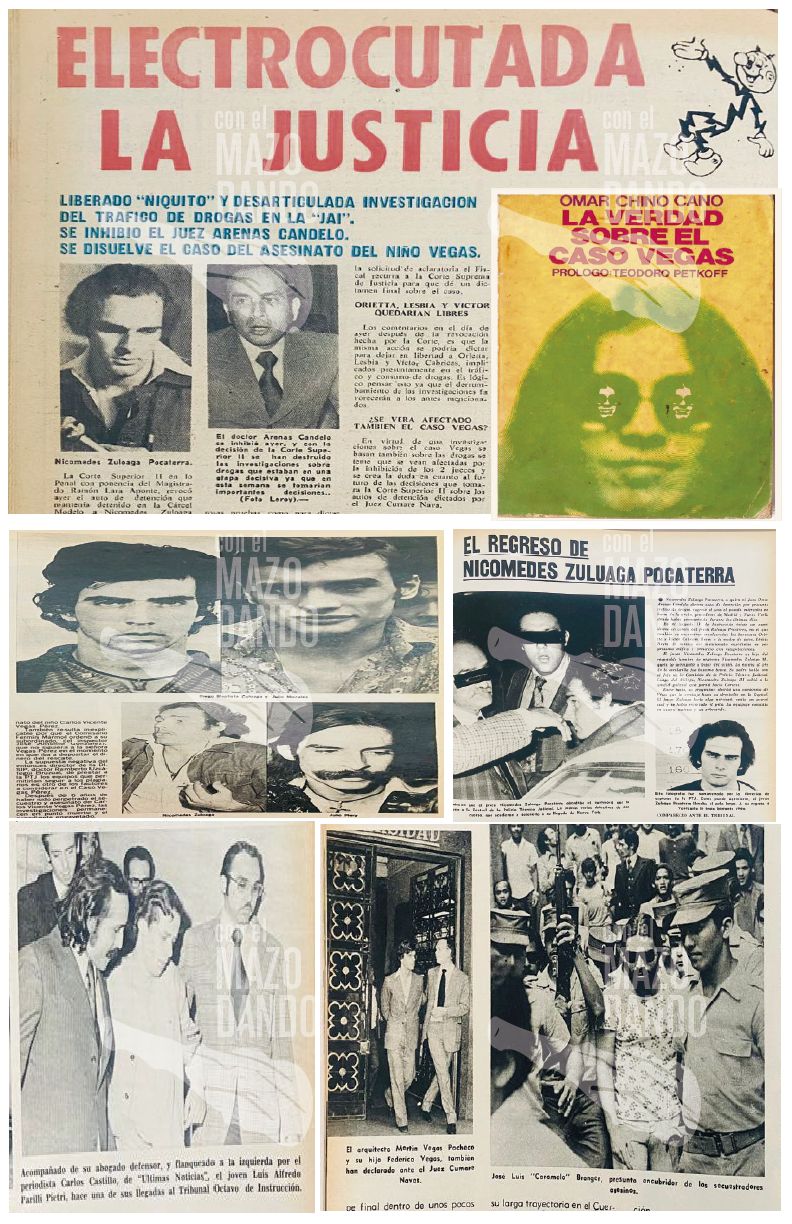
- CRAB II: The kidnapping and murder of the boy Carlos Vicente Vegas Pérez, executed by crooks from the Caracas Country Club to settle debts with Colombian drug traffickers (the economic power linked to the big ones).
- On February 22, 1973, 13-year-old Carlos Vicente Vegas Pérez left his house to buy food supplements a few blocks away at the Santa Marta Shopping Center. But he never returned home.
- Carlos Vicente was the youngest son of the architect Martín Vegas Pacheco and Trina Pérez de Vegas, the younger brother of the famous novelist Federico Vegas, who was one of those indicted for his close friendship with the group of kidnappers.
- These members of select social circles were dedicated to drug consumption and distribution, identified in summary files with the surnames of the Masters of the Valley: Herrera, de las Casas, Branger, Batista Zuloaga, Zuloaga Pocaterra, Rízquez Cupello, Capecci, Paredes, Díaz Pietri and Parilli Pietri. The latter linked to the First Lady of the Republic, Mrs. Alicia Pietri de Caldera.
- The kidnappers sedated the boy Carlos Vicente, tied him up, gagged him and put him in the suitcase of a car to take him to a hiding place. On the way, he died suffocated by inhalation of carbon monoxide. Before he died, he was beaten and his skull was fractured.
- Later, the young murderers threw the body into a ravine on the Coche-Tejerías highway, where it appeared on March 1 of that year. The day after the kidnapping, they had collected, as a ransom, the sum of 150,000 bolivars, equivalent today to 350,000 dollars.
- A few days after the body appeared and after carrying out all the investigations and forensic experiments, the arrest warrants were issued to:
- Alfredo Parilli Pietri
- Roberto Díaz Pietri
- José Luis “Caramelo” Branger
- Omar “Chino” Cano Lugo
- Gonzalo “Fafa” Capechi
- Orietta Cabrices
- Nicomedes Zuloaga Pocaterra
- Javier Paredes
- Diego Baptista Zuloaga
- Julio Neri
- Diego Rízquez Cupello
- The victim's brother, Federico Vegas Pérez, was called to testify as a defendant.
- However, after a month, all the defendants were acquitted and the Vegas Case became another “golden crab” that entered the records of impunity.
- Unexpectedly, the summary file was taken from the investigators and commissioners of the Judicial Technical Police (PTJ), becoming another police-resolved, well-investigated and well-shelved case, due to great pressure from the prevailing powers that be (the church, the political, the economic and the military).
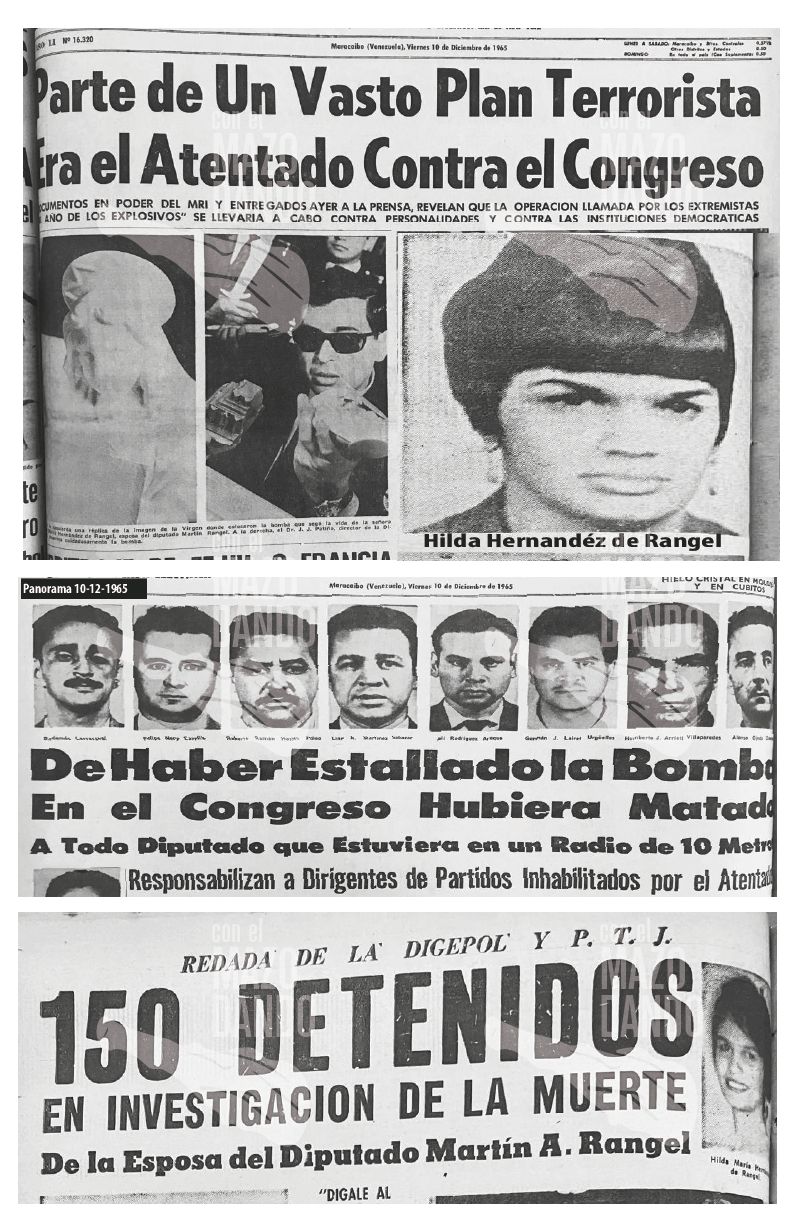
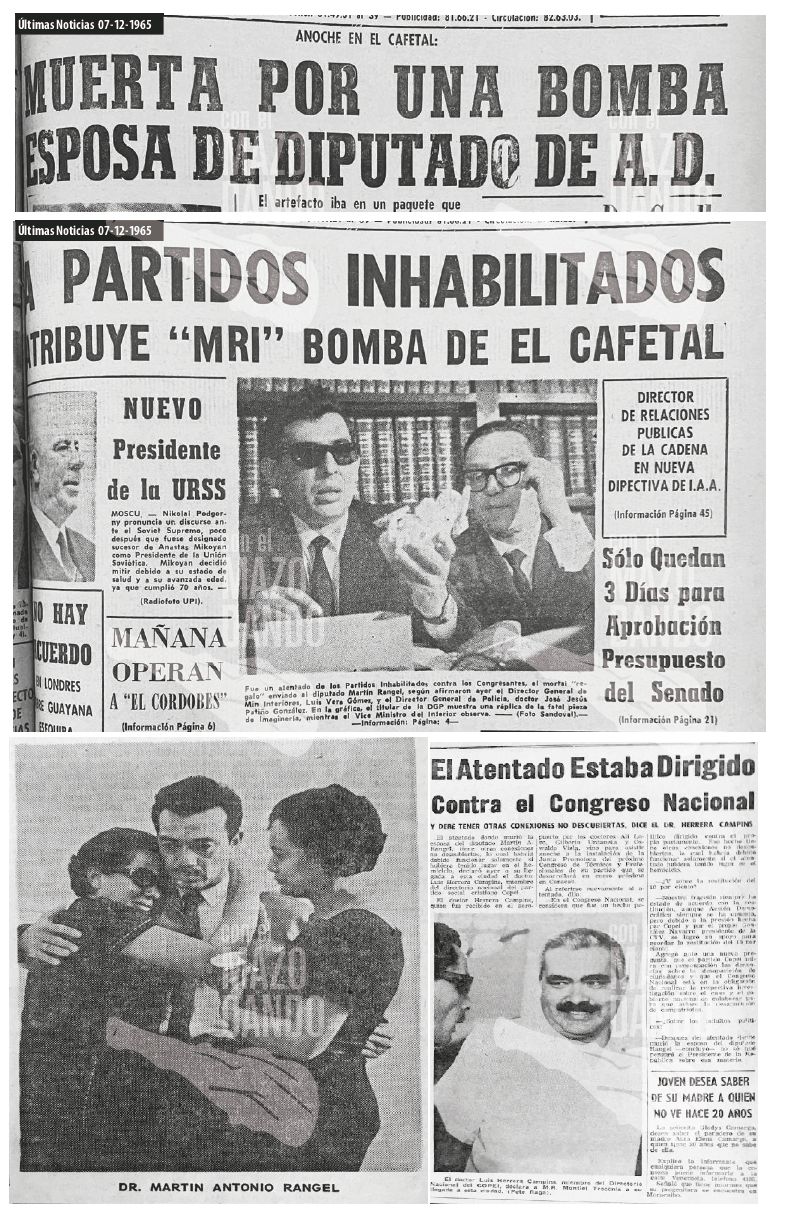
- CRAB III: “The Crime of the Coffee Plantal (The Deadly Statuette)”. Camouflaged bomb inside a statue of a virgin kills Hilda Hernández de Rangel, young wife of the representative of Democratic Action (AD), Martín Antonio Rangel.
- On December 6, 1965, Congressman Rangel delivered a gift to his wife, Hilda Hernández, in the living room of their home located in El Cafetal. It was a box and inside a statuette of Our Lady of Coromoto.
- The deputy quickly went up to the top floor of the house and the lady, when she opened the box with the statuette, shot through the air, leaving her body completely destroyed in the bloodied room.
- Despite the fact that all the interrogations, investigations and experiments carried out by the PTJ's commissioners and researchers determined that the only person responsible for “The Coffee Farm Crime” was the same spouse of the victim, deputy of AD, Martín Antonio Rangel, senior officials and the media froze the file, as they directed the accusations against members of outlawed political parties, then in hiding.
- Deputy Adeco had not had his parliamentary immunity breached, but he waited five long years for him to be sentenced, once his legislative term had expired, by a highly qualified judge from the well-known “Tribe of David”, who ruled that there were no merits or sufficient evidence to charge him with the murder of his 22-year-old wife.
- All the evidence that incriminated Deputy Rangel was inserted in the summary file, and it was reliably proven that he was an explosive expert and that he belonged to the “special apparatus” of sabotage and attacks of Democratic Action (AD) in hiding.
- Four months after the abominable murder, Congressman Rangel married a minor girl, fifteen (15) years old.
- Meanwhile, the director of the General Directorate of Police DIGEPOL, J.J. González Patiño, seized the opportunity of this qualified homicide to put a price on the heads of the following left-wing political leaders:
- Rafael Nery Carrillo
- Eduardo Gallegos Mancera
- Pedro Ortega Díaz
- Lino Martínez
- Ali Rodríguez Araque
- Alonso Ojeda Olaechea
- Germán Lairet
- Radamés Larrazábal
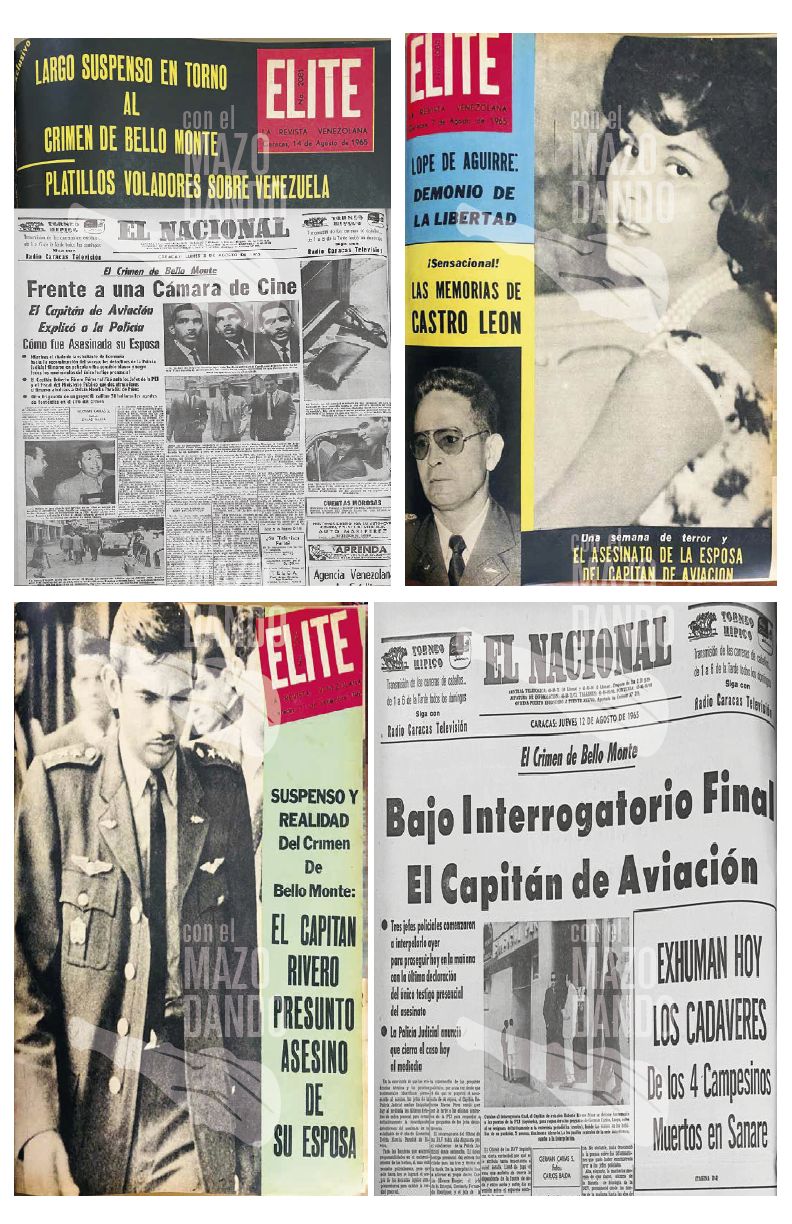
CRAB IV: “The Elevator Crime”. The Murder of the Economics student, Delcia Morelia Paradisi Carabaño.
- 61 years ago, at 6:30 a.m. on Friday, July 30, 1965, the young Delcia Morelia Paradisi, 24, a 4th year economics student at the Central University of Venezuela (UCV), was murdered by her husband Roberto Rivero Pérez, who was acquitted of all responsibility by the courts of justice of the Fourth Republic, after some of the evidence collected was lost by the PTJ who proved his guilt.
- On the 61st anniversary of the so-called “Elevator Crime”, which kept Venezuela in suspense for months, the only trace left, in the memory of impunity, was the unusual acquittal sentence that released a murderer in the service of the fratricidal governments of Rómulo Betancourt and Raúl Leoni.
- The captain of the Aviation, Rivero Pérez, was an officer protected by the Armed Forces Intelligence Services (SIFA), due to his participation in the bombings carried out in the mountainous areas of the states of Lara, Falcón, Portuguesa and Trujillo, to assassinate and intimidate rural populations suspected of collaborating with the guerrillas.
- The sentence or legal mammotreto, which acquitted the murderer, considered that the disappearance of some evidence was sufficient reason to declare the allegations of the Public Prosecutor's Office against the sole suspect in the case without merit.
- Coincidentally, the trial was removed from ordinary criminal jurisdiction and transferred to the jurisdiction of a special ad-hoc military court, where SIFA took care of removing from the file the key elements found at the crime scene.
- That morning, Delcia Morelia Paradisi Carabaño went out with her husband to take a final exam at the UCV. Inside the elevator of the Riverside Building, where they lived, Rivero shot him twice at point-blank range. Then he took to the street screaming and shooting shots into the air with his regulation weapon.
- The alarmed neighbors, who hurriedly helped Rivero to take the dying lady to the University Clinical Hospital (HCU), observed that before doing so, Rivero decided to return home to change his clothes.
- The chaplain of the HCU heard Rivero Pérez say: “I shot him twice, I don't know what it was like”, when he admitted his wife to the emergency room of this health center.
- In the notorious case, also known as “The Crime of Bello Monte”, the judges of the ad-hoc court did not use more than 20 evidence, based on reliable testimonies, ballistic expertise, investigations and fingerprints collected by the scientific police, which pointed to Rivero Pérez as the material and intellectual author of the murder.
- By mere chance they disappeared:
- The regulation weapon, a 9 mm pistol, which the officer used to shoot in the air at alleged robbers, which no one saw.
- A Smith & Wesson revolver, caliber 38, purchased days earlier by Rivero in the United States, to kill his wife.
- The victim's bloodied suit, with gunpowder tattoos.
- The murderer's warrior with traces of gunpowder and stained with his wife's blood.
- The bullets that hit humanity of the deceased.
- Two passports, with a US visa application form, of Rivero Pérez and his lover, Olga Guerrero, which were found in the wallet that the unfortunate victim left lying on the floor.
- The society of accomplices rewarded the murderer with the trivialization of the crime, shelving itself in oblivion as just another “crime of passion”, and granting him a visa for a golden self-exile in Miami, where he lived quietly until the end of his days.
Mazo News Team