Scientists manage to eliminate in vitro the extra chromosome that causes Down Syndrome
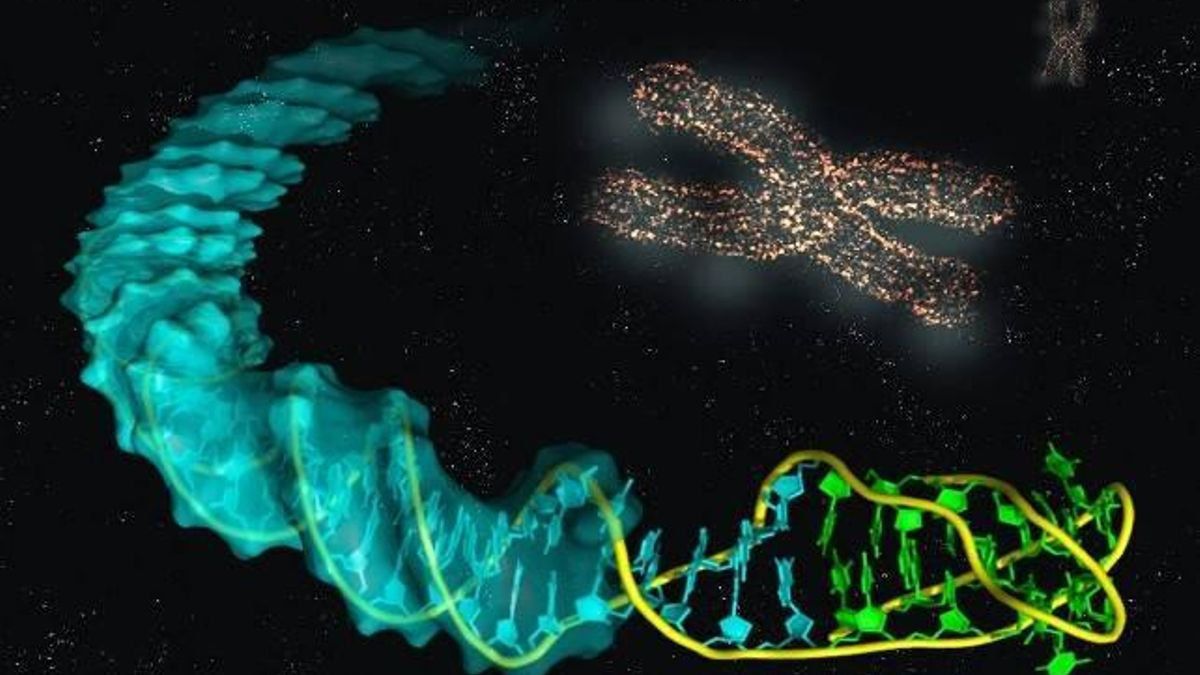
Photo: MINCYT
Published at: 12/09/2025 09:18 AM
A team of Japanese researchers managed to eliminate in vitro, using the genetic editing tool CRISPR-Cas9, the copy of chromosome 21, responsible for Down syndrome.
The study, referred to in a press release from the Ministry of Science and Technology (MINCYT), was presented in the journal PNAS Nexus by Mie Medical University and Fujita Health University.
The extra chromosome is the genetic abnormality that causes Down syndrome, affecting the child's physical and cognitive development.
Although studies on this disorder have advanced in areas such as prenatal diagnosis, the treatment of its clinical characteristics and the creation of animal models, less effort has been devoted to eliminating the extra chromosome in the affected cells.
Japanese researchers developed a variant of CRISPR-Cas9 capable of identifying and cutting exclusively one of the three 21 chromosomes of a cell with trisomy, based on the specific differences of each copy of the chromosome.
This “allele-specific cut”, as it is known, allows only the desired chromosome to be deleted without affecting the other two. According to the team, this precision is essential to avoid genetic imbalances that could cause other problems.
The technique was performed on a patient with the syndrome. It was tested on induced pluripotent stem cells (iPSCs) derived from fibroblasts (skin cells).
The results showed that cutting specific chromosomes made it possible to reduce trisomy and restore the normal number of chromosomes (disomy). They also tested the effectiveness of this method on differentiated cells such as fibroblasts and on cells that were no longer dividing.
Despite the importance of the study and the doors it opens to future research, the team reiterated that the research is at an early stage.
In 1846, French psychiatrist Edouard Séguin described a patient's condition as “furfuraceous idiocy”, whose characteristics are now associated with Down's syndrome.
It was Jérôme Lejeune, a French doctor and geneticist, who in 1958 identified the extra copy of chromosome 21. However, the definitive clinical identification of the disorder is attributed to the British physician John Langdon Down, who published the first case in 1866.
The worldwide incidence of Down's Syndrome is estimated at 1 in 1,000 to 1 in 1,100 newborns and can be diagnosed from the womb.
People with Down syndrome show a series of very characteristic morphological and anatomical alterations. Many people also have congenital defects that lead to problems in the heart, digestive system or eyes and ears, obesity, motor and neurological development disorders.
Mazo News Team