Venezuela advocates ethics in media and social networks at UNESCO
MPPRE Press
Published at: 21/11/2024 12:27 PM
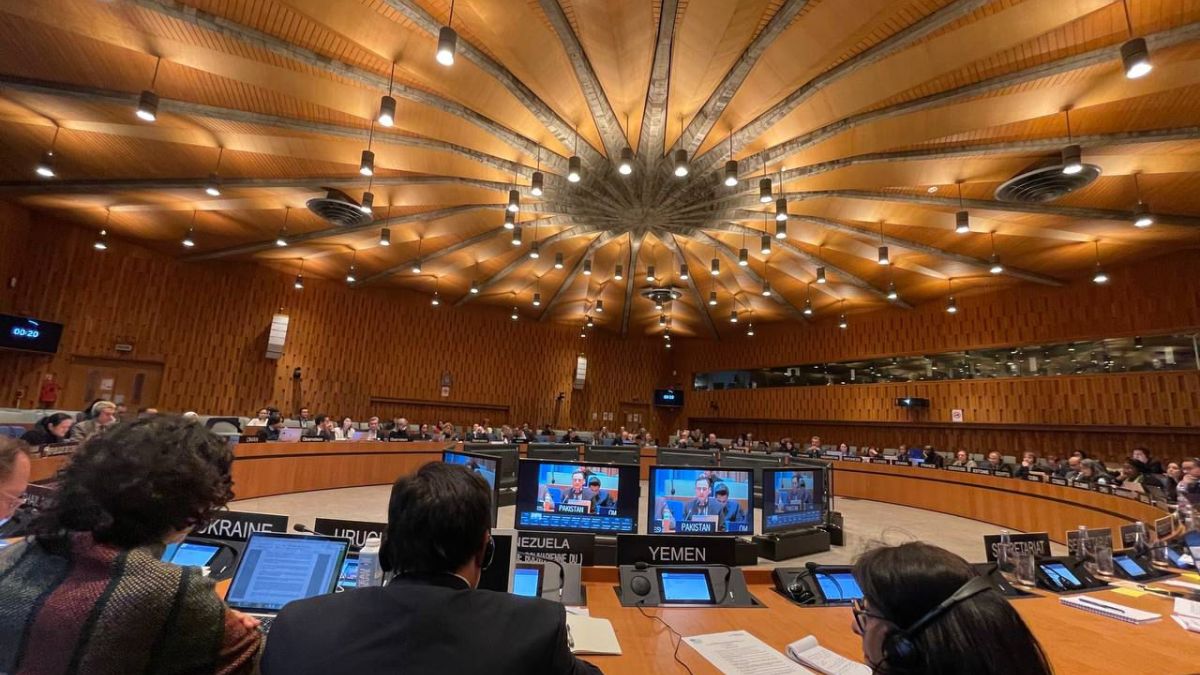
The defense of the right of peoples to free communication, the urgency of a new international order of communication and the condemnation of practices aimed at intimidating, manipulating or deleting information as a way to promote the interests of groups of power in the media and social networks, focused Venezuela's position on the Intergovernmental Council of the International Program for the Development of Communication (PIDC) of the United Nations Educational, Scientific and Cultural Organization Culture (UNESCO).
During the 34th session of the Intergovernmental Council of the IPDC this Wednesday, the Deputy Minister for International Communication of the Ministry of People's Power for Foreign Affairs, Camila Fabri, highlighted Venezuela's commitment to “communication that guarantees access to truthful information, supporting the right of the people to express themselves freely, without fear of reprisals or blockages on digital platforms.”
In her online speech to the delegations participating in the meeting, held at the headquarters of UNESCO in Paris, France, the Deputy Minister denounced that the owners of social networks arrogate to themselves the power to even ignore heads of state or institutions, and violate the right to information about public policies, in addition to promoting disinformation and misleading information.
He also exemplified the unscrupulous management of digital platforms and media that have forced messages and accounts to be deleted or blocked for denouncing the genocide against the Palestinian people.
“The expansion of neofascism has a breeding ground on social networks; it is a tool for the constant intimidation of diverse voices. Algorithms and their information microbubbles manipulate facts depending on who favors their interests,” emphasized the representative of Venezuela.
Faced with this scenario, ethical and moral responsibility is urgently needed in the media and social networks, in particular in the face of practices such as viral challenges that activate “a whisper that attacks our young people,” Fabri said.
Recently, one of these viral practices cost the lives of two young Venezuelans and affected dozens of students in basic and secondary education, so the head of state, Nicolás Maduro, instructed to demand that TikTok remove from the platform those challenges that endanger children and adolescents.
“This is why we need even more of a regulatory system that focuses on the lives and health of citizens and establishes responsibility for violations. It is urgent to move towards a new international order of communication, which regulates these dynamics and protects life, human rights and peace”, concluded the diplomat.
MPPRE