Venezuela reaffirms its commitment to the peaceful use of nuclear energy
Telegram
Published at: 17/09/2025 03:00 PM
The sector vice-president of Science, Technology, Education and Health, Gabriela Jiménez, emphasized the firm commitment of the Bolivarian Republic of Venezuela to the peaceful development and application of nuclear technology at the 69th General Conference of the International Atomic Energy Agency (IAEA).
“Venezuela is a founding member of the IAEA and the ARCAL Regional Agreement, thanks to the scientific legacy of Dr. Humberto Fernández-Morán, a pioneer in the promotion of nuclear research in Latin America. Since then, we have defended the use of atomic energy for the life, health and well-being of peoples,” Jiménez said through his Telegram channel.
The vice president emphasized that nuclear technologies are now essential tools for medical diagnosis, using computed tomography, x-rays, magnetic resonance imaging and mammography. He also emphasized the role of nuclear medicine and radiopharmacy as vital alternatives in cancer treatment, saving thousands of lives in the country and in the region.
He also emphasized that these technologies allow the advanced study of ecosystems, animals, plants and bodies of water using electron microscopy, scintigraphy and genetic sequencing, contributing to pandemic control and strengthening scientific research.
Jiménez recalled that Venezuela was the first country in Latin America to have an institute dedicated exclusively to nuclear research, now known as the Venezuelan Institute for Scientific Research (IVIC), and to operate a nuclear research reactor since 1955.
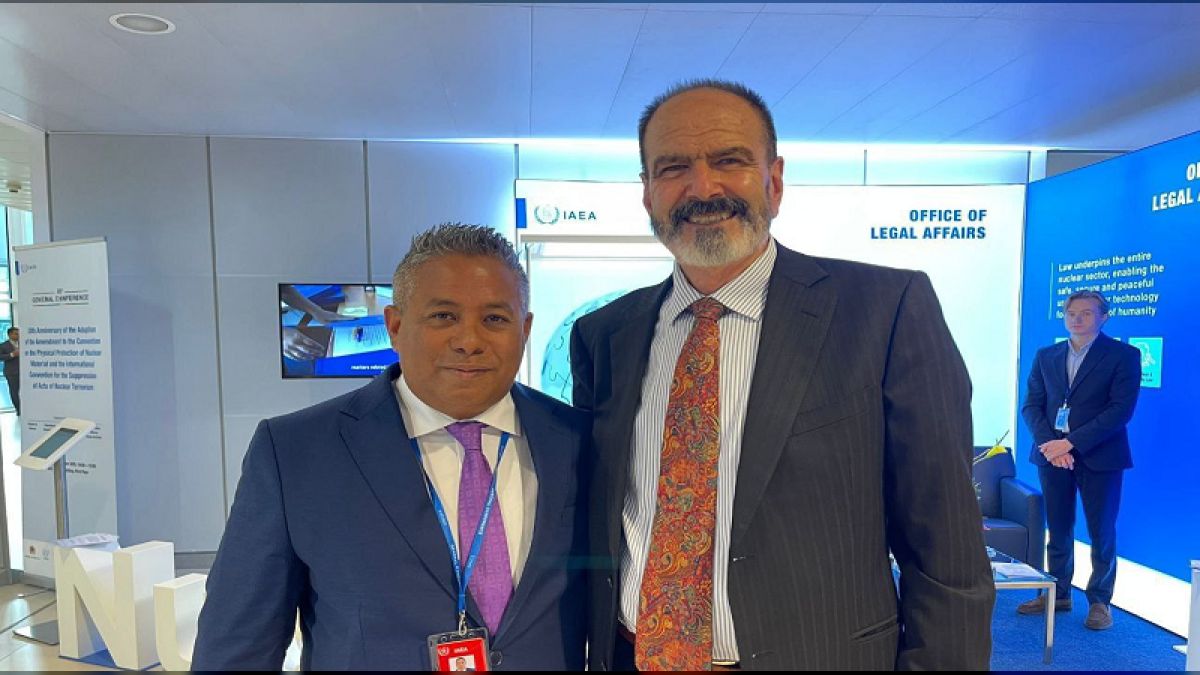
During the conference, the Deputy Minister and Director of the IVIC, Dr. Alberto Quintero, denounced the presence of a U.S. nuclear submarine near Venezuelan territorial waters, which constitutes a violation of the 1967 Tlatelolco Treaty, which declared Latin America a nuclear-free zone. “This type of action undermines peace, stability and regional diplomacy,” said Quintero.
The director general of the IAEA, Rafael Mariano Grossi, met with Dr. Quintero to confirm the technical cooperation between the two institutions. Grossi recognized the commitment of the Bolivarian Government, led by President Nicolás Maduro, to strengthening the public health system, which has been affected by unilateral coercive measures.
For his part, Dr. Luis Carlos Longoria, IAEA's Director of Technical Cooperation for Latin America and the Caribbean, praised Venezuela's efforts to promote the peaceful use of nuclear energy and promote free and cooperative training through the LANENT Network.
Mazo News Team