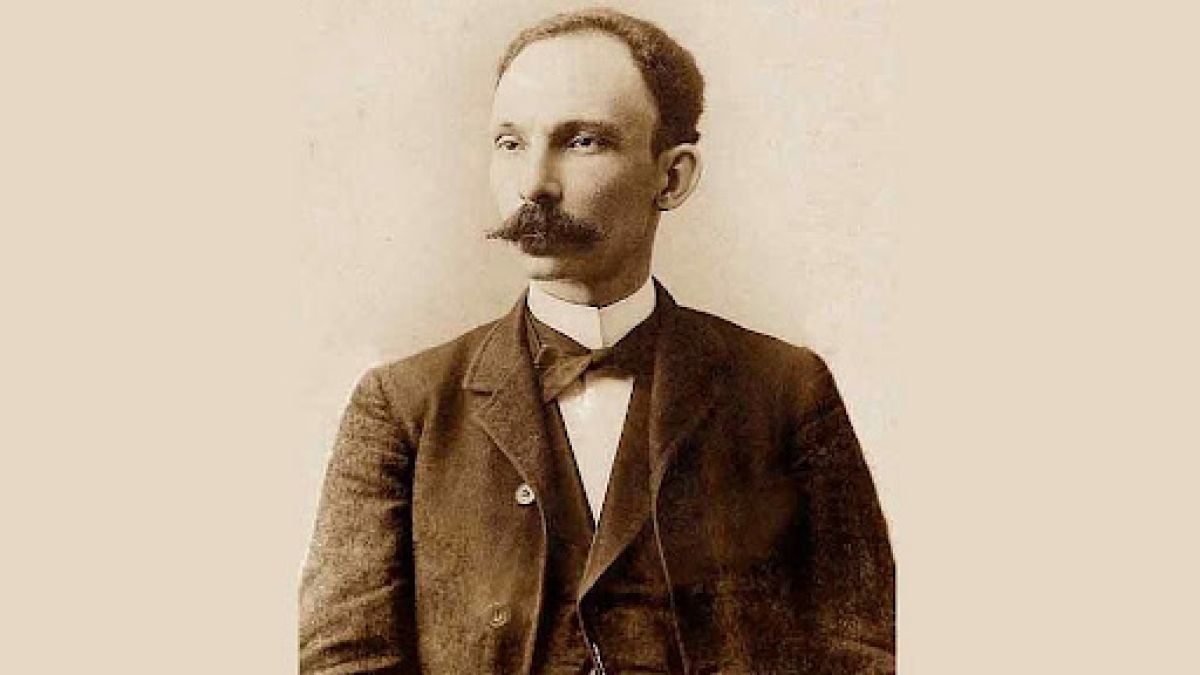
1881: Armed with love, José Martí arrived in Caracas
Internet
Published at: 21/01/2025 09:22 AM
They say that a traveler arrived in Caracas one day at dusk, and without brushing off the dust on the road, he didn't ask where he ate or slept, but how he went to where the statue of Bolivar was...
This is how the story Three Heroes begins, which is part of the book The Golden Age by José Martí and which pays tribute to three great fighters for independence in Latin America: Simón Bolívar, José de San Martín and Hidalgo. If we are guided by the beginning of the text, we can say that it has a somewhat autobiographical tone, because José Martí did just that when he arrived in Caracas in 1881.
José Martí is well received in the Venezuelan capital, so much so that on January 21, 1881, the Caracas intelligentsia warmly welcomed him to the Business Club, where Martí said:
“Thus, armed with love, I come to take my place in this sacred air, charged with the salts of the free sea and the powerful and inspiring spirit of egregious men; --to ask I come-- to the sons of Bolívar a position in the peace militia.”
During his short stay in Caracas, Martí founded the Revista Venezolana, of which only two issues, almost entirely written by him, are published. No less important was his work as a teacher of public speaking and literature at the capital's school of Santa María, where orphaned and under-resourced children attended, although children from various families in Caracas society also attended.
Martí was only in Venezuela for just six months, but they were enough to take an immense affection from that land, which is reflected in his farewell letter to his Venezuelan friend Teodoro Aldrey:
“I am a son of America: I owe it to her. And of America, to whose revelation, shaking and urgent foundation I dedicate myself, this is the cradle; there is no bitter cup for sweet lips; neither does the asp bite on manly breasts; nor do faithful children deny their crib. Give me Venezuela to serve her: she has a son in me.”
In this extract, Martí demonstrates his admiration and love for Venezuela, his respect for the people of Bolivar and his willingness to do anything for them. The Cuban hero affirms that he may have been Cuban by birth, but he already felt Venezuelan at heart.
They also say that when Martí arrived at the statue of Bolívar, he surrendered before his feet, raised his eyes to the sky and the sun reflected his face, and seeing how the statue moved as when a father approaches his son he said: Thank you Bolívar for having achieved the independence of your land, for having made insatiable efforts for the freedom of this continent that today professes the same love and respect for you as on the battlefield. Thanks to you, Libertador, today we feel free.
TELESUR/PABLO VIRGILI