203 years ago the Liberator met with San Martín in Guayaquil
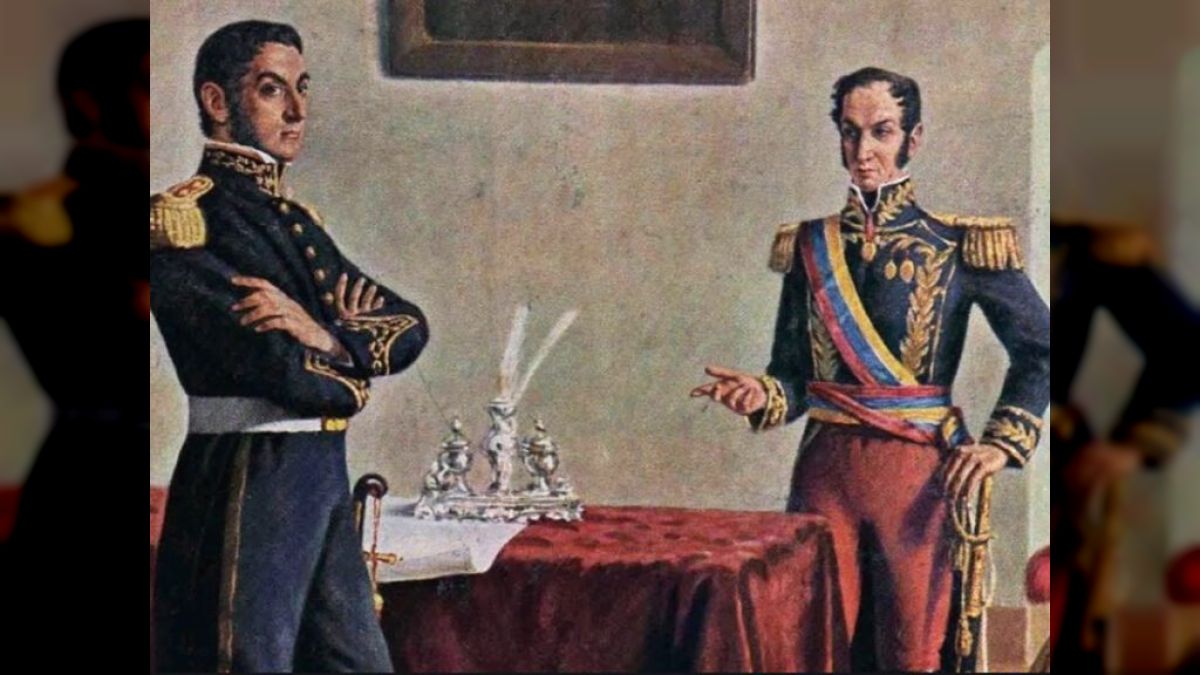
Photo: Internet
Published at: 26/07/2025 08:33 AM
On July 26, 1822, the Liberator Simon Bolivar held a meeting with José de San Martín in Guayaquil, Ecuador.
According to a document, found by the historian from New Granada, Armando Martínez, in the National Archives of Colombia, during that meeting both heroes exchanged ideas about the emancipatory process in the region.
The Alba Ciudad web portal said that the Colombian historian found a series of documents written by Bolívar's secretary, José Gabriel Pérez, who in his copier's book (supporting correspondence) shows that he sent a letter on July 29, 1822 to Antonio José de Sucre about the meeting between El Libertador and San Martín where both expressed their ideas about the destiny of Peru.
San Martín, according to Pérez, complained “a lot about the command and especially about his comrades in arms who had recently abandoned him in Lima. He assured that he was going to retire to Mendoza; that he had left an attached list for submission to the Congress, renouncing the Protectorate (of Lima) and that he would also renounce the re-election he counted on; that after winning the first victory, he would retire from military command without waiting to see the end of the war; but he added that before retiring, he intended to leave the foundations of the government well established, which should not be democratic because in Peru it is not appropriate and he said that a single and isolated prince should come from Europe to rule.”
Bolívar opposed it and said that neither America nor Colombia wanted to introduce European princes, who were alien to the masses and that he would oppose it, unless the people decided something like that. Faced with this opposition and Bolívar's defense of democracy and the Congress of Angostura, San Martín said that the principality could come later.
San Martín praised the idea of creating the Federation of American States, which Chile would have no problem entering but Buenos Aires would, and offered to negotiate a border agreement between Colombia and Peru. In the end, after offering all his help waiting for Colombia to do the same with Peru, the Protector made it clear that the meeting was an unofficial visit and without any political or military purpose.
After their meeting, it became clear to Bolívar that San Martín had neither the strength nor the military support to assume the final victory over the Spaniards, who had an important force in the richest viceroyalty and had an aristocracy that had little effect on republican ideas. As this threat had to be neutralized, Bolívar decided to recruit 4,000 new men who joined the Army of 5,000 veterans he had led, to go to upper Peru. Two years later, and after several battles, those of Ayacucho and Tumulsa ended the war against the Spanish.
“The letter confirms the suspicion that always existed about the monarchist position of San Martín, something that was not strange considering the failure of the first years of the democratic experience in Argentina. Even Brazil and Mexico decided to experiment with the constitutional monarchical path,” Martínez says.
Mazo News Team