Bartolomé Salom: Hero who fought fervently for the freedom of the Great Homeland (+birthday)
Internet
Published at: 24/08/2025 08:00 AM
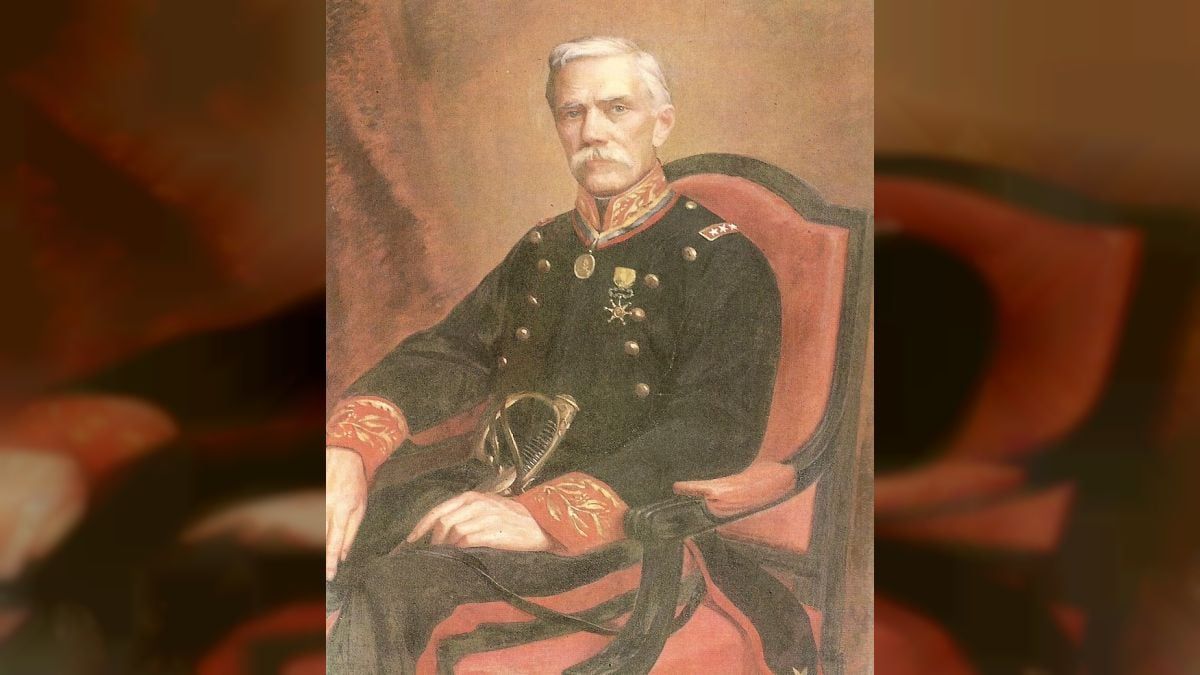
Bartolomé Antonio de la Concepción Salom Borges was born in Puerto Cabello, Carabobo state, on August 24, 1780. He was an honorable soldier and hero of the country's independence.
He was General in Chief of the Venezuelan Army in the War of Independence and in actions in subsequent years. Before the events of April 19, 1810, he worked as a merchant in his hometown, an activity that he abandoned to close ranks for the independence cause.
In May 1810, he occupied the position of second lieutenant of militias, and in July of the following year he was captain of artillery in the attack on Valencia, executed by General Francisco de Miranda. Then, under the orders of Miranda, he fought in La Victoria on June 20, 1812.
In 1815, after joining the fighting armies of New Granada, he was among the defenders of Cartagena. From there he went to Haiti, where under the orders of Simón Bolívar he was part of the Expedition of the Keys, participating with the rank of major general in the naval combat of Los Frailes (May 2, 1816) and in the capture of Carúpano, in this city, as a lieutenant colonel, he founded the National Artillery Corps of the Liberating Army.
Founded in Carúpano, the National Artillery Corps of the Liberating Army, he triumphed in 1817 with Piar in the battle of San Félix, Edo. Bolivar. In 1818, he fought in the siege and capture of San Fernando de Apure and in the battle of Ortiz, on April 26. The following year he was in the Battle of Boyacá, Colombia. In 1820, he was Governor and military commander of Tunja, Colombia.
Back in Venezuela, he took part in the Carabobo campaign, and was responsible for army logistics. In this sense, with the rank of colonel and with the position of Deputy Chief of the General Staff, he fought in the Battle of Carabobo (June 24, 1821). Later, as a brigadier general and chief of the Army General Staff, he participated in the campaign that will culminate in the victory of the republican forces in the Battle of Bombon a, on April 7, 1822. On August 4 of that year, he was appointed mayor of Guayaquil.
In November 1822, under the orders of General Antonio José de Sucre, he marched to Pasto (Colombia) to combat the insurrection that was taking place in that region. In short, this campaign ended with the occupation of Pasto by Sucre's troops, on November 24 of the same year.
Two years later, he received command of operations for the surrender of the fortified port of El Callao, Peru, and succeeded in getting the royalists to sign the capitulation in 1826. In March 1827, Salom returned to Venezuela and organized the Public Treasury in Carabobo. In addition, between May 1828 and April 1829, he served as commander and intendent of the then department of Maturín, Monagas state.
After the War of Independence, Salom retired to his ranch in San Esteban, where he remained until his death in his hometown. On October 30, 1863, he died, and his mortal remains have been resting in the National Pantheon since July 5, 1909.
Mazo News Team