Photo: Internet
Published at: 27/07/2025 08:14 AM
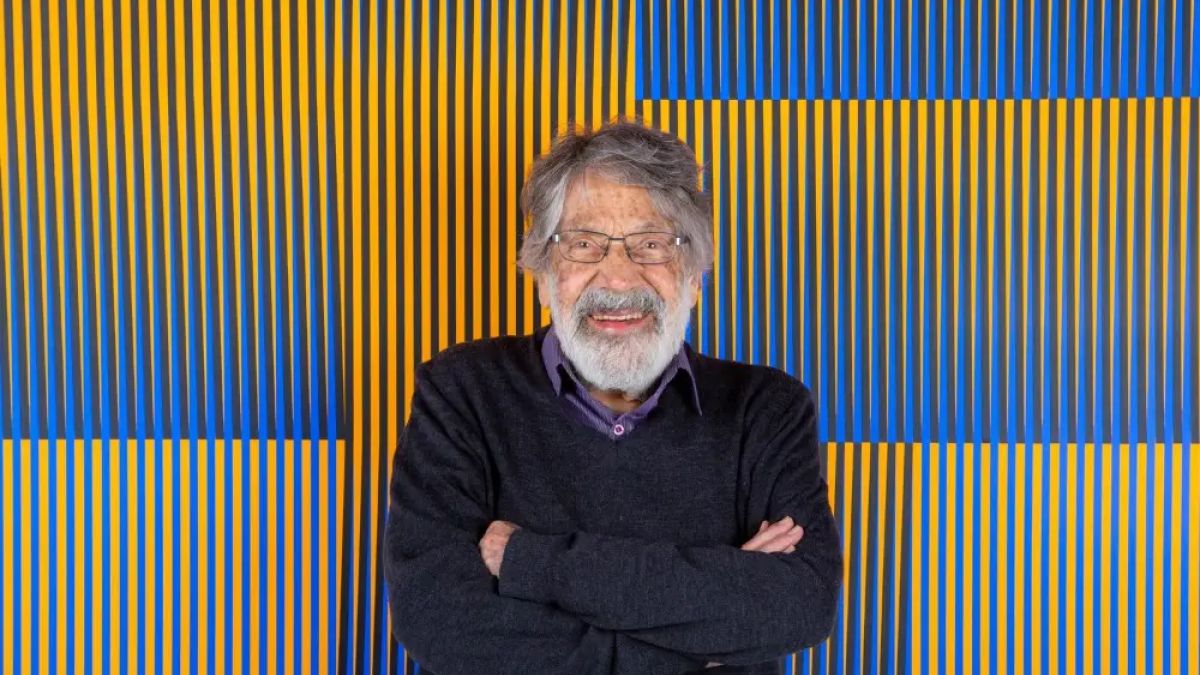
On July 27, 2019, Carlos Cruz-Diez, a prominent plastic artist considered to be the greatest representative of Venezuelan kinetic art, died in Paris, France.
Cruz-Diez was born in Caracas on August 17, 1932. In 1959 he created his first Physichromy (visual effects and in which he often applied colorful mixtures on a single plane, giving rise to a virtual or subjective color) and after successfully exhibiting a group of works with a kinetic tendency at the Museum of Fine Arts.
Together with Jesús Soto, Alejandro Otero and Juvenal Ravelo, they make up the kinetic movement in the country, which developed tremendously throughout the 20th century, to become one of the most prominent in Latin America.
Carlos Cruz-Diez's artistic proposition is based on his eight investigations that highlight the different behaviors of color: Additive Color, Physichromy, Chromatic Induction, Mechanical Chromointerference, Transchromy, Chromosaturation, Chromoscope and color in space. Each of these stages with significant works and where the artist's work can be observed.
In Venezuela, Cruz-Diez's works decorate various corners of the national geography. From the engine rooms of the Guri Hydroelectric Power Plant (Chromatic Setting, 1977-1986) to the Barquisimeto Radial Chromostructure (Homenaje al Sol, 1983), or the Chromatic Induction of the Stratos Tower in Valencia (1990), their geometric shapes and color mixes create characteristic environments. In 1992, he designed the Plaza de la Realidad Virtual, for the Venezuelan Pavilion representing national plastic art at Expo Sevilla 92, Spain.
This genius of kinetic art left an important legacy that has left its mark in various parts of the world that has inspired current national and international artists.
Mazo News Team