Gabriel García Márquez: Giant who portrayed the reality and magic of our America (+seeding)
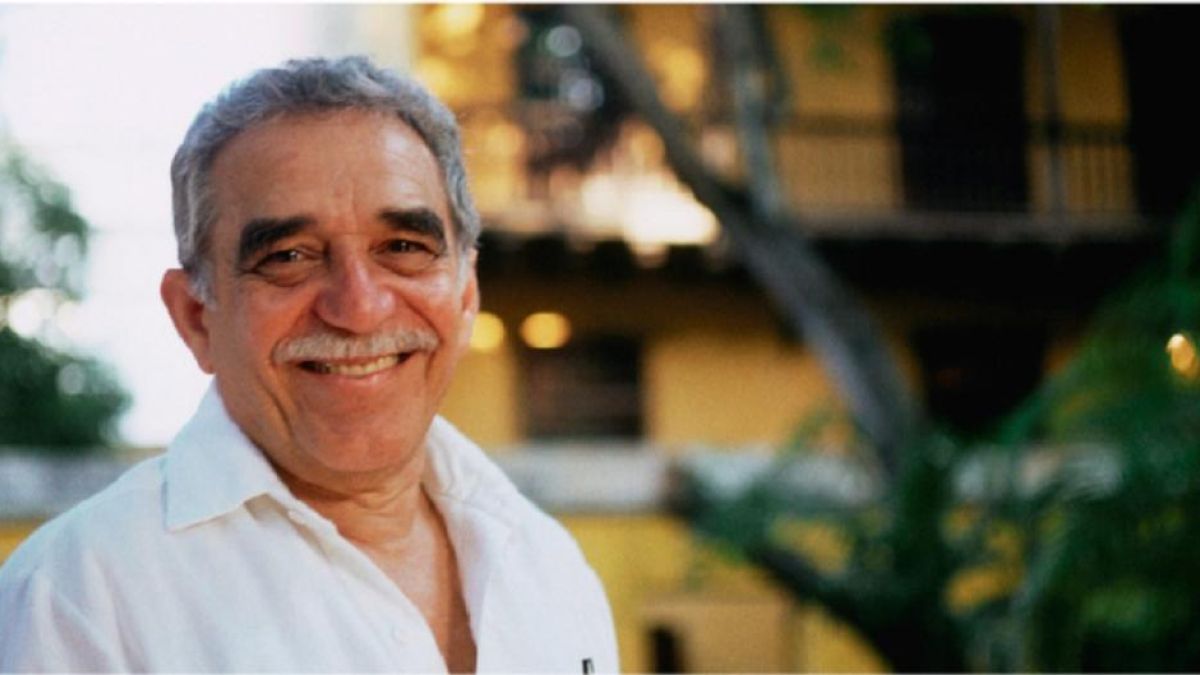
Photo: Internet
Published at: 17/04/2025 09:45 AM
On April 17, 2014, the writer, journalist, storyteller and novelist, Gabriel García Márquez, a master of Hispanic literature who captured the essence of the peoples of our America, died in Mexico City, where magical realism, satire and struggle intertwine to draw their history.
He was born on March 6, 1927, in the town of Aracata, Colombia. He grew up as an only child among his maternal grandparents and aunts, because his parents, the telegrapher Gabriel Eligio García and Luisa Santiaga Márquez, decided to leave for another destination. It was at the age of five that the boy Gabriel learned to write at the Montessori school in Aracataca.
From lawyer to writer
In 1947, under pressure from his parents, he moved to Bogotá to study law at the National University. Law studies were not exactly his passion, but he managed to consolidate his vocation as a writer. On September 13, 1947, he published his first story, “The Third Resignation”, in issue 80 of the Weekend supplement of the newspaper El Espectador.
In February 1954, García Márquez joined the editorial staff of El Espectador, where he initially became the first film columnist in Colombian journalism, and then a brilliant chronicler and reporter. The following year, the first issue of the magazine Mito appeared in Bogotá, under the direction of Jorge Gaitán Durán.
In that year of 1955, García Márquez won first prize in the contest of the Association of Writers and Artists; he published “La Hojarasca” and an extensive serialized report, “Story of a castaway”, which was censored by the regime of General Gustavo Rojas Pinilla.
European experience and its passage through Venezuela
The management of El Espectador decided that Gabriel García Márquez would leave the country for Geneva, to cover the Big Four conference, and then to Rome, where apparently Pope Pius XII was dying.
He was absent from Colombia for three years. He spent a long time in Paris, and toured Poland and Hungary, the German Democratic Republic, Czechoslovakia and the Soviet Union. He continued as a correspondent for El Espectador, although in precarious conditions, because although he wrote two novels, The Colonel has no one to write to him and The Bad Hour, he lived in poverty waiting for the monthly return that El Espectador should send him but which was delayed.
At the end of 1957, he was linked to the magazine Momento and traveled to Venezuela, where he could witness the last moments of the dictatorship of General Marcos Pérez Jiménez and where, after getting married, he decided to work for the magazine Venezuela Gráfica.
Macondo and the Buendía family re-emerge
One day in 1966 when he was on his way from Mexico City to the resort of Acapulco, Gabriel García Márquez had the sudden vision of the novel that had been ruminating for seventeen years. He considered that she was already mature, sat at the typewriter and worked eight and more hours a day for eighteen straight months, while his wife took care of the household, an effort that gave birth to “One Hundred Years of Solitude”, this writer's masterpiece.
During the following decades he would write five more novels and three volumes of short stories and two stories would be published, as well as important compilations of his journalistic and narrative production, which he confessed were sent to his favorite publisher and his great friend, Commander Fidel Castro.
In the early morning of October 21, 1982, García Márquez received news that he had been waiting for a long time at that time: the Swedish Academy had just awarded him the long-awaited Nobel Prize in Literature.
Today, the peoples of the world remember more of this unworthy writer of our America, who continues to enlighten the minds of those who immerse themselves in the literary work of the great Gabo, who eternalized in the heat of his prose
Mazo News Team