Hinterlaces: More than 60% of Venezuelans demand trial of traitors to the Fatherland
Internet
Published at: 03/12/2024 09:12 PM
More than 85% of Venezuelans reject any type of military or violent intervention, as extremist sectors have requested to overthrow the President of the Republic, Nicolás Maduro, and more than 63% want the political leaders of the extreme right who called for sanctions and economic aggression against Venezuela to be prosecuted for treason, reveals a recent opinion poll conducted in November by the company Hinterlaces.
With regard to the 63% of responses that demand a trial of political leaders who are considered traitors to the Fatherland, the president of the polling company, Oscar Shéme l, believes that this indicator reveals that the country in the vast majority rejects the serious damage caused by this opposition policy. “People want peace, they want union, they want investment, production, they want better income,” he said.
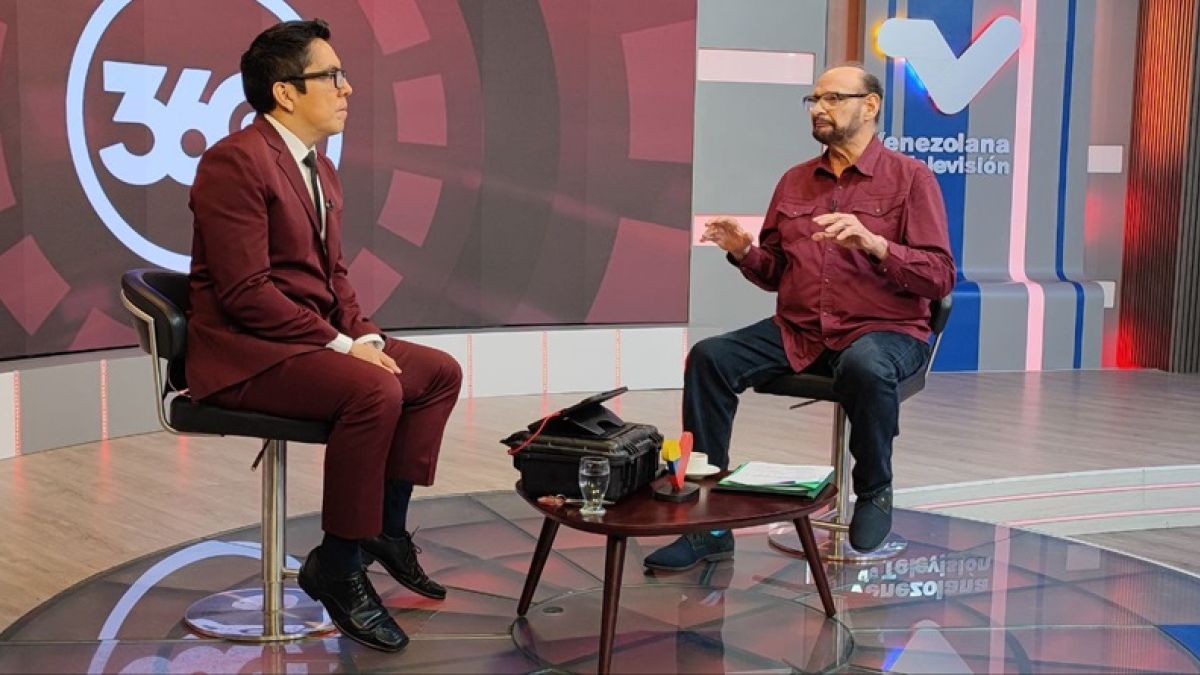
These five words concentrate the overwhelming majority of the aspirations of Venezuelans,” Schémel said during a special interview on the 360º program, broadcast by Venezolana de Televisión.
“The majority rejects sanctions, rejects military intervention, rejects interference (...) In fact, almost 90% of Venezuelans already think that sanctions have harmed and affected everyone, and not just political leaders or leaders, which is what the opposition has proposed when it manages the thesis or tries to manage that option that sanctions are aimed exclusively at officials and political leadership,” he explained.
Schémel reported that, in another question in the poll, 76% of Venezuelans agree to close the electoral chapter and start working as a national union for the country. This figure is consistent with the 73% who support President Maduro in his swearing in on January 10, against the 20% who believe that the former fugitive candidate in Spain, Edmundo González Urrutia, will do so.
In another of the results sheets, 47% answered that the change will be made by Venezuelans with more and more work, and 36% pointed to the National Government as the actor of this change that will begin in 2025.
Then, there are a significant number of opinions that consider businessmen, students, young people and workers to promote work and the future. “We are talking about a large majority who consider that everyone's work is vital to move the country forward,” he said.
“People are saturated with violence and confrontation, which is nothing positive. For this reason, 76% want calm and leave behind the electoral and political conflict, close the electoral chapter and start working together for a better country, without divisions or conflicts,” he said.
Regarding the call of the extremist María Corina Machado to march last weekend, which resulted in a resounding failure, Schémel had no hesitation in stating that this attempt at mobilization was marked by mockery and disqualification.
“The opposition from the beginning was marked by the mockery of claiming that the most lethal weapon, other than the battle weapon that will overthrow or displace President Maduro from power, is lipstick,” he said.
He added that “this generated a lot of ridicule, a lot of laughter, that is, the narratives and symbols used do not connect with the mood, the emotional state of most Venezuelans and they have already lost their capacity to summon, to mobilize, to create identification,” he said.
He commented that this is an opposition problem that has dragged on for a quarter of a century, “it doesn't end up becoming an alternative; it benefits from the discontent of a sector of the population that qualifies government management and economic management as negative and that benefits neurological voting, which is a sector of the population that doesn't care about who the candidate is or his proposals or his credentials; what matters to him is to go out and what he perceives to be causing neurosis, he associates it with uncertainty, anger”.
In contrasting this historic opposition failure, he is confronted with the offers of Chavism, which has built an emotional community, a class identity and a popular national culture that allows him to strengthen his positions in Venezuelan society. “With their capacity to mobilize, to persuade Venezuelans,” he said.
Schémel believes that the revolutionary sector has come to renew linguistic narratives, in what he called a “new love letter” for all Venezuelans of today and those of the future.
In that sense, he commented that the concept of the Historical Bloc is an interesting and renewing idea.
“The President himself said it: we are entering a new phase, we must build a new historic block, that is what fundamentally reveals the need to renew the repertoires that the movement has,” he stressed.
Mazo News Team