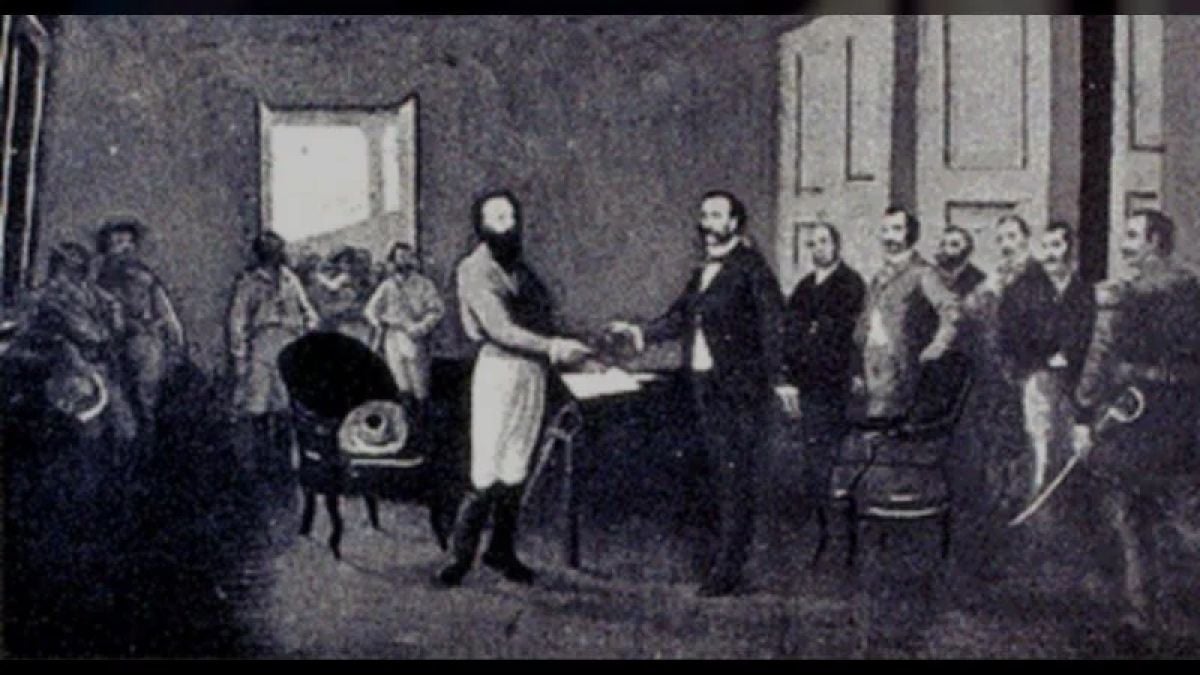
In 1863, the Automobile Treaty was signed.
Internet
Published at: 24/04/2025 08:20 AM
On April 24, 1863, the Car Treaty was signed, which marked the end of five years of fighting between Venezuelan brothers, known today as the Federal War. This treaty established the peace of the nation and called for the organization of a National Assembly, which would consist of 80 members: half elected by the then Supreme Head of the Republic, José Antonio Páez, and the other half by the Provisional President of the Federation, Juan Crisóstomo Falcón.
This Convention provided for the definitive cessation of hostilities, the prohibition of new recruitment and the formation of law enforcement brigades aimed at preventing any outbreak of violence. According to the chroniclers of the time, the Car Treaty not only involved the aspects mentioned above, after such a protracted and bloody civil war, in which popular participation was primarily highlighted, it meant the opening of a new historical horizon for the country, by adopting the federalist orientation that the national government would have from then on.
Among the consequences of the signing of this treaty signed in Caracas, on a farm in Coche, we can mention: the access of liberals to power without any change in social structures or compliance with the proposed demands; economic losses with their effects on agriculture, livestock and commerce; the abandonment of the countryside by the population for fear of becoming victims of bloody struggles and the historic delay in fulfilling popular needs, events that marked the end of the Federal War in Venezuela.
Mazo News Team