IVIC develops a project with essential oils for the control of crop pests
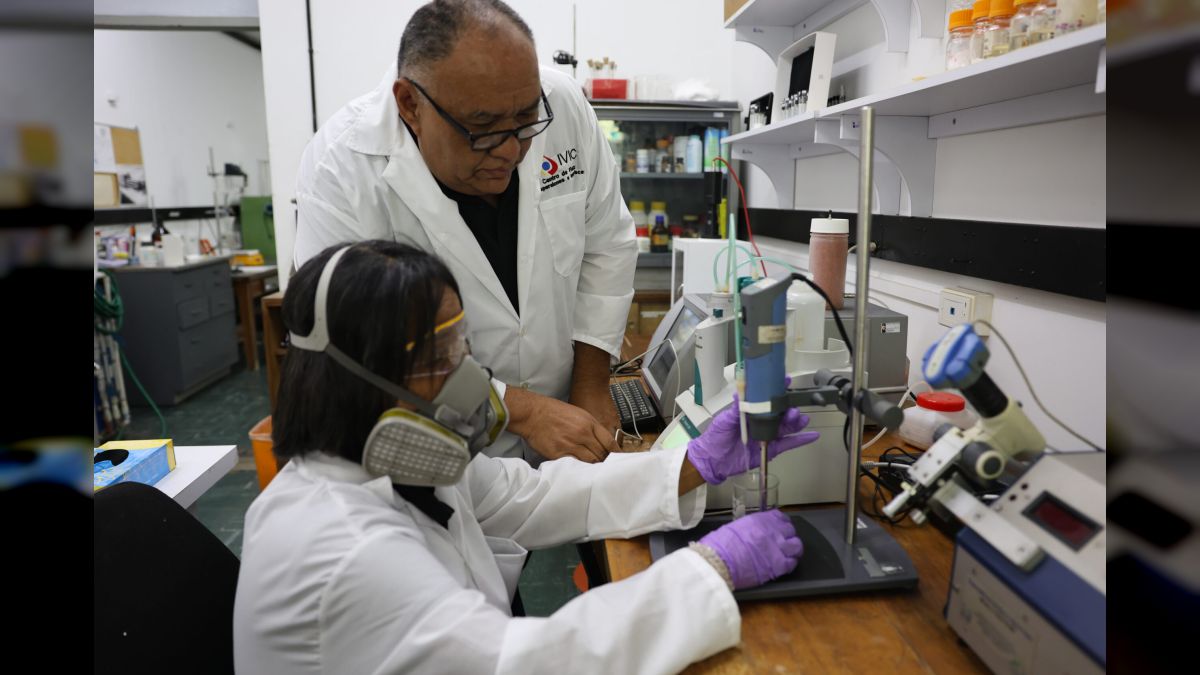
Photo: MINCYT
Published at: 03/06/2025 09:07 AM
In Venezuela, the scientific community is working on the development of projects that make it possible to advance the control of crop pests, through different methods, in order to keep them at levels that do not cause harm to the agricultural sector and, in addition, to minimize environmental impact and exposure to chemicals.
One of these projects is being developed at the Venezuelan Institute for Scientific Research (IVIC), in the Physics Center, specifically in the Laboratory of Dispersions and Interfaces, which is in charge of the doctor in the area of Physico-Chemistry, Aly Castellanos.
According to a press release from the Ministry of Science and Technology (MINCYT), Castellano explained that nanoemulsions “are nothing more than nanometric particles that are between 10 and 200 nanometers and that serve to make the controlled delivery of essential oils to the inner part of the cells”.
Dr. Castellanos pointed out that the intention of using essential oils is that they are not toxic to humans, but are toxic to pests.
“Why essential oils? Because essential oils are not toxic to us humans, but they are toxic to some insects, fungi and bacteria. These oils, once nanoemulsified, can penetrate both animal and vegetable membranes, and once they penetrate the membranes they release this oil, making them lethal to the insect,” he said.
The researcher explained that these studies are carried out together with the staff of the Ecology Center, who are responsible for carrying out the evaluation, both at the nursery level and at the field cultivation level.
Dr. Castellanos stressed that this project seeks to strengthen the agri-food sector, providing an “agroecological, sustainable alternative that allows us to obtain organic production, free of pesticides”. The importance of eliminating pesticides in pest control systems —explained the Venezuelan scientist— is due to the different studies that reveal the presence of pesticides, herbicides and fungicides in breast milk, in the brain of children and in some food products, such as fish.
Mazo News Team