IVIC develops low-cost sensor network to monitor climate and pollution
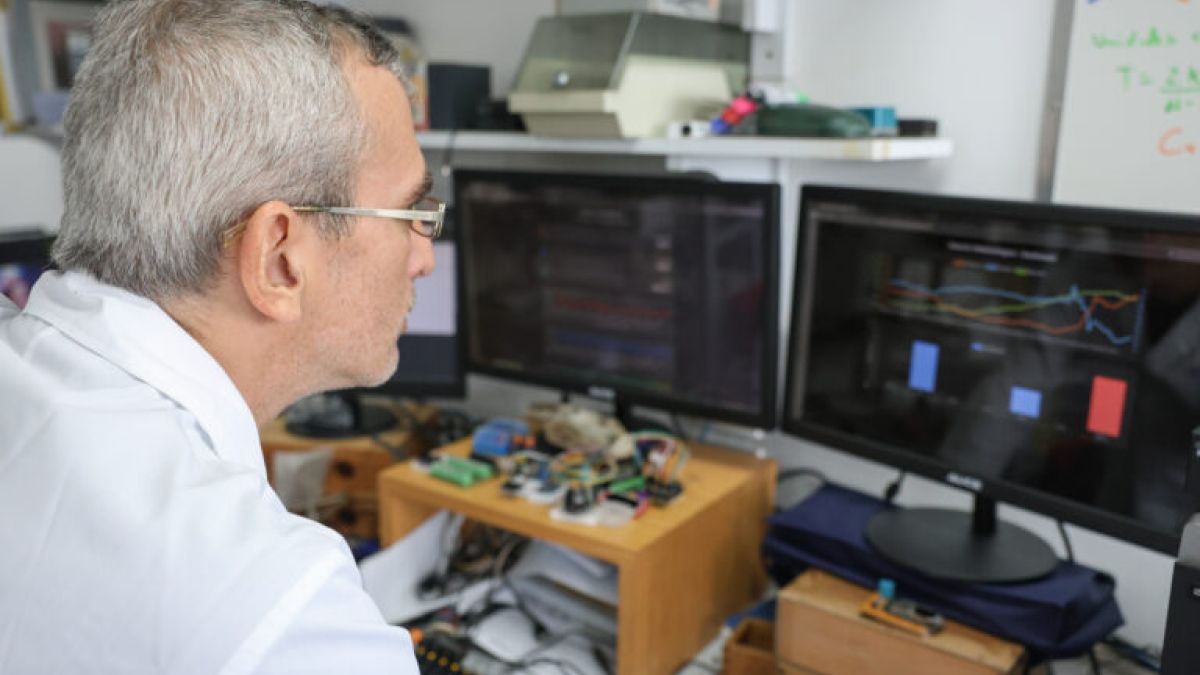
Photo: MINCYT
Published at: 18/05/2026 03:57 PM
The Center for Atmospheric Sciences and Biogeochemistry of the Venezuelan Institute for Scientific Research (IVIC) is leading the design of a technological project that seeks to transform Caracas into a smart city. Under the direction of researcher Luis Vásquez, the initiative deploys a network of nationally designed meteorological sensors, aimed at measuring the urban heat island phenomenon and optimizing environmental public management.
Unlike conventional weather stations, whose cost in the international market ranges from 2,500 to 3,000 dollars, the IVIC team managed to develop local prototypes with an investment of approximately 150 dollars. “In terms of cost, the advantage is incredible,” says Vázquez.
Although the basic electronic components are imported, the innovation lies entirely in Venezuelan talent, since the design of the boards, the circuit boards and the programming of the microcontrollers are of national origin.
Vásquez assured that the device has the capacity to transmit data via the web in real time to a monitoring center.
The objective of the project, according to a press release from the Ministry of Science and Technology, is to achieve a density of two sensors per square kilometer for unprecedented accuracy. “The ideal would be to be able to place at least one sensor every 500 meters to have an ideal measurement,” he said.
He also mentioned that these devices measure a full spectrum of critical variables such as temperature, humidity, atmospheric pressure, wind speed and direction, as well as soil moisture.
In addition, the prompt integration of sensors to detect PM2.5 polluting particles is contemplated.
The researcher emphasized that this information will allow authorities to make decisions based on scientific evidence for the formulation of public policies.
“This data translates into public policies in the sense that you can have a sense of whether there is too much accumulation of moisture in a certain soil to anticipate a landslide, or to be able to predict the change of position of a bus stop,” he added.
A fundamental aspect of the project is its open science nature, which ensures that information is available in real time to the entire public.
He specified that the project is focused on providing security to devices and stability to transmission, and will be expanded with rigorous scientific criteria.
The engineer noted that its scalable nature makes it possible to design its use not only in urban environments, but also in rural areas, “because it could also be used to measure the incidence of rain and the direction of the winds for crops.”
Finally, Vázquez is confident that with the launch of this initiative, Caracas will become a clean and technological city for the next decade.
Mazo News Team