José Antonio Páez: The Lion of Payara (+Christmas)
Internet
Published at: 13/06/2025 09:18 AM
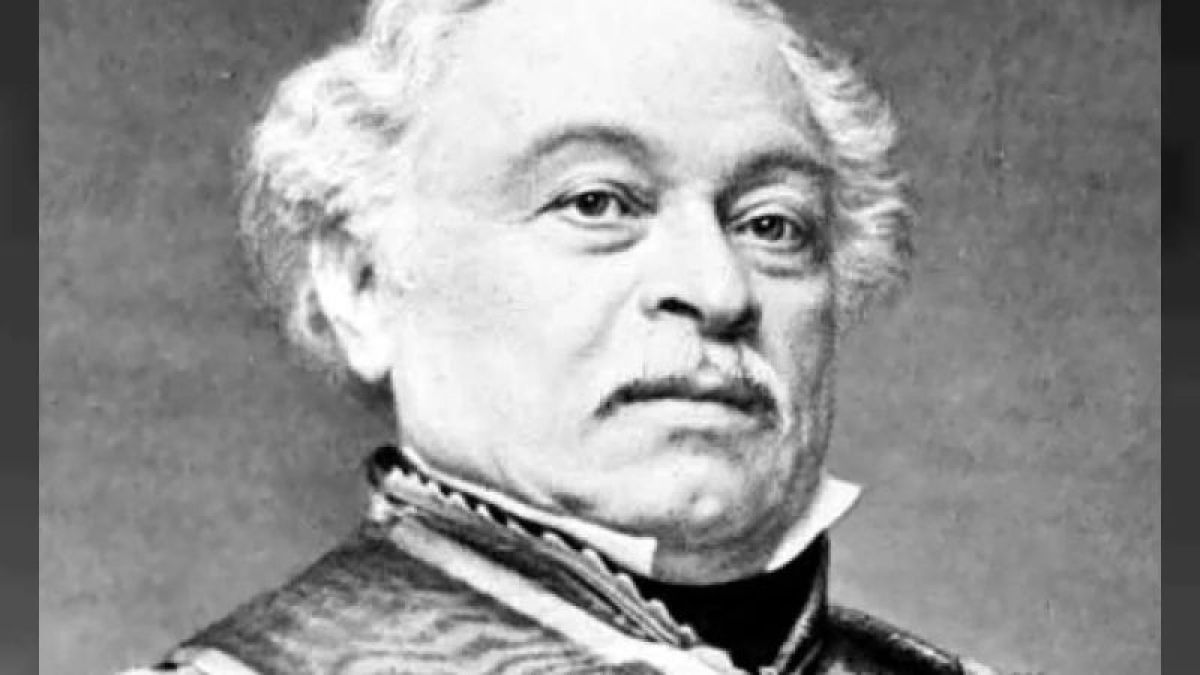
The General in Chief of the Liberation Army, José Antonio Páez, who was president of Venezuela three times, was born on June 13, 1790 in Curpa, the current Portuguese state.
He was known in some places as the Centaur of Los Llanos or as the Lion of Payara. In 1810 he began his military career when he joined the cavalry squad organized and commanded by Antonio Pulido, his patron. He served there until 1813 when he asked to leave.
Soon after, in Santa Bárbara de Barinas, he joined the patriotic troops commanded by Pulido, with whom he followed Barinas. There he received the order to attack Miguel Marcelino, who occupied Canaguá. With 400 horsemen, he executed the order, and for his performance he was promoted to Captain.
He participated in the battles of El Yagual (1816), Mucuritas (1817); in the Toma de Las Flecheras, the battles of Calabozo, Uriosa and the battle of El Sombrero, in 1818 and Las Queseras del Medio (1819). On January 30, 1818, in Hato Cañafístola, Páez, already with the rank of Brigadier General, he met with the Liberator Simón Bolívar, who came from Angostura. The meeting served the patriotic cause to unite the troops of the two great chiefs and to be able to face the powerful army of Pablo Morillo.
Starting in 1822, Páez served as civilian military leader of the Department of Venezuela, a position that was ratified by the Liberator Simón Bolívar, in 1826, the date on which he led the La Cosiata movement, which opposed the implementation of the Constitution of Cucuta (1821) and the implementation of some measures taken from Bogotá by Santander and the Bogotá oligarchy.
He assumed the provisional government in 1830, appointed by the Constituent Congress of Valencia; and was later elected Constitutional President for the period 1831-1834. In 1838 he was elected to a second presidency, which he assumed from February 1, 1839 to 1843, when he was replaced in the presidency by Carlos Soublette. On August 13, 1863, he left permanently for the United States, where he settled until the moment of his death.
Despite the military exploits carried out by Páez that made him a fundamental part of the Venezuelan independence process, it is important to highlight that his ambitions for power led him to betray the Liberator Simon Bolivar and the ideals that the father of the Fatherland proclaimed. From our country, together with the national oligarchy (especially the Caracas and the Valencian oligarchy), he promoted the separation of Venezuela from the Republic of Colombia, being the main driver of the La Cosiata separatist movement in 1826.
He died in New York, United States, on May 6, 1873, at the age of 83.
Mazo News Team