Mexican President Claudia Sheinbaum denounced the paid digital strategy of the Generation Z march
Internet
Published at: 14/11/2025 09:37 PM
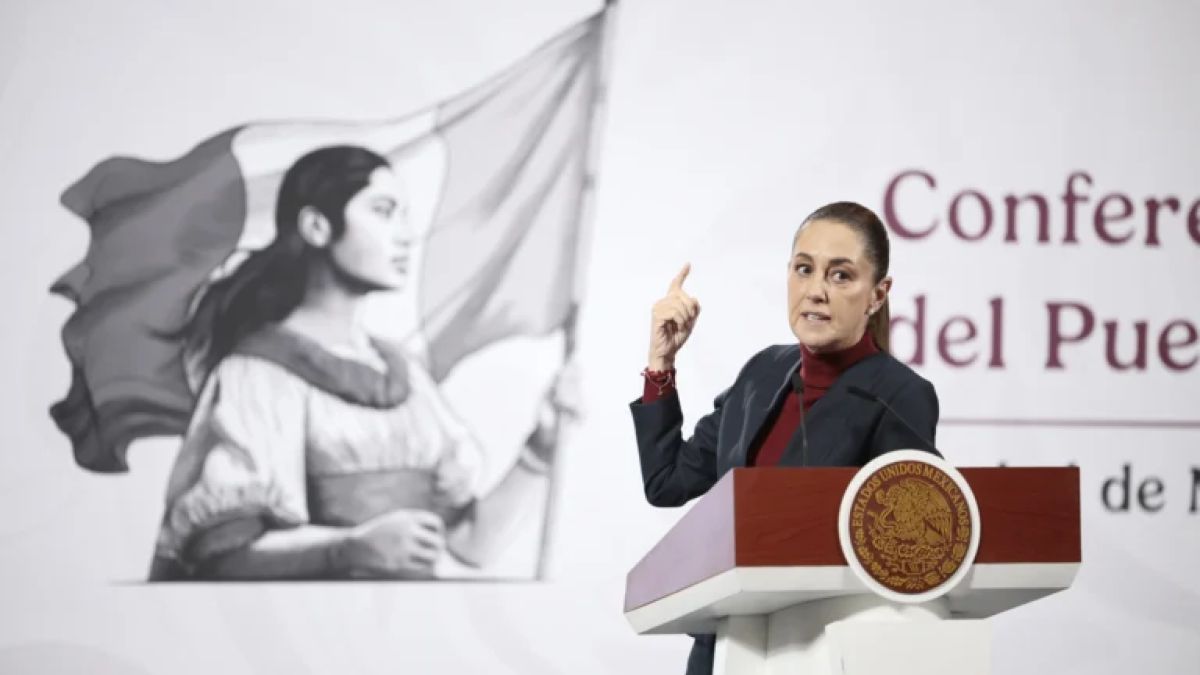
The president of Mexico, Claudia Sheinbaum, said that the call for the march this Saturday, November 15, released under the name of “Generation Z”, does not have a genuine origin, but is part of a paid digital strategy, promoted from abroad and linked to international right-wing networks.
President Sheinbaum stressed that there are young people with legitimate demands, but highlights the importance of identifying who is actually organizing the mobilization and how external structures that seek to intervene in Mexican politics through digital campaigns operate, the Telesur website reported.
According to an analysis prepared by the Government team about this campaign organized from abroad, the expenditure allocated to promotion on social networks exceeded 90 million pesos between October and November. That figure does not correspond to a spontaneous movement, they reported from the Executive.
During the press conference, the coordinator of Infodemia, Miguel Ángel Elorza Vázquez, presented a report that links the call to the Atlas Network, an organization known to finance disinformation campaigns against progressive governments in Latin America.
The study carried out by the Public Broadcasting System identifies that the campaign was structured from recently created accounts, managed in part from Spain, the United States and Bolivia, and that used artificial intelligence to produce content.
Elorza explains that the “Generation Z-MX” account, presented as non-partisan, has a history of publications aligned with opposition figures from Mexico and the region, and resumed activity as the call for the march, scheduled for this Saturday 15th, approached.
According to the analysis, 179 TikTok accounts and 359 Facebook communities promoted synchronized mobilization, with digital behavior that Infodemia describes as inorganic and highly coordinated. At least 28 administrators of these pages are located outside the country.
The report also detected the participation of politicians, communicators and influencers linked to conservative sectors, including former president Vicente Fox, businessman Claudio X. González, Alessandra Rojo de la Vega and businessman Ricardo Salinas Pliego, as well as digital promoters from Argentina, Venezuela and the United States associated with information manipulation campaigns. According to Elorza, these actors would have promoted content that sought to attribute the mobilization to a supposed spontaneous youth wave.
The Mexican Government maintains that the operation is part of a transnational network that attempts to intervene in political processes through digital strategies, a practice that has already been documented in other countries in the region.
That is why the Mexican president confirms that digital analyses will continue to clarify the structure of the campaign and its international ties.