Simon Bolivar: The Giant who embodied moral values for the freedom of the Great Homeland (+birth)
Internet
Published at: 24/07/2025 06:00 AM
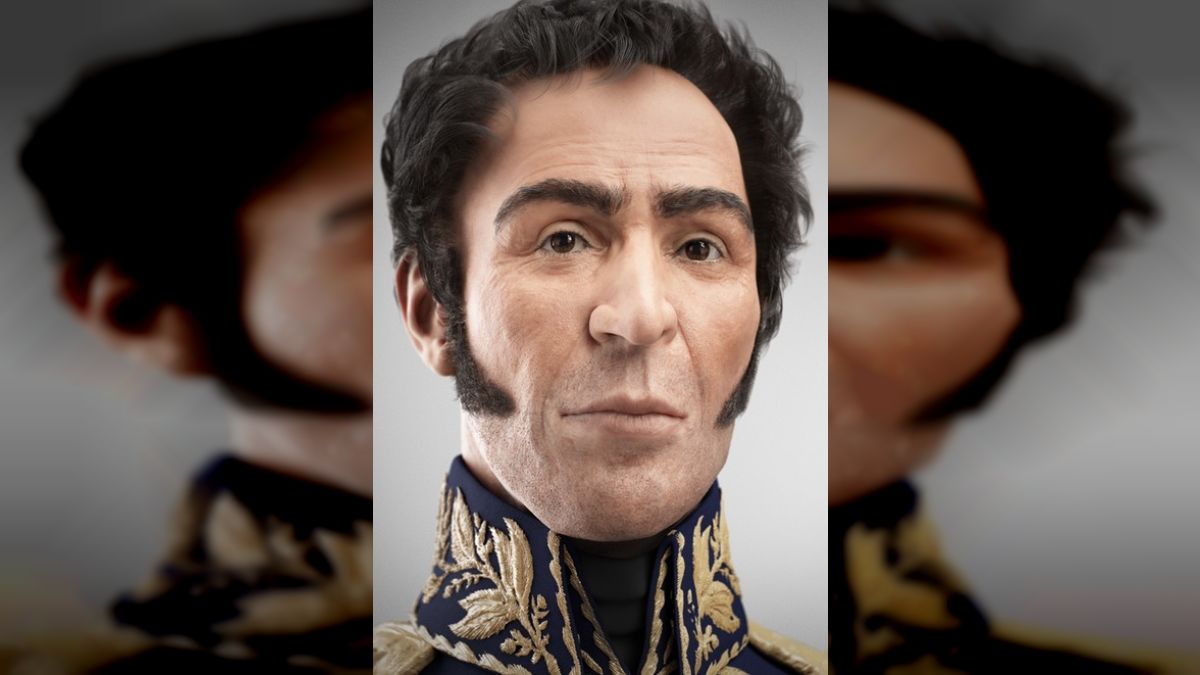
On July 24, 1783, José Antonio de la Santísima Trinidad Bolívar Palacios y Blanco was born in Caracas, Venezuela, known as our Liberator Simon Bolivar.
Bolívar was a military and politician of the pre-republican era of the Captaincy General of Venezuela, founder of Gran Colombia and one of the most prominent figures of American emancipation from the Spanish Empire. His parents were Juan Vicente Bolívar y Ponte and Doña María de la Concepción Palacios y Blanco, both Creoles.
When he was orphaned, when he was barely 9 years old, the audience entrusted his education to Simón Rodríguez, who initiated him into the study of French encyclopedists. At the age of 15, in 1799, Simon went to Spain to continue his education with his friend Esteban Escobar. In that country he met María Teresa Rodríguez del Toro y Alayza, whom he married in 1802. Shortly after returning to Venezuela, in 1803, María Teresa died of yellow fever, her death greatly affected Bolívar, who swore never to marry again (a promise he kept the rest of his life).
After losing his wife, Bolívar returned to Spain with his tutor and friend, Rodríguez, in 1804. In Europe, he witnessed the proclamation of Napoleon Bonaparte as French Emperor and then attended his coronation as King of Italy in Milan. In Paris, he came into contact with the ideas of the revolution and met Napoleon and Humboldt personally.
Already in 1805 he swore in Rome that he would not rest until he freed his country from Spanish domination. And although he lacked military training, Our Liberator became the main leader of the war for the independence of the Spanish-American colonies. In addition, he provided the movement with an ideological basis through his own writings and speeches.
In 1810, he joined the independence revolution that broke out in Venezuela, led by Miranda. The failure of that attempt forced Bolívar to flee the country in 1812, that's how he put himself in charge of the movement, writing the Cartagena Manifesto from Cartagena de Indias, which again incited rebellion. In that manifesto, he asked New Granada for help to liberate Venezuela because their cause was the same. This is how Bolívar received this assistance and in 1813 he launched a second revolution, which triumphantly entered Caracas on August 6 and where he would be ratified the title given to him by the Cabildo de Mérida de El Libertador, which has since remained united to his name.
Bolívar's great goal and dream was to form a great confederation that would unite all the former Spanish colonies in America. For this reason, despite having achieved the liberation of Venezuela, he fought for other independence. He crossed the Andes and defeated the Spanish royalist troops in the battle of Boyacá (1819), which freed the Viceroyalty of New Granada (present-day Colombia). On December 17 of that year, the Republic of Gran Colombia was created (which included what are now Colombia, Venezuela, Ecuador and Panama).
On May 8, 1830, Bolívar left Bogotá and in June he arrived in Cartagena where the locals encourage him to continue fighting, while in Bogotá the campaign against him continues. On July 1, General Mariano Montilla informed Bolívar of the assassination of the Grand Marshal of Ayacucho, news that disappointed him.
He arrived in Santa Marta on December 1, 1830 and his health declined a few days later, with some moments of clarity that allowed him to dictate his will and his last proclamation, where he cried out that his death would at least allow the consolidation of the union and the disappearance of the parties.
On December 17, 1830, at 47 years of age. At one and three minutes in the afternoon, the Colombian sun died, according to the official statement. The mortal remains of the Liberator were buried in the main altar of the sumptuous Cathedral Basilica of Santa Marta, and in that sacred enclosure they lived peacefully, until December 1842, when they were transferred to their country of origin Venezuela and taken to the National Pantheon, thus fulfilling the mandate of his will.
However, in 2010, the Eternal Commander, Hugo Rafael Chávez Frías, ordered a mausoleum to be built for the greatest hero of the country, just behind the Pantheon and with internal communication between them. Since May 14, 2013, under the mandate of President Nicolás Maduro, El Libertador has been based on that modern structure.
Mazo News Team