
THE CARACAZO
Published at: 04/03/2026 09:00 PM
(Latest News, February 27 - March 11 1989/SIC Magazine No. 513 - April 1989)
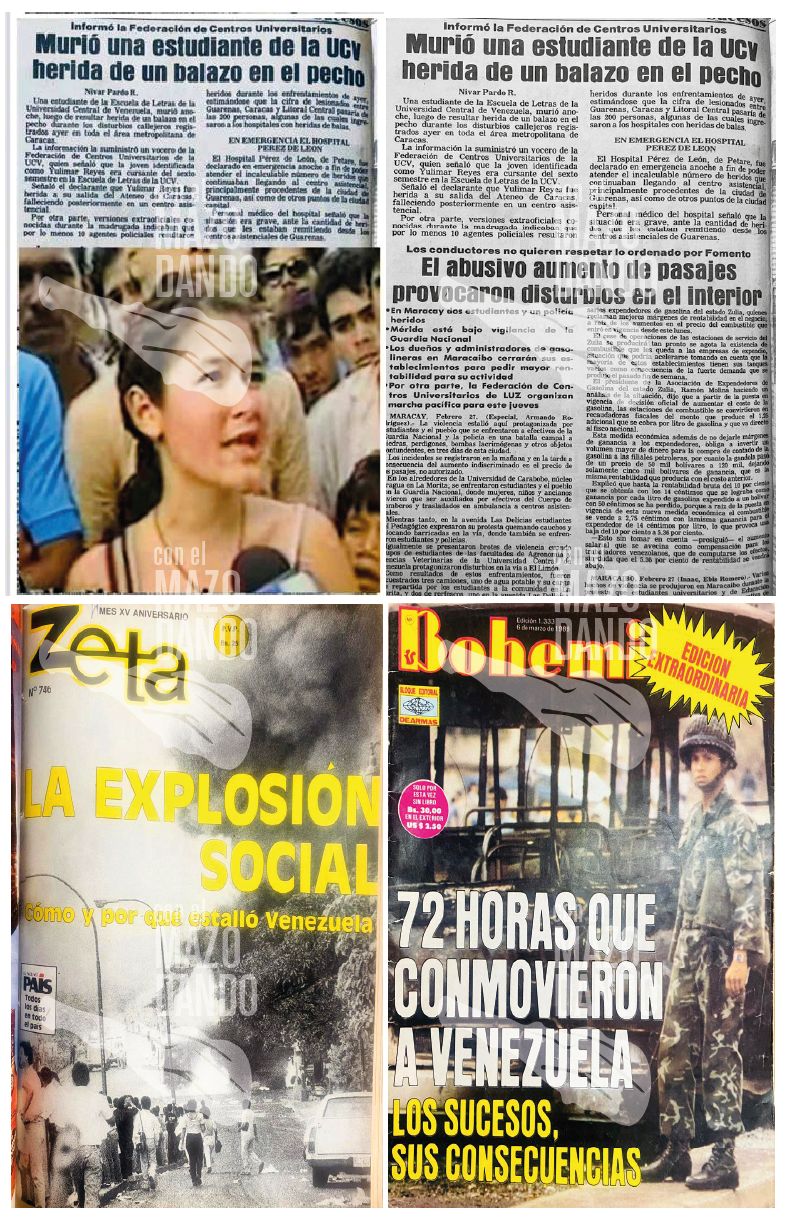
- The events that occurred in Venezuela between February 27 and 28 and the subsequent days of March 1989, known as “El Caracazo”, are the most genuine expression of an authentic social outbreak that broke out against the degraded political classes that for decades systematically violated the Fundamental Rights of the People until they forced them to explode.
- For many years, the spirit of rebellion was slowly building up in the collective consciousness. The open secret, so often muttered, finally occurred: “What will happen the day they come down from the hills?” . Finally, they stubbornly went down to do justice and were mercilessly massacred.
- Until those dismal dates, for 31 years, Democratic Action (AD) and Copei installed a true Factory of Poverty in Venezuela. A time bomb. To reverse the ravages of the lack of basic products, the prevailing misery and corruption, in the face of which the masses suddenly chose to exercise the strong moral force of their mobilization, powerfully overwhelmed and transformed into social rebellion.
- Guarenas was the epicenter of this popular earthquake, whose shock wave immediately reached Caracas and spread within a few hours to La Guaira, Maracay, La Victoria, Ciudad Bolivar, San Félix, Barquisimeto, Valencia, Mérida, Trujillo and Maracaibo.
- The government of Carlos Andrés Pérez, always arbitrary, arrogant, mediocre and short-sighted, chose, as always, the path of repression, destroying thousands of innocent people in the neighborhoods.
- To contain it, Pérez once again played his best role as a police thug, authorizing the discretionary use of weapons against unarmed people who went out to look for food and basic necessities.
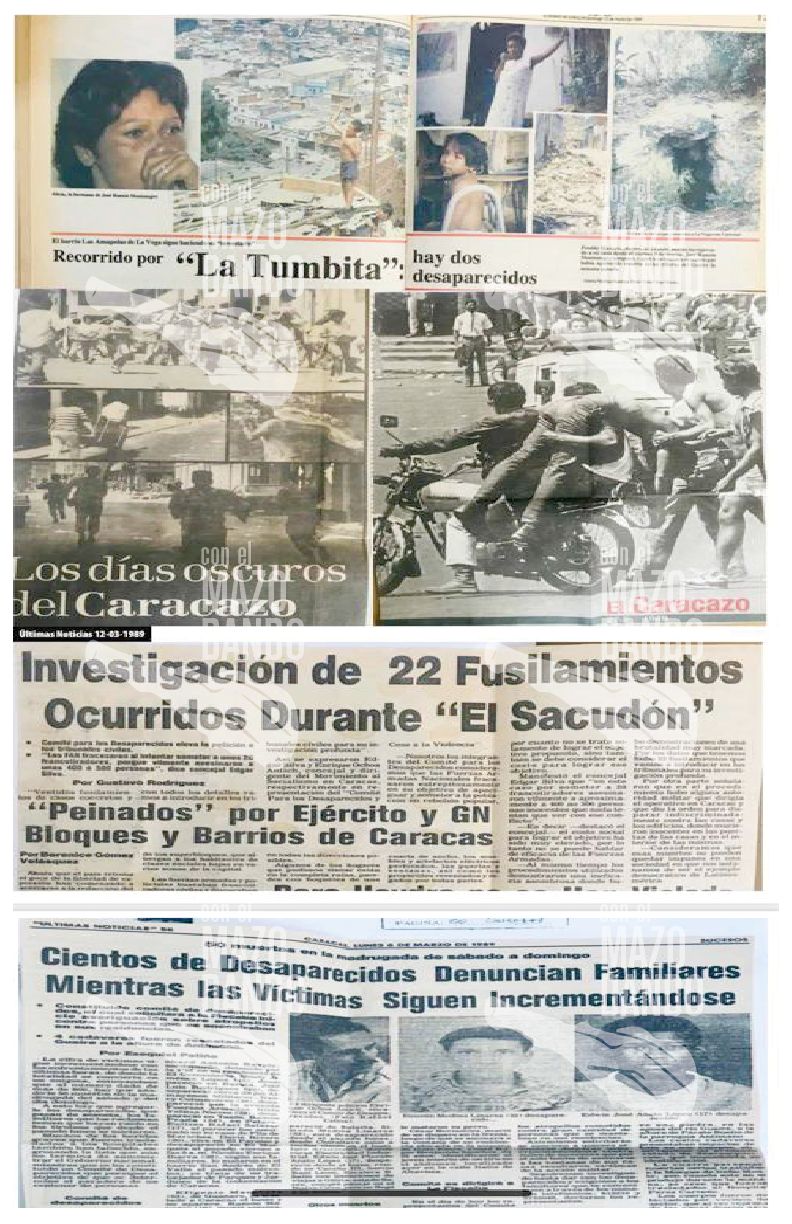
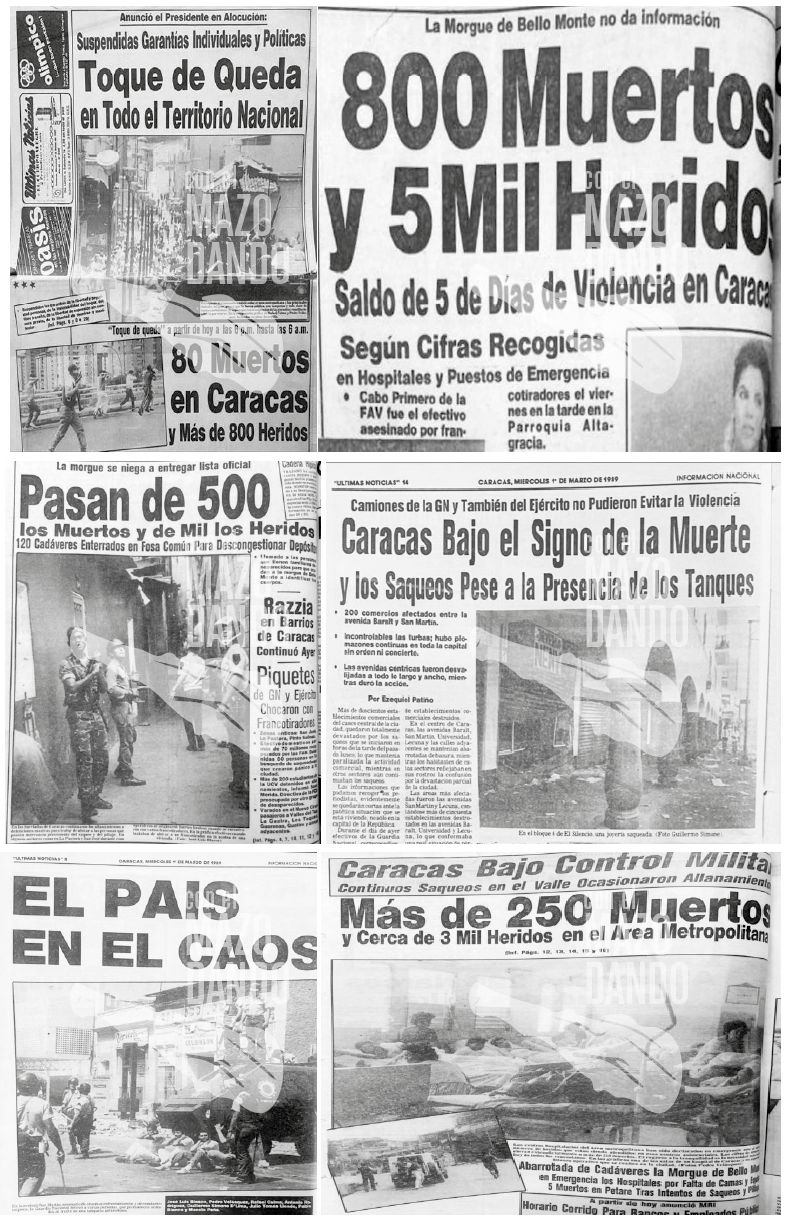
- Between February 28 and March 1, morgues collapsed, and funeral homes reported “not having enough urns for so many bodies.” In just three days, 800 victims who died as a result of genocidal government action were admitted to hospital emergencies in the Metropolitan Area of Caracas without life.
- To strip them of all identity and disappear them, the government opted for the formula of stacking them in the background of mass graves. Thus, there were mass graves in El Valle, La Montañita, Caucagüita, La Vega and Guarenas, yet to be found.
- The unidentified remains of hundreds of people were transferred to the most renowned mass grave, known as “The Plague”, who, due to their advanced state of decomposition, were thrown by forklift trucks and as garbage into this death pit.
- Under the shadow of the curfew, thousands of gunshot wounds were admitted to hospitals, some seriously losing their lives and, not being claimed by their families, they suffered the same fate.
- Even into the first week of March, the government was still killing people. Within the police forces, a repressive dynamic of assaulting homes, arbitrary arrests, humiliation, harassment and even rapacious appropriation of property and money found in those houses broke out.
- The supposed operation to rescue the looted goods turned, in many cases, into bloody shootings, massacres inside the rooms of the humble ranches, acts of police abuse and murders.
- In this phase, the metropolitan police, with a strong dose of destructive violence, between fatigue and perplexity, overwhelmed by the situation, acted madly, shooting at everything that moved to try to contain the looting.
- The General Directorate of Intelligence and Prevention (DISIP) took advantage of the rough river to “comb” neighborhoods and kill people described as subversives.
- With the guarantees suspended, the Army, the Metropolitan Police (PM), together with the DISIP and the Technical Judicial Police (PTJ), acted with a greater margin of excess, giving rise to serious injustices against defenseless and unarmed people.
- The Venezuelan people took to the streets, regardless of class, and expressed themselves in the only language left to them by the elites: the social outbreak as an affirmative response to the existence of the people and as a torn gesture of being taken into account and participating in the rules of the democratic game.
What happened? :
- It happened that once again the people were the protagonists of the history of Venezuela, in the events that occurred between February 27 and March 11, and in its first phase its role was massive.
- Against hoarding and government measures, it shook the political establishment, invading supplies, warehouses and supermarkets, finding in their warehouses the products that their owners denied them for weeks, waiting for prices to rise.
- While in New York, Miguel Rodríguez was signing a memorandum of understanding with the International Monetary Fund (IMF), a very powerful time bomb was installed because of this situation of structural injustice.
- The Pérez government put the fuse on this bomb and it ignited with the announcements made before the inauguration. The immense contradiction between the call to sacrifice of the majorities and the grotesque ostentation of the ruling elites was evident.
- The hoarding of merchants, waiting to increase prices, impelled the masses to trade products that were normally inaccessible to them day and night.
- Some small merchants opened their doors on their own initiative so that people would take the food, without destroying the place and, if they were esteemed by the people, for their honesty and supportive attitude, they were respected.
- We must not remain anecdotal or perplexed in this powerful social upheaval. In it, there was a clear message from the people to the ruling classes.
- Representative Democracy, inaugurated in 1958, was characterized by being founded precisely on a pact between economic, political, religious and military elites. The Venezuelan people became more an object than a subject of rights. Until the differences in the distribution of wealth became scandalous and people desperate for shortages and hunger took to the streets.
- When these drastic economic measures were taken, in that wasteful Saudi Venezuela, the burden of them fell only on those at the bottom, while those at the top were not affected, on the contrary, they benefited, improving their condition. This immense uneven sacrifice generated an energy of high social tension, highly flammable.
- The political status quo, the business elites, the high church hierarchy and some generals were carried away by the conviction of a country willing to sign a blank letter for any shocking measure taken by the newly elected President Pérez. It wasn't like that.
Mazo News Team