Venezuela presents to the UN Vienna the progress of the National Consultation for Criminal Justice Reform
MPPRE Press
Published at: 03/06/2026 02:11 PM
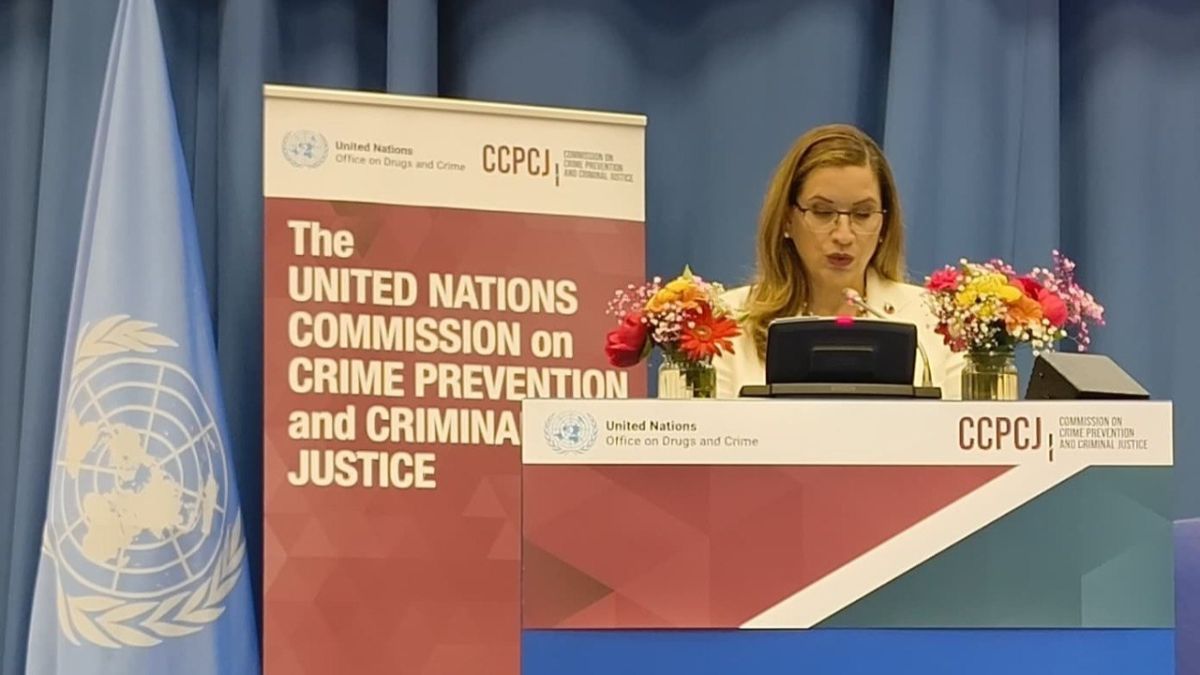
In the framework of the general debate of the 35th session of the Commission on Crime Prevention and Criminal Justice (CCPCJ), held at the headquarters of the United Nations (UN) in Vienna, the delegation of the Bolivarian Republic of Venezuela reported on the National Consultation process initiated on June 1.
This initiative seeks comprehensive and inclusive reform of the criminal justice system to consolidate and adapt the organs of administration of justice to the current demands of the population, giving special priority to procedural speed, strengthening the integrity of the courts and the eradication of the criminalization of poverty.
The national delegation, led by Ambassador Claudia Salerno Caldera, permanent representative to International Organizations based in Vienna, stressed that the Executive and Legislative branches convened this consultative process, which will carry out debates throughout the country to detect critical issues from the direct experience of defenders, judges, prosecutors and organized communities.
As part of this route, the Venezuelan diplomat referred to the enactment, in May 2026, of the Partial Reform of the Organic Law of the Supreme Court of Justice, which marks the beginning of a series of structural adjustments aimed at optimizing the response times of the criminal and civil system.
In addition, Venezuela reaffirmed in the plenary session its commitment to the fundamental principles of the 2021 Kyoto Declaration, stressing that crime prevention and criminal justice must serve as essential tools for building equitable, peaceful and sustainable societies.
On the other hand, he denounced that the application of unilateral coercive measures weakens judicial institutions and hinders their capacity to prevent and combat crime, creating financial fences that limit international cooperation and access to new technologies.
For this reason, the national delegation called on the international community to act with moral coherence and to comply with the obligations deriving from the Convention against Transnational Organized Crime and its complementary protocols. In this way, it seeks to ensure that the resources allocated to technical and financial cooperation are sustainable, predictable and without political conditioning.
Finally, the South American country reiterated that the prevention and fight against crime in its different expressions is a common and shared responsibility that requires a comprehensive and balanced approach. This effort must be carried out in full accordance with the purposes and principles of the Charter of the United Nations, international law and the Universal Declaration of Human Rights, with full respect for the sovereignty, territorial integrity of States, the principle of non-intervention in internal affairs and mutual respect.
Mazo News Team/MPPRE