Venezuelan scientists study the use of enzymes for the biodegradation of microplastics
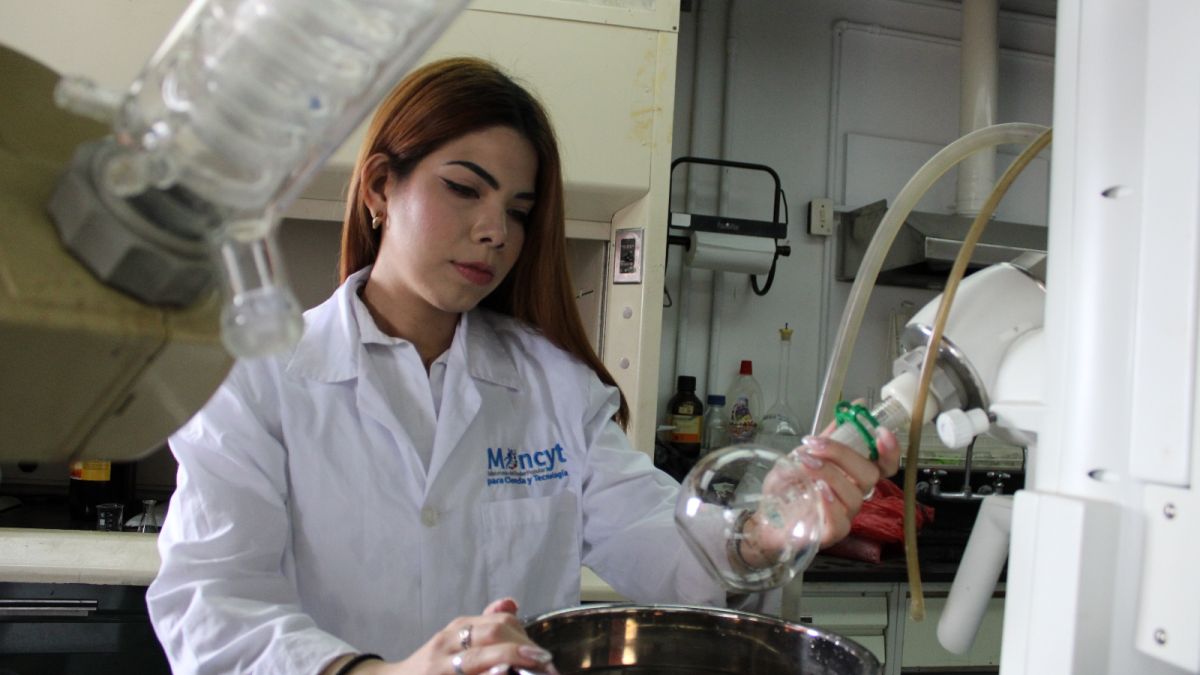
Photo: MINCYT
Published at: 09/06/2025 03:25 PM
Microplastics are small synthetic particles derived from plastics or petroleum, which are difficult to eliminate due to their tiny size, which cause contamination of the marine and terrestrial environments and are introduced into the human body and animals.
That is why researchers from the Institute for Advanced Studies Foundation (IDEA), an entity attached to the Ministry for Science and Technology, are carrying out an enzyme conversion project to achieve the biodegradation of microplastics, through fungal enzymes.
The chemical engineer, Isabella Márquez, a member of the research team of the Energy and Environment Directorate of the IDEA Foundation, indicated that biotechnology makes it possible to exploit the metabolic potential of indigenous Venezuelan fungal species, to produce enzymes and proteins capable of degrading certain plastics by enzymatic catalysis.
“There are hydrolase and oxidative enzymes such as cutinases or laccases that are present in many fungi in our country, adapted to living on recalcitrant substrates such as hydrocarbons. This is an indication of its ability to degrade chemical molecules that were not considered bioavailable, such as the chemical structures of synthetic polymers such as PET, used to make containers and bottles, as well as high and low density polyethylene, which is used in bags,” he said.
Márquez, according to a MINCYT press release, added that thanks to the collaboration with the Polymer Laboratory of the Chemistry Center of the Venezuelan Institute for Scientific Research (IVIC), they have carried out thermogravimetric analyses and differential scanning calorimetry (TGA-DSC) in order to complement the evidence of changes in the characteristics of plastics that were subjected to degradation tests by enzymatic catalysis.
“For this research, we are using natural laccase enzymes as a reference, but there are also others such as cutinases or enzymes improved genetically or by recombinant techniques, which have oxidative or hydrolytic capacity, which allow us to propose and test chemical mechanisms with the possibility of degrading different molecular structures that are common in plastics,” emphasized the researcher.
Engineer Isabella Márquez explained that bioremediation projects contribute to the achievement of the SDGs (Sustainable Development Goals) described in the United Nations Environment Program (UNEP), which addresses climate change and the adoption of new environmentally friendly technologies that reduce the carbon footprint.
This research provides a contribution to the implementation of mitigation measures for emerging pollutants, through the use of biotechnology through enzymes that are found in microorganisms in the country and present a contribution to positioning Venezuela in the development of research on plastic biodegradation.
Mazo News Team