What happens in a country after a U.S. invasion? (3-Syria)
Internet
Published at: 05/12/2025 08:30 PM
The US intervention in Syria dates back to 2011 when the Arab Spring broke out, a protest movement for “democracy” in the Middle East, which spread to that country. Later, in August 2013, Washington accused the Syrian government of attacking a rebel group with chemical weapons, and used that assertion to impose financial sanctions on that nation.
That same year, the United States began providing weapons to subversive groups to the government of Bashar al-Assad under the excuse that the Syrian army “crossed the red line”, established by then-US President Barack Obama, of using chemical weapons against civilians. Despite the fact that the Syrian government stated on several occasions that it did not have this type of weapons in its possession, Obama chose to intervene in the country, claiming that Al Assad did not fully comply.
Jordan Tama , professor at American University, in Washington, explained that “the war on terror was a campaign launched in 2001 by George W. Bush that led to the invasion and occupation of Iraq by USA. Until then, there was no Al Qaeda in Iraq, which allows us to consider the genesis of the ISIS group as a direct consequence of that invasion. The terrorist group called Islamic State (IS), called ISIS in Sir i a, like Al Q a eda, was created by the United States for the purpose of maintain destabilizing activities in the Middle East”.
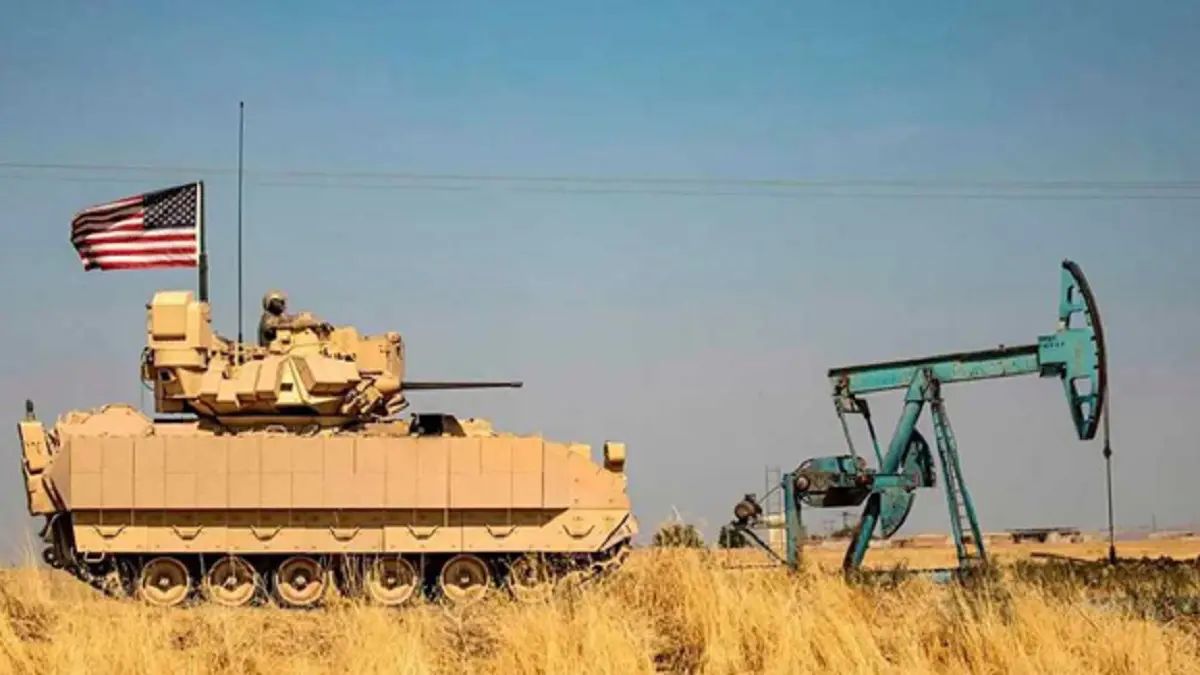
Tama explained that “the United States has continued to be involved in Syria in a variety of ways. First, it has about 900 soldiers deployed in some remote areas of the country to prevent ISIS from regrouping. Second, the United States spent more than $1 billion in military assistance to more moderate armed groups that resisted the control of the Al Assad government. Third, the US has maintained strong financial sanctions against the Syrian government from 2011 to the present.”
However, Donald Trump has taken the position that Syria is a failed state and that it is not his country's problem. During his first term, Trump wanted to withdraw all remaining U.S. troops in Syria, and his advisors convinced him to keep a small number of troops there.
Professor Tama added that “with Trump, the United States will probably not be an important actor in the events in Syria, but I think it is in the nation's interest to remain involved, because what happens in Syria affects the rest of the Middle East and, for extension, to the United States”.
Currently, in August of this year, The New York Times, noted in its editorial that “while the rebels are trying to create a transitional government, armed factions and external powers are fighting for control of the Syrian political scene. Kurdish fighters from northern Syria, who have US support, said they had agreed to a US-brokered ceasefire in Manbij, a city where they have been fighting to defend themselves against Turkey-backed forces, and the Israeli army has launched hundreds of air strikes against military assets across the nation in recent days, claiming that he was trying to keep them out of the reach of Islamist extremists.”
The New York Times editorial also referred to the situation in the country and noted that up to 2018 “the Syrian conflict has had massive geopolitical ramifications, including the humanitarian crisis, with an estimated death toll of more than 615,000, 14 million displaced and 90% of the remaining population living below the poverty line. Policymakers and regional stakeholders see the removal of sanctions as a strategic opportunity to support the reconstruction of Syria after years of significant economic isolation. In addition, U.S. support for the new Syrian government is likely to further erode Russian regional influence, as it no longer functions as a vital foreign benefactor to the country's political regime.”
The first direct US action against the Al Assad government , and Trump's most important military decision since taking office in January 2017, was when US forces launched a missile launch against the Shayrat airbase in Syria. Then, in April 2018, the US, with the support of France and the United Kingdom, launched new retaliatory attacks following an alleged chemical attack by the government against the rebel-controlled city of Douma, in which about 40 people died.
The New York Times editorial ended by explaining that “in October 2018, Washington announced that U.S. forces were withdrawing from border areas to make way for an operation planned for some time by Turkish forces. Trump's decision to back down caused a stir in the White House, and several of his close allies ask him to go out of his way and to reconsider for such a resolution.”
What is the situation of the people in the midst of this American invasion?
Journalists and researchers who are experts in geopolitics, such as Jethro Mullen, Laura Koran, Matthew Chance, Tim Hume and Lindsay Isaac, explained in an interview with CNN that “according to the latest estimates of the At the United Nations (UN), at least 306,887 people have died in the conflict, but this is an estimate up to 202 4. The figure already includes almost 12,000 children, according to data from the United Nations Children's Fund (UNICEF).”
According to the UN, there are also 6.8 million internally displaced persons and 5.2 million Syrian refugees in nearby countries such as Turkey, which houses 62.3% of these refugees, and given this, “it is not for us all to listen to the voices of the survivors and victims of Syria , as well as the stories of those who have now been silent forever”, were the statements of the UN High Commissioner for Human Rights, Volker Türk.
Also, the UN aid officer, Tom Fletcher, said that “today marks a decisive moment in the history of Syria, a nation that has endured almost 14 years of incessant suffering and unspeakable losses... This dark chapter has left deep scars, but today we await with cautious hope the beginning of a new one: one of peace, reconciliation, dignity and inclusion for all Syrians.”
Fletcher added that “events in Syria are progressing at a remarkable pace. More than a decade of conflict has displaced millions of people. Now many more are in danger. We will respond wherever, whenever and however we can to help people in need, including reception centers: food, water, fuel, tents, blankets.”
And all this happens, not because Syria had chemical weapons, which has never been proven, but because it has oil, natural gas and phosphates, as well as other minerals such as chromium, manganese, asphalt, iron ore, salt, marble and gypsum; indispensable for the development of the American technological industry.
AMELYREN BASABE/Mazo News Team