Battle of San Félix: Military Strategy that Liberated the Province of Guiana
Internet
Published at: 11/04/2024 08:00 AM
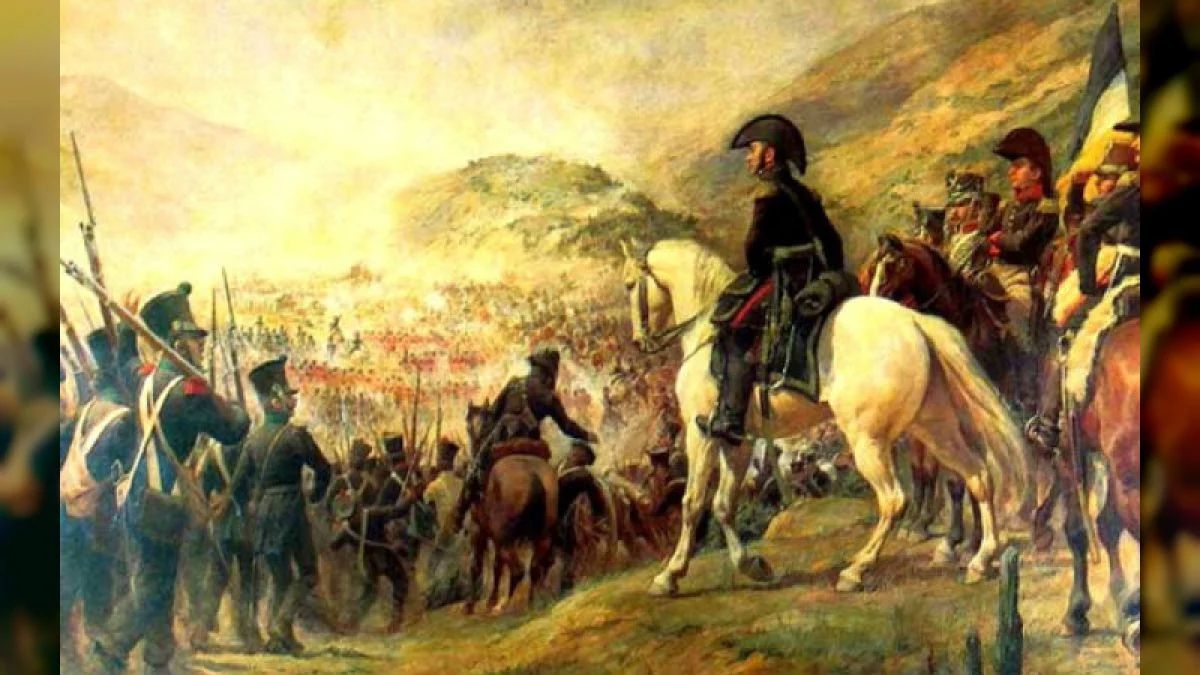
On April 11, 1817, the patriotic forces under the command of General Manuel Carlos Piar defeated in Mesa de Chirica, south of San Félix, Bolívar state, a strong Spanish contingent under the command of Brigadier La Torre, who had arrived from Angostura del Orinoco (today Ciudad Bolívar) to put an end to the patriotic uprising in the area where the Orinoco and Caroni rivers meet.
The battle lasted only half an hour, but it represented the defeat of the Spanish forces sent from Angostura del Orinoco, who since 1816 had been trying unsuccessfully to stop the patriot uprising in the main towns of the Province of Guiana and to maintain control of the traffic of goods, food and equipment along the Orinoco river, in the stretch between the Castles of Guayana (Old Guiana) and Angostura del Orinoco.
General Piar had already gained control of the Caroní Missions, on what is now the southern bank of the Macagua reservoir, leaving the realists without their main supply center.
Brigadier La Torre left Angostura to try to retake this area, leading a contingent of 1,600 infants, 200 cavalry and two guns.
At Mesa de Chirica, he met Piar's forces, led by officers whom he barely knew personally or had no experience, and 500 riflemen, 800 foot lancers, 500 indigenous flecheros and 400 horsemen.
The patriots' disadvantage in men and experience was offset by the skill of their riders, managing to defeat La Torre on El Gallo Hill, the plateau's high point.
Piar's triumph led the royalists to abandon Angostura del Orinoco six days later, leaving the Province of Guiana in patriotic hands and ready to supply Simón Bolívar's liberation campaign in Venezuela and Gran Colombia thereafter
The liberation of Guiana also helped businessmen and landowners to donate to the Liberation Army, which at that time was already suffering a crisis due to the lack of economic resources.
Control over trade across the Orinoco River with Antillean countries also secured resources for the purchase of weapons and ammunition, changing the balance of forces between patriots and realists.
It also ensured the continuous supply of cattle, horses and saddle equipment, as well as the food required for the daily maintenance of thousands of men who would then begin a series of battles to liberate all of eastern and central Venezuela. Later, they would be mobilized to New Granada to continue the war of independence.
In this sense, the Battle of San Félix is considered by many historians to be of similar importance to the Battle of Carabobo and other great dates of the liberation feat.
Mazo News Team