Decline? The Imminent Fall of the American Empire (1)
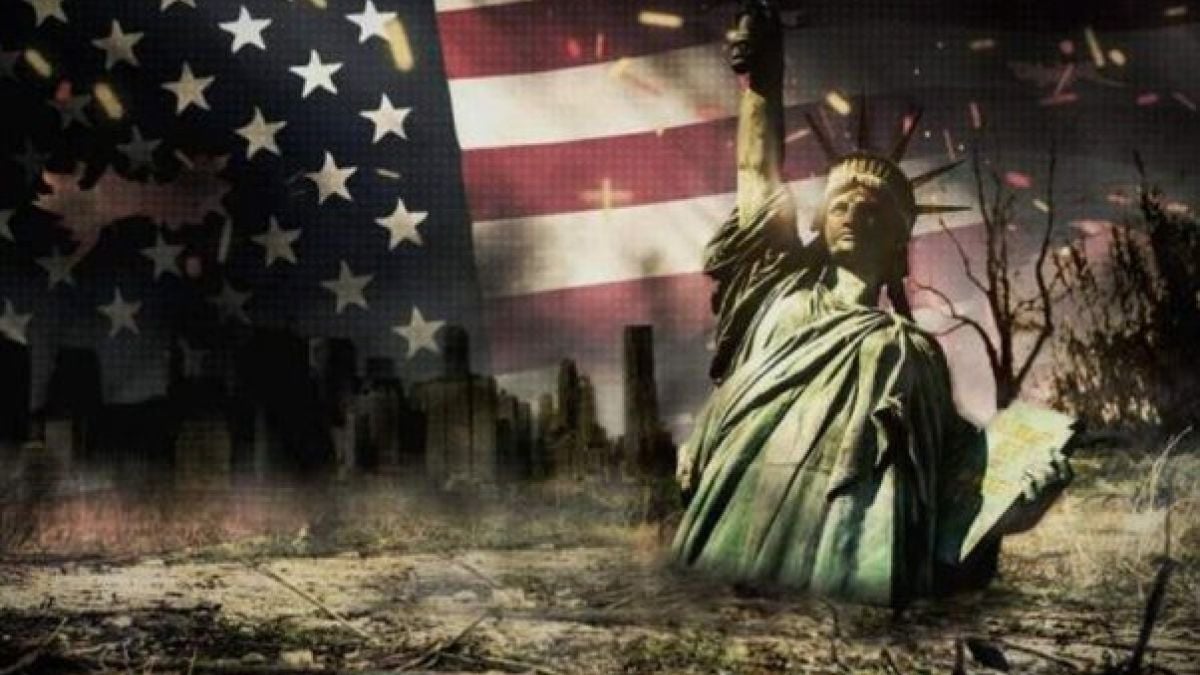
BBC World
Published at: 03/10/2025 05:00 PM
The United States has been
an informal, globalized, technological and
financial empire since the 20th century, based more on influence than on direct occupation. Some
call it a “liberal empire”, others an “empire of consent”, or even a “
hegemonic empire”.
Today, faced with the profound
transformations of the 21st century, we must ask ourselves if we are witnessing the
beginning of the decline of the American empire, or if, on the contrary, it
has the resources and the capacity to adapt to continue leading the world order.
Unlike
Great Britain and other European States, the United States was unable to develop a colonial
project, with the conviction that all regions of the
North American continent should be integrated into its territory sooner or later,
as happened with Canada, which it tried to separate from the British Empire without success.
That is why it had problems taking over adjacent territories that did
not fit the model, especially since they had not been colonized or
were not colonizable by white Anglos, such as Puerto Rico, Cuba and several Pacific islands.
Journalist Eric
Hobsbawm carried out, in 2008, an investigation called The Decline
of the North American Empire, in which he explained that “from a
historical perspective, all the great empires of humanity have shared a similar
life cycle: they are born, they grow, they reach maximum splendor and eventually decline.
Traditionally, an empire is a political system in which a central
state dominates large territories and diverse populations, whether through military
conquest, direct political domination or military and
cultural economic control.”
According to this conceptualization, the
United States maintains unprecedented global military power. It has more than 750 military
bases in 80 countries and maintains a presence on all continents. It also
has the capacity to project force anywhere on the planet.
Hobsbawm explained that U.S. economic and financial influence is global. The Federal Reserve and Wall Street have a decisive influence on global markets. The largest multinational companies such as Google, Apple and Amazon are from that country. In addition, its cultural and technological strength is definitive. From Hollywood to Silicon Valley and through social networks, music, fashion, etc.
The American way of life (
American Way of Life or American dream), to a large extent, has been
exported globally. Technology, from Microsoft, for example;
artificial intelligence, to Netflix, impose global standards, which allow them to
manipulate global media in favor of their interests.
On the other hand,
institutional and diplomatic dominance allowed the United States to appropriate the Organization
of American States (OAS), the United Nations
(UN), the International Monetary Fund (IMF), the World Bank and the North Atlantic Treaty Organization (NATO), among others. Because of this
influence, it has veto power in the United
Nations Security Council. He intervened politically and militarily in European countries
during World Wars I and II, as well as in Vietnam, Laos, Cambodia,
Iraq, Afghanistan, Yemen, and in countries in Latin America and Africa.
The American historian Daniel
Immerwahr, regarding this topic, wrote in March 2025 that “
globalization, technological advances, the digital revolution, the rise of
Asia and internal tensions within Western democracies have profoundly transformed the geopolitical board.
Faced with this scenario, legitimate
questions arise: Is the United States in decline? Will it be displaced by emerging
powers such as China, India or even Brazil?
Or will it be able to reinvent itself, as it has done in the past, and reaffirm its global
leadership?”
Immerwahr commented that “although the US is still the largest economy in the world, China has achieved purchasing power parity and is projected to surpass it in nominal GDP before 2030. In the military field, the North American country leads in defense spending with almost 40% of global military spending, has hundreds of military bases in the world and maintains qualitative superiority in strategic capabilities. No other nation has this war capacity. Despite this, China is rapidly closing the gap, with significant advances in military technology, hypersonic weapons, and naval fleet.
Despite all the strengths presented, from social and political psychology, Steven Pinker explained that “one of the most worrying signs of the American present is not external, but internal. The growing political polarization, the loss of trust in democratic institutions, the rise of populism and cultural fragmentation are symptoms of a possible crisis of national identity. These elements do not necessarily imply decay, but they do imply a weakening of cohesion that has historically been a source of strength”.
Pinker analyzed
that “this dynamic began to erode rapidly after the election of Barack Obama in 2008.
From that moment on, both parties (Republican and Democratic) began
to radicalize and distance themselves from the political and social center. The
political discourse hardened, the agreements became betrayals for the most ideologized
bases, and the Congress became a permanent battlefield.
The Judiciary, historically seen as an impartial arbiter,
has been drawn into the maelstrom of politicization. Today, the decisions of the Supreme
Court are interpreted according to the affiliation of its judges and not by their
adherence to the law.”
Faced with this, rather than an inevitable decline, what the United States is facing is a rethinking of its hegemony. Today's world no longer allows unipolar supremacy, and the complexity of global geopolitics marks the transition to a multipolar order.
History has demonstrated that
great empires and democracies do not necessarily fall because of
external invasions or economic crises, but because of their own unresolved fractures.
Collapse usually begins when dialogue breaks down, when adversaries
become enemies and when political parties, far from building
bridges, dig trenches.
Today, with the shutdown of its government, with no approved budget and much of the federal administration adrift, the United States faces a deep polarization that threatens to erode its democratic foundations. The bipartisan system, which for decades was a source of balance and stability, has resulted in a permanent confrontation where the important thing is no longer to advance public policies, but to block the other, delegitimize them and, in many cases, demonize them before public opinion.
AMELYREN BASABE/Mazo News Team