Do drug cartels exist in the United States? How do they operate?
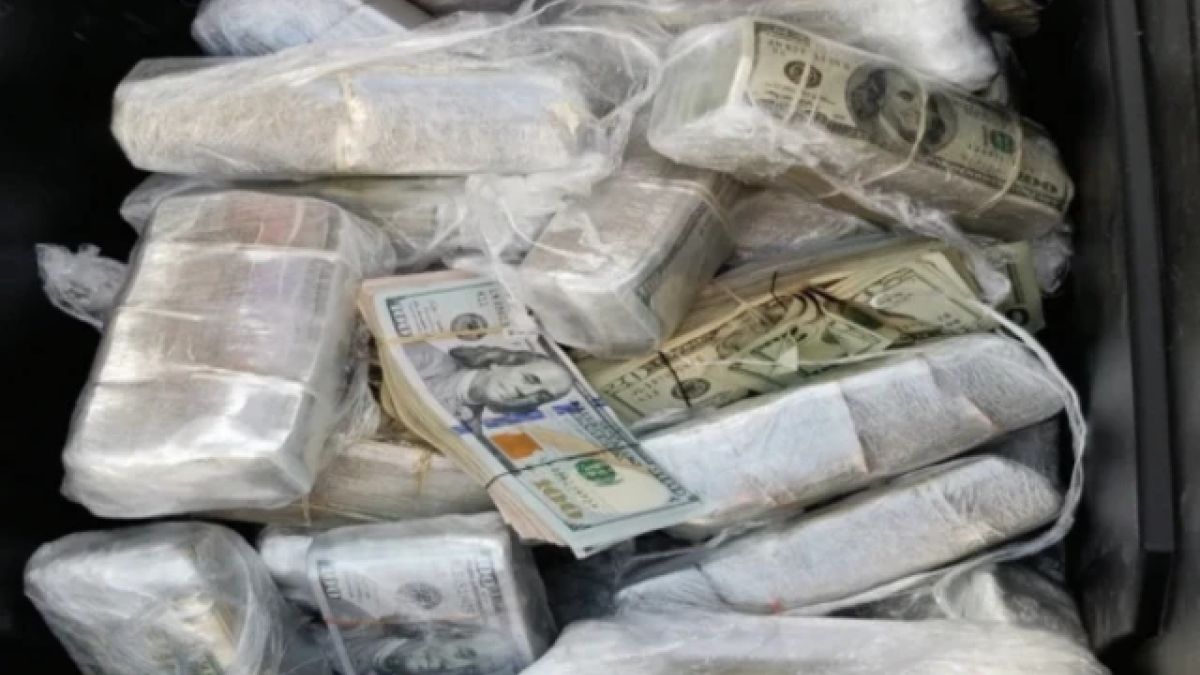
Internet
Published at: 31/10/2025 05:00 PM
Nobody talks about this, nobody
asks what happens to drugs when they arrive in the United States (USA). Who receives them?
How do they distribute it? Why aren't there big drug cartels in the US?
The short answer is because there are a lot of little ones and they don't control them. A longer
answer might be that there are big drug cartels: they're
called prison gangs.
These organizations
maintain tight control over street gangs, the main retail drug
distributors in that country. Prison women, on the other hand, provide crucial protection to members who are serving sentences of these groups and
recruit them into their ranks. They also negotiate the relationship between the main Mexican drug
cartels and street gangs.
The structure of
drug trafficking in the U.S. domestic market is different from the models
based primarily on transit and production observed in Mexico,
Central America and Colombia. Academics such as Marcelo Bergman, a
researcher at the Mexican study center CIDE, say that “distribution
markets, as well as production markets, require a lot of
labor and a large number of employees to traffic drugs and are
highly compartmentalized organizations, such as the decentralized network of street
and prison gangs, these are better adapted to the United States, since a A large number of small
groups attract less attention from the authorities than a single large
organization”.
Bergman explained that, “Washington
is divided into four large areas, Northwest and Southwest, Northeast and Southeast. The
Northwest is where the main activity of the federal city is concentrated (mostly
inhabited by officials, bureaucrats, legislators, diplomats,
lobbyists, consultants, journalists and spies) and where its large residential areas, such as Foxhall and Georgetown, are located.
The Southeast is the
opposite, especially in an area near the Maryland border, which is
called Anacostia, where there are neighborhoods where the
police dare not enter and for a long time there has been an unwritten agreement between the local
authority and the criminals: in exchange for keeping the Northwest free of
crime, Anacostia was theirs, for their entire drug business.”
Drug trafficking
has always been used in the United States as a political tool and for
social control. During the Vietnam War, the Pentagon gave
synthetic drugs to soldiers to increase their courage, which collaterally
resulted in less combat trauma and greater violence that ended in massacres of civilians.
Also, the use of drugs within
security forces allowed the development of violence in the turbulent late
1960s to mitigate anti-war protests. When they were fighting Cuba
and Russia in Nicaragua, they traded drugs with Mexican
organizations in exchange for transporting weapons for the anti-Sandinista movement.
For years, drugs have
entered the United States through the border with Mexico, surreptitiously and with
the cooperation of customs and immigration agents. Hundreds of
federal, state and local officials have been arrested by the Federal
Government Agency (FBI) for corruption, and in 2015, John Ehrlichman, one of
Richard Nixon's main advisors when he was head of the
White House, revealed that “the war on drugs launched by the president in 1971 was motivated by the repression of blacks and the movement against
war,
to win the presidential re-election”.
In the United States, there is a
double language when it comes to combating drug trafficking, where enemies are
always outside and victims are inside. It is true that since the
late 90s, Colombian cartels began to pay Mexican
cartels in kind for the transfer of cocaine to American soil,
but it is also true that the money from these practices made Miami a dream city for many, and distribution networks began to be woven
in that nation.
From there, more than 33,000 criminal
gangs that operated in
American streets and prisons, and transnational organizations around the world. An article
from Money Inc. magazine , who specializes in making quantitative
comparisons, has a historic count of billionaire drug lords, in which there are
more Americans than Mexicans.
The Global Initiative
against Transnational Organized Crime , which is a
non-governmental organization based in Geneva, Switzerland, with funding
from the US State Department and the European Union, has a
global index among the lesser-known items in its chapter American. This organization explained
that “there are thousands of active gangs, involved in drugs, weapons and
human trafficking, that are violent. There are also five large families that
have control in New York, Southern New Jersey and Philadelphia.
There are also motorcycle gangs, which operate in the
drug market, particularly transporting them across borders.”
Global Initiative added
that, “in addition to being the largest drug user in the world, the United States has the world's largest human trafficking
market, and forced labor occurs
mainly in the construction, domestic service and beauty
and agricultural sectors, while sexual labor is in the service of escorts,
pornography and prostitution. Human trafficking has been consolidated on the border
with Mexico, involving domestic and
international criminal networks, which pass through smuggling corridors, paying
bribes to low-level, immigration and customs officials. It is also the
main destination and transit for illegal flora and fauna. In addition, illegally
mined gold often passes through Miami in small planes,
as part of a larger illegal mining market in Mexico, Colombia,
Venezuela , Peru and Guyana. Illegal gold is legalized and
sold in bullion to US multinational corporations.”
On the other hand, Raymundo
Riva Palacio , a Mexican journalist, explained that “due to the globalization
of the U.S. currency and the number of transactions through its banks, a vulnerability
is created that allows money laundering, particularly in
relation to fraud, drug trafficking, human smuggling and corruption. Some in
Donald Trump's inner circle have been convicted of
money laundering, while the former president has been accused of having been associated with mafia
groups before reaching the White House.”
Riva Palacio added
that in the United States, “organized crime has no visible heads, due to
the number of groups involved, volume of activity, violence, market
and income, however, they have had the help of officials who have
allowed the development of illegal activities, so we saw complaints about
characters such as John Bolton, Michael Cohen , Rudy
Giuliani and Bob Menéndez, to name a few, who have been
accused of money laundering, corruption, trafficking in drugs, gold and people.”
Given this, it is clear that
the drug market is not going to end, since it financially maintains a
large part of the US economy; so, it's not a problem of democratic or dictatorial
regimes, it's about money, it's about
resources, it's about plundering countries to maintain the management of world capital
and feed their empire.
AMELYREN BASABE/Mazo News Team