Financial Crisis: Another Fight by the Palestinian People for Survival
Internet
Published at: 05/09/2025 04:49 PM
The genocide of Israel
against Palestine not only refers to the daily and permanent murder of the civilian
people, but also the cash or money in circulation, which was once an
instrument of common exchange, has now been transformed into a resource as
scarce as drinking water or food.
In addition to the genocidal violence of
Zionism against Palestine, there is material disaster in the face of the premeditated
destruction of its economy. The money crisis has
further aggravated the daily situation faced by its inhabitants with
systematic capitalist violence.
In an editorial published on the Euronews portal in July, he explained that “people in Gaza pay up to 40% commission to receive cash, the economy is profoundly affected by cash shortages, inflation, unemployment, speculation and intermediaries aggravate daily life so critically that almost all cash machines are inoperative, forcing the population to depend on cash brokers who charge very high commissions for each trade.”
According to experts, the
shortage of cash in Gaza has several causes: “a) To reduce Hamas'
ability to buy weapons and pay its fighters, b)
Israel eliminated the flow of cash into Gaza at the
beginning of the war and c) the growing fear of the financial system breaking down,
made foreign companies that sold products in the territory
demand cash payments”.
The lack of cash combined with an economy hit by genocide, inflation, extreme unemployment and
the decline in savings, provides a disappointing picture. The Euronews editorial added that
“it is estimated that in 2024 unemployment was 80% and that it
is currently even higher, but there are no updated figures. Palestinian families have
sold their possessions to buy the basics that can be found for food
and drinking water.”
In the same way, the cost
of the products has multiplied: a kilo of flour is sold between $80 and
$100 when its price is around $2. Fuel reaches extreme prices of
around $25 per liter at the lowest price available in cash.
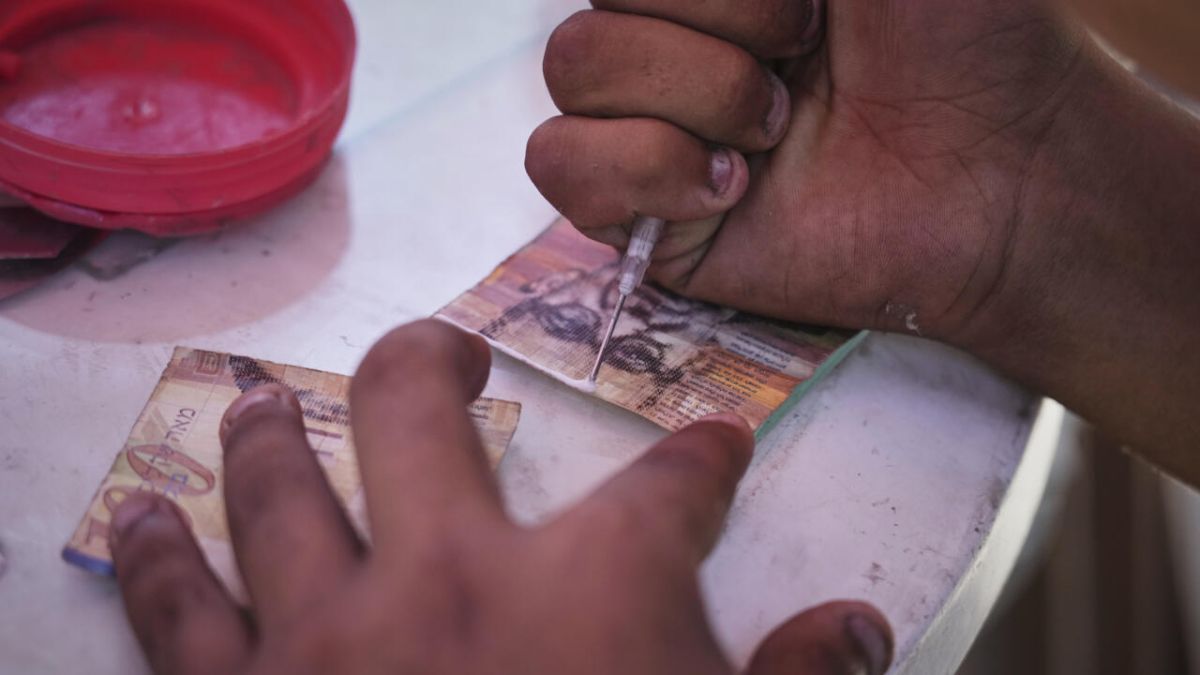
The banknotes in circulation
(mainly Israeli) are in poor condition or deteriorated. This further
complicates transactions, as many merchants and suppliers
only accept new banknotes; this has generated a “banknote repair” market
with a cost of between $3 and $10 for each repaired ticket. With banks closed
and automated teller machines obsolete, Palestinians today rely on an
informal network of cash brokers who apply abusive fees of up
to delivering ill-treated, often useless bills, which they then have
to pay to fix them.
Cash brokers
have great power and operate without regulation, imposing high commissions.
In addition, the use of electronic transfers (when there is electricity and
internet) only allows you to recover a fraction of the money sent, for example, $100
is transferred and the person receives $60 in cash.
Social impact
When cash runs out,
families depend on humanitarian aid, which is also insufficient and at
best, when not bombed, causes long
lines to get food.
“It's suffocating us, it
's starving us to death,” summarizes Ayman al-Dahdouh, director of a school in Gaza.
Like him, thousands of people face a
vicious cycle: no access to their bank accounts, no flow of new notes from
Israel, and the cash in circulation is so deteriorated that even
merchants refuse to accept it.
At the same time,
brokers (men with access to physical ticket reservations) have become indispensable
and expensive intermediaries. “How are we going to live? Our life is
very difficult; when dealing with merchants, 100 shekels (approximately $30)
are not enough to buy anything, and they hardly accept the bills that circulate: either they
say it's broken, stuck, damaged, or they bring another one. There is no money or cash or exchange,” said Khitam Hamdan, also a Palestinian resident.
Jehad
al-Sosi, a resident of Gaza City, also described in an interview with the
AP agency that “before, merchants
opposed the 10 shekels and stopped using them, and now they reject the 20 shekels and the 50 shekels.
As for the commission on the products, it has
reached 42%, which means that you get half the salary and the other half is
theirs. Life is unbearable, in all its forms it's unbearable,” he said.
In the same way, on July 15, the
news portal Atalayar published an article written by journalist Dayriby Abreu, called “
The financial collapse of
Gaza leaves it at the mercy of the black market”, where the director of Pal-Think for Strategic Studies, Omar
Shaban, has stated that “the
war makes it difficult to determine the functioning of the economic activity of the strip,
stating that it is currently operating as a kind of mafia and at
exorbitant rates compared to the current situation. In the absence of official banking
services, the inhabitants are subject to a double situation
of instability, finding themselves immersed in an environment of armed violence and
extortion by informal media that profit from the feeling of desperation and precariousness.”
Without financial institutions or printing new banknotes, Gaza survives with informal networks of brokers who charge up to 40% to deliver money. The scarcity of useful notes, inflation, unemployment and desperation turn every transaction into a fight for survival.
AMELYREN BASABE/Mazo News Team