Is the United States Really Fighting Drug Trafficking?
Internet
Published at: 19/09/2025 04:38 PM
Drug trafficking, despite
being an illegal activity, is estimated to generate 400 billion US
dollars a year, according to the United Nations, a figure equivalent to the gross domestic product (GDP) of countries such as Austria or Namibia. In this hidden market, which is linked
to the real market, Latin America plays a crucial role, since it supplies one
of the largest markets in the world: the United States.
Drug trafficking affects
instability in the region and even influences local and
international politics. But how do drugs get to their final consumer? What
drugs are produced in Latin America? How does the market actually work?
In Latin America, several types of drugs are produced: cocaine, marijuana, heroin and synthetic drugs.
The predominant drugs are cocaine and marijuana, depending on
weather conditions. However, cannabis
also finds its niche in other areas where it is even legal to be planted, such as the state
of California in the United States. In contrast, cocaine is
almost entirely produced in Northeastern South America.
The largest production of the coca
leaf is found in Colombian forests, responsible for around 60%
of world production. Specifically, in the departments of
Nariño, Cauca and Putumayo. In 2023, a report by the United
Nations Office on Drugs and Crime (UNODC)
revealed that cultivated territory had increased by 13% compared to 2021.
This increase is attributed to the refinement of the production of
cocaine hydrochloride, which refers to the product ready for consumption.
Peru and Bolivia
are the other countries where the cultivation of the coca leaf is found. Peru
's production is concentrated in the remote region of the VRAEM (Valley of the Apurimac, Ene and Mantaro
rivers). In Bolivia, on the other hand, the
crops in Chapare and Yungas stand out. Once its production is complete,
cocaine is transported through various routes, depending on the destination. The
main destination of cocaine is the United States, where around 40%
of the users of this substance are found worldwide. Traffic from the Andean
region to the North American country is the most common, but it must first
arrive in Mexico and its transfer is carried out in three ways: sea, air
and land.
Currently, maritime traffic
predominates, with an estimated 87% of the cocaine that reaches North America through
this route. The merchandise arrives at the Mexican
Pacific coast and Central America in speedboats or semi-submersible boats.
Mostly, they come mainly from the port city of Guayaquil,
in Ecuador and also from Colombia, Peru and even Chile.
The UNODC World Drug Report 2025 includes chapters that
address drug trafficking and organized crime; effects linked
to drug use on individuals, their families, communities and society; and the environmental impact of drugs in Europe.
This
report also reflects that “in the last decade, the production and consumption of cocaine have
increased significantly around the world. The US and Brazil
continue to be the main markets, but consumption has also grown
steadily in Europe.”
The UNODC report details
that “cocaine is produced from the coca plant, which grows almost exclusively in South America.
Colombia, Peru and Bolivia
lead global production. From 2010 to 2021, global production increased from
914 to 2,074 tons. In that period, Colombia doubled its production from 329 to
972 tons; Peru went from 369 to 785; and Bolivia from 216 to 317”.
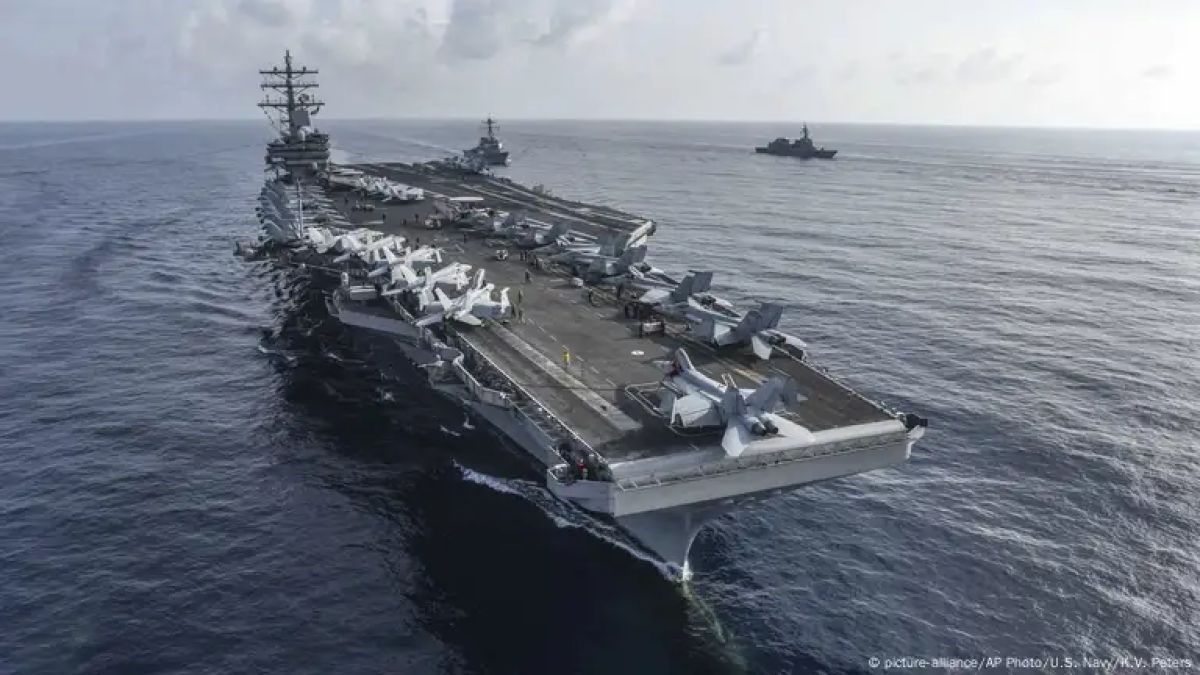
However, the U.S. government , in order to shape the narrative of an invention, the Cartel of the Suns , has begun war operations off the Venezuelan coast. The news portal CNN Español explained earlier this month that “at least 8 ships consisting of destroyers, amphibious assault ships, a cruise ship and even a nuclear submarine: the United States has deployed an impressive war fleet in Caribbean waters off Venezuelan shores in recent weeks with the objective, according to the White House, of combating drug trafficking in Venezuela ”. According to a previous CNN report , “ at least three Arleigh Burke-class destroyers operate in the region , the USS Gravely, the USS Jason Dunham and the USS Sampson. Just like two San Antonio-class amphibious transports: the USS Fort Lauderdale and the USS San Antonio.”
In addition, CNN announced
that “a Ticonderoga-class cruiser, the USS
Lake Erie, a littoral combat ship, the USS Minneapolis-Saint Paul,
and an unidentified nuclear-powered submarine, whose locations are currently unknown.”
All this mobilization is justified, according to the U.S.
government, to combat drug trafficking from our
nation.
However, last weekend, the president of
Colombia, Gustavo Petro, reported on a
new coup against drug trafficking that allowed the seizure of 4 tons
of cocaine in two coordinated operations between his country and international authorities.
According to official information issued by the Petro government, “cocaine was destined for Europe and was transported in different ways: in trailers, a deep-draft ship and containers. The cargo would have left Puerto López, in La Guajira, and it is presumed that it crossed near a U.S. military vessel before being detected.”
With this in mind, it is difficult to understand that a shipment of 4 tons of cocaine goes unnoticed in front of 8 American warships and these are capable of detecting and destroying boats and rocks dedicated to deep-sea fishing, which, according to statements offered by American spokespersons, were loaded with drugs.
On March 1, 2020, Trump announced that the United States sent Navy ships to Venezuela to reinforce its counternarcotics operations in the Caribbean, after filing drug trafficking charges against President Nicolás Maduro , “today The United States is strengthening its counterdrug operations in Latin America to protect the American people from the deadly scourge of drugs. We will not let drug trafficking cartels take advantage of this pandemic to threaten the lives of Americans,” Trump announced at a press conference at the White House.
But what is the purpose of
saying that Venezuela is a drug trafficking country? Well, it's simple: to
seize the territory to secure traffic in the region, in accordance with
the pacts established with Juan Guaidó at the time and now, with María
Corina Machado and to seize the largest oil reserve on the planet.
On the subject, Vice President
Delcy Rodríguez gave a presentation on the narrative of
drug trafficking as a new instrument of aggression against the country. He assured that it is a psychological
campaign against our people.
According to the review
carried out from 1999 to 2025 by the UNODC Annual Report , it was
found that Venezuela is not a relevant country in terms of drugs,
it is not a country that
produces drugs, it is not a country where drugs are cultivated or produced or trafficked, nor is it a country with high levels of consumption.
The figures presented in the UNODC Report
revealed that the Latin American
producer countries are Colombia, with 61%; Peru, with
26%; and Bolivia with 13% of drug crops. With regard to
trafficking, we have Ecuador, with 87% occurring in that country and in Colombia
by way of the Pacific; 8% of the drugs produced go through the
Colombian Guajira and the Caribbean coast. Only 5% of
drug production that leaves the neighboring country is intended to be mobilized through
Venezuelan territory destined for Caribbean islands and Europe.
According to UNODC numbers, it is not through the Atlantic Ocean that the
largest drug trafficking route used for distribution is established, but through the Atlantic Ocean
that 87% of the drugs produced in Ecuador and Colombia pass;
then, and if it is the intention of the government
To stop
drug trafficking, it is worth asking: Why aren't they taking their ships to the Pacific?
Could it be that the fight is for another reason?
Nor is
Venezuela on synthetic drug routes (methamphetamines and fentanyl), which
mostly come from the Middle East and Africa, according to data reflected in the
UNODC report.
What does happen in our
country is the significant seizure of drugs when they intend to use our
territory as a safe route. This year alone, 56
tons of this product have been withheld and destroyed. In fact, according to figures from
international organizations on this scourge, seizures increased after
our country withdrew from the Office of Drug Administration (DEA),
registering between 1999 and 2004 a seizure of 209.65 tons and 1,054 tons of this merchandise from 2005 to 2025.
These figures support the thesis that the presence
of the DEA in Venezuela was due to the promotion of coups d'etat and internal
destabilization.
Venezuela does not
cultivate or produce or traffic drugs; it is really threatened and in the
sights of the imperial target that seeks safe routes for the distribution of drugs
and secure the supply of oil and gas, using the excuse of the
fight against drug trafficking, which clearly has neither legal nor real support.
AMELYREN BASABE/Mazo News Team