La Cuadra Bolívar: Space of historical values of the independence quest (+anniversary)
Internet
Published at: 20/04/2024 08:00 AM
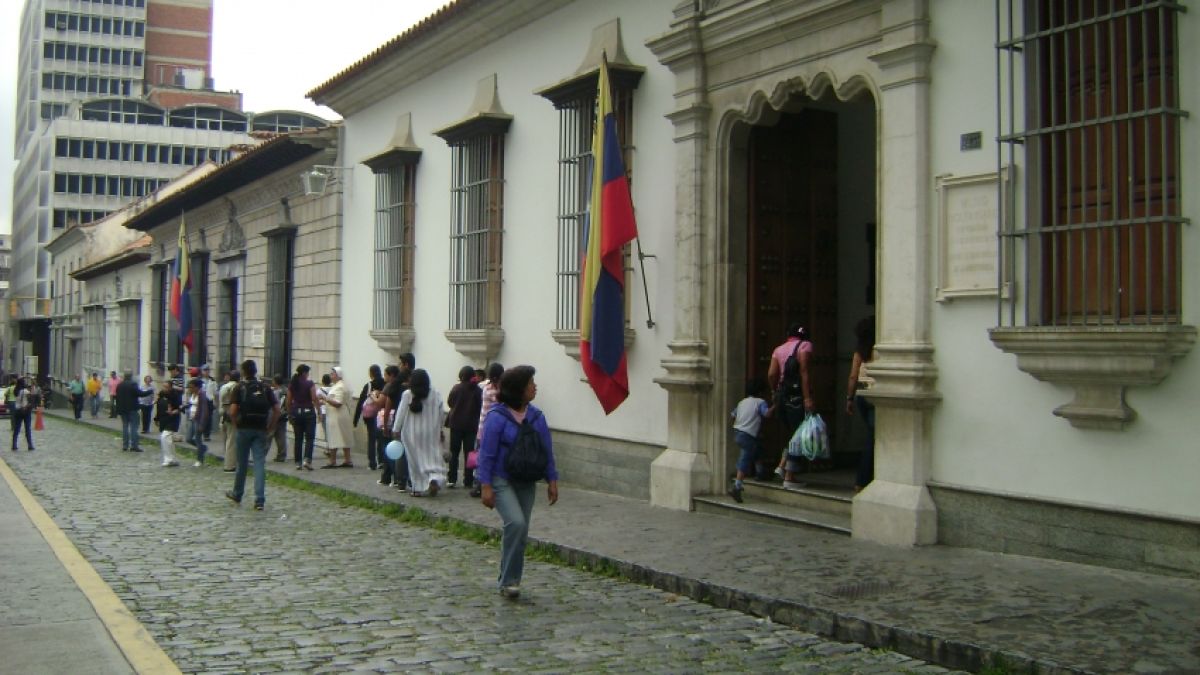
On April 20, 1959, the so-called Cuadra de Bolívar was declared a National Historic Monument. The property has preserved the original style of a colonial house, which occupies half a block. It is characterized by its development around a patio or interior garden, to which corridors and rooms open up.
This is how to the south of Caracas, there is this place that stands out among the buildings of the city for its colonial aspect, between the corners of Piedras and Bárcena in the parish of Santa Teresa, with more than 200 years of history.
The Casa Museo “Cuadra de Bolívar” dates back to 1750 and was built by the Liberator's parents Simon Bolivar, Juan Vicente Bolívar and María de la Concepción Palacios. It is said that it was there that the Liberator received his first classes and spent the first phase of his life.
In addition, historical records indicate that in 1808 it was the center of independence meetings known then as the “Mantuan conspiracy” and where the Liberator received the first plans for emancipation. And that is why the scientist, writer and teacher Francisco Rísquez, proposed that a plaque be placed in front of the house with the inscription: “This is where the Freedom of America was born”.
The Cuadra Bolívar House Museum had been abandoned during the governments of the Fourth Republic. And thanks to the Bolivarian Government, through the Mayor's Office of the Bolivarian Libertador municipality of Caracas, this building was restored in the process of recovering the Historic Quarter of Caracas.
In this way, in order to recover the historic spaces of the capital city, as of February 20, 2015, the Mayor's Office offers this site for the enjoyment of visitors.
This important historic corner called La Cuadra de Bolívar was declared a National Historical Monument in 1959, according to Official Gazette No. 25,940.
He received this honor thanks to the cultural values it contains, such as collections of paintings, furniture and objects representing the activities and way of life of the colonial era.
The place consists of nine exhibition rooms, including the Liberator's room, his closet, the main room, the dining room, living rooms, and others.
In the “Cuadra de Bolívar”, it has been possible to agree on the historical rescue and the creation of a Creole museum that expresses aspects of the way of life of a colonial past. It is a jewel of Venezuelan colonial architecture and an excellent option to visit.
Mazo News Team