Manipulation of the masses, another form of oppression
Internet
Published at: 10/10/2025 05:00 PM
When we ask ourselves questions like: Why doesn't the genocide in Palestine stop? Why aren't paedophiles convicted? ,
Why are migrants allowed to be persecuted? Why are extremists like Charlie Kirk victimized?
, and bringing it to our context: Why is it said that
there is a drug trafficking cartel in Venezuela? Why is it said that Chavism has
murdered opponents? Or Why is Chavism blamed for the
migration of Venezuelans? Well, they have all these questions, the same
answer: Manipulation of information to misrepresent reason, to the
point that it is condemned for a Venezuelan to say that he does not want war in his country.
And this isn't opinion, it's
science. The phenomenon of mass manipulation is not a new concept in human
history. Historically, to maintain social control,
ensure their power, and direct people's behavior toward their
interests, political and religious leaders have sought ways to
influence public opinion.
Expert thinkers in
psychiatry, psychoanalysis and neurology, such as Gustave Le Bon, Freud
and Lacan, considered those responsible for keeping the
masses calm, as generators of illusions and distortions of thought due to the predominance of emotionality and impulsivity in them.
Later, based on
the experiences of the doctor of medicine, Wilfred Bion working with
groups of psychoanalysts, during and after the Second World War,
this understanding changed: The emotions generated by groups can be a source of
distorted thinking, but they can also stimulate it, generate new
thoughts and change the perspective of reality.
Because as a species
we are condemned to live in groups and in society, we must learn to
get the best out of this reality without allowing our
ideals and thoughts to be distorted; a difficult situation when postmodern culture and advertising
techniques developed for more than a century are
precisely designed to manipulate the desires and ideals of citizens for economic and political purposes.
The study of mass manipulation is rooted in social psychology, where principles have been identified that explain how individual behavior is affected by group dynamics. One of the first theorists to address this phenomenon was Gustave Le Bon, in his work The Psychology of the Masses (1895), and he argued that “individuals, being part of a crowd, tend to suppress their individuality and are more susceptible to suggestion and imitation, which makes them prone to behave more emotionally and irrationally. These ideas have been fundamental in understanding how authorities and the media can manipulate large groups, using techniques such as positive or negative reinforcement.”
The most important thinker,
philosopher, linguist and sociologist of the modern era, Noam
Chomsky, also explained in an interview that “mass manipulation is also
based on psychological principles such as collective behavior, where
individuals lose their critical capacity when they feel part of a
larger group, and this behavior becomes especially visible when emotions such as fear or anger
are used to influence decision-making”.
Chomsky added that “for
example, after the September 11 attacks in 2001, fear of
terrorism was used to implement laws such as the Patriot Act in the
United States, which limited civil liberties in the name of national security.
The fear technique has been especially effective in promoting mass
surveillance and other authoritarian measures. In addition,
mass manipulation also relies on the use of stereotypes and prejudices, reinforced
through the repetition of images and discourses that perpetuate simplified visions of social groups.”
According to Chomsky, another pillar of
mass manipulation is the strategy of distraction, which
consists of “diverting public attention from relevant issues through the
saturation of irrelevant information or the emphasis on entertainment. This
tactic has been widely used in modern media, especially in
times of crisis or conflict. For example, during wars in the
Middle East, American media focused much of their coverage on minor
scandals or celebrities, diverting attention away from the critical
political decisions that were being made at the time.”
Reinforcing
simplified messages and polarization are also common strategies. According to the opinion of the French political analyst, Sylvain Timsit, described in his essay called Strategies
of Manipulation (2002), stated that “the media
often present facts in a superficial way, without delving into real
causes or consequences, thus reducing the critical capacity of the public.
This is evident in how geopolitical conflicts or
internal crises are reported, where the complexity of events is usually reduced to black and
white narratives, with clearly defined good and bad”.
However, what distinguishes
contemporary manipulation is the degree of perfection achieved,
especially with the rise of modern communication media, technology
and social networks. The capacity to shape opinions, generate consensus or
create divisions on a large scale has reached unprecedented levels,
particularly due to the massification of information and the concentration of the media in the hands
of a few global corporations.
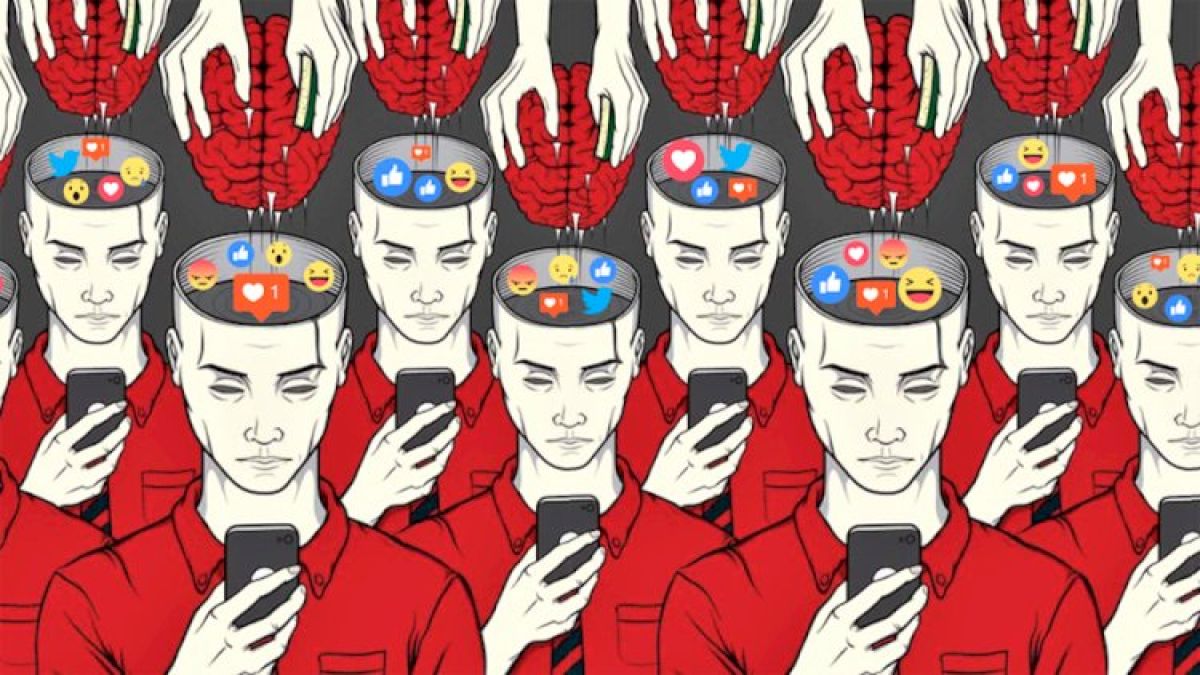
Nowadays, mass control
, powered by algorithms and media manipulation, plays a fundamental
role in how people consume information and, therefore, in the
configuration of their perceptions. Political polarization and disinformation
have been amplified through these channels, which have generated tangible
consequences for social and political stability at the global level.
In addition, manipulation
through social networks is also based on the exploitation of
negative emotions. Neuroscience studies have shown that the human brain
is predisposed to paying more attention to negative or threatening stimuli,
a phenomenon known as “negativity bias”. Digital platforms
exploit this bias by prioritizing content that generates indignation, fear, anger and emotions that increase the likelihood of users sharing the
content, thus amplifying its dissemination.
However, the growing
awareness of these methods and the availability of alternative information
via the Internet offer a unique opportunity to resist their influence.
The key is to maintain a critical attitude and to always seek the truth beyond the dominant narratives.
Combating these phenomena
requires a combination of education, critical thinking and access to diverse sources of information. Only through a concerted effort to promote
a more critical and conscious citizenship will it be possible to resist
manipulative tactics that seek to erode trust in institutions and divide society.
AMELYREN BASABE/Mazo News Team