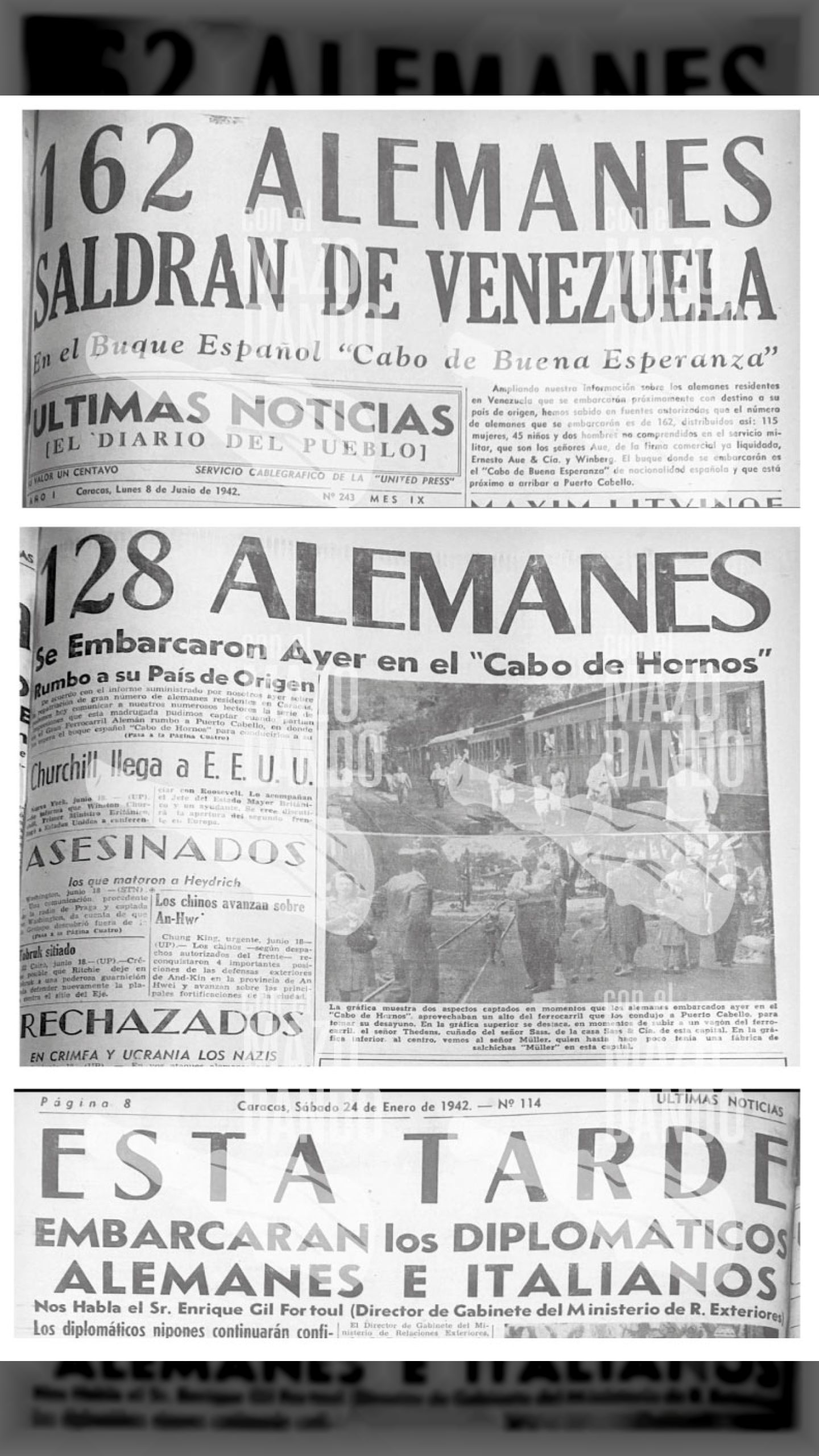
THE FIGHT AGAINST FASCISM: GRAL. ISAIAS MEDINA EXPELLED 290 NAZI-FASCISTS FROM VENEZUELA (II)
Published at: 28/08/2024 09:00 PM
(LATEST NEWS, January-June 1942)
Faced with the presence on the mainland of Nazi-Fascist elements, General Isaías Medina did not hesitate to expel them from the country and put an end to the preaching of the superiority of the Aryan race, ethnic racial hatred and the apology of genocide in the framework of World War II in our territory:
- By this date, approximately 4,000 people of German descent resided in Venezuela, of whom 290 were deported between February and June 1942.
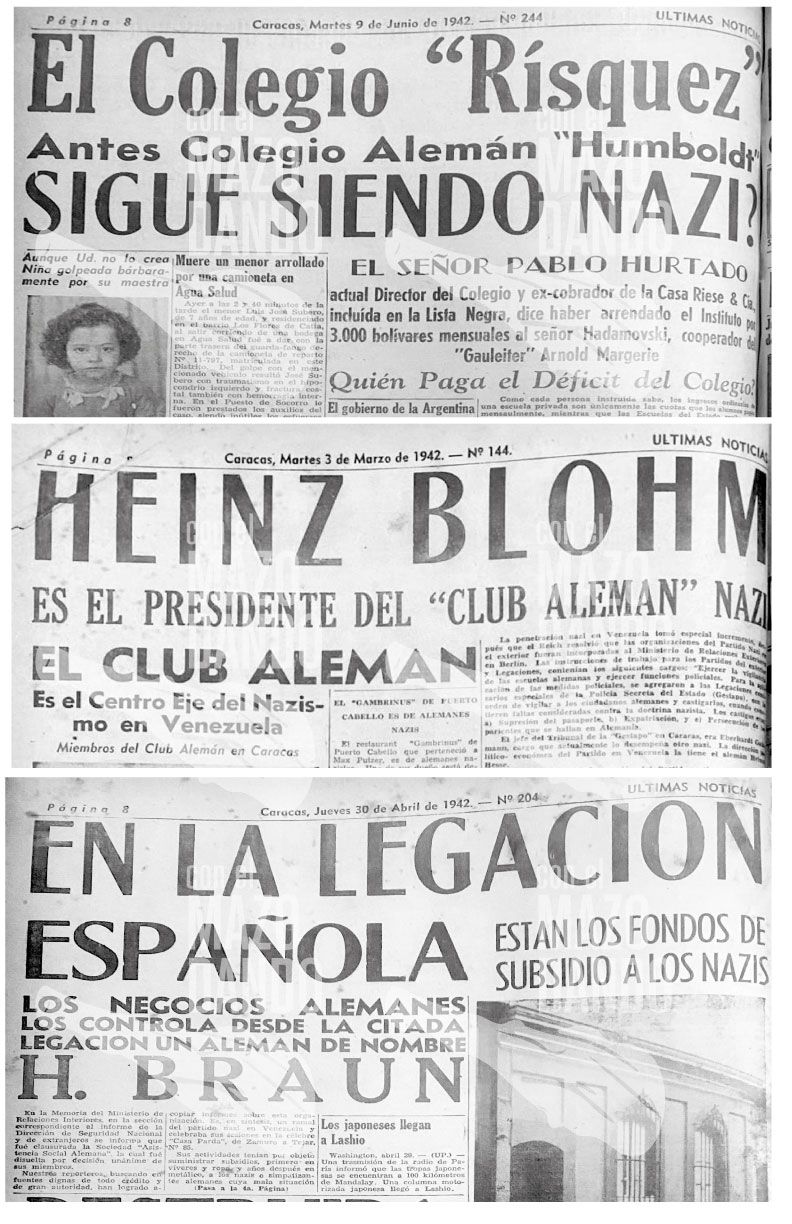
- The Venezuelan Nazi Party had several headquarters for its operation: the German Club, the Royal Club, La Casa Parda and the German School. They were all shut down.
- Captain Richard Aretz, an operator of underground Nazi-Fascist radio stations from Petaquire and coach of Hitler Youth in Colonia Tovar, was deported.
- Clandestine Nazi radios operated from Punta de Piedras, Punto Fijo, the Orinoco Delta and San Juan de las Galdonas were also seized.
- During the application of these measures, General Medina ordered the seizure of 7 German and Italian ships that were interned in our ports. Among them: Durazzo (1,000 tons), Baccini Padre (5,000 tons), Teresa Odero (8,000 tons), Troitera (6,000 tons), Jole Fascio (3,000 tons), Alabama (6,000 tons), Sestoris and Dentice. All were sold to compensate for the damage caused to the republic.
The context:
- Venezuela provided 74% of all the oil used in World War II.
- From February 1942 to August 1944, our coasts were dominated by German submarines (Lobos de Mar), stationed from the mouths of the Orinoco River to the Gulf of Venezuela.
- During that period, a total of 74 merchant ships and tankers were sunk in Venezuelan territorial waters by the forces of the Nazi-Fascist axis.
- All of this was done with the support on the mainland of a network of Nazi intelligence agencies and agents paid by the embassies of Germany, Italy and Spain.
- The “sea wolves” attacked at night using “pack” tactics. During the day, they used our territorial waters and adjoining islands as burrows and as a source of water, fish, food and fuel. Among them: Los Monjes, Tucacas, Los Frailes, Los Roques, La Orchila, Los Testigos, La Blanquilla, Margarita, Boca de Aroa, Morrocoy and the Gulf of Paria.
- To prevent submarine traffic, General Medina ordered the installation of a cordon of explosive mines between the coasts of Trinidad and Venezuela.
Mazo News Team