The history of unauthorized CIA interventions in Latin America (1)
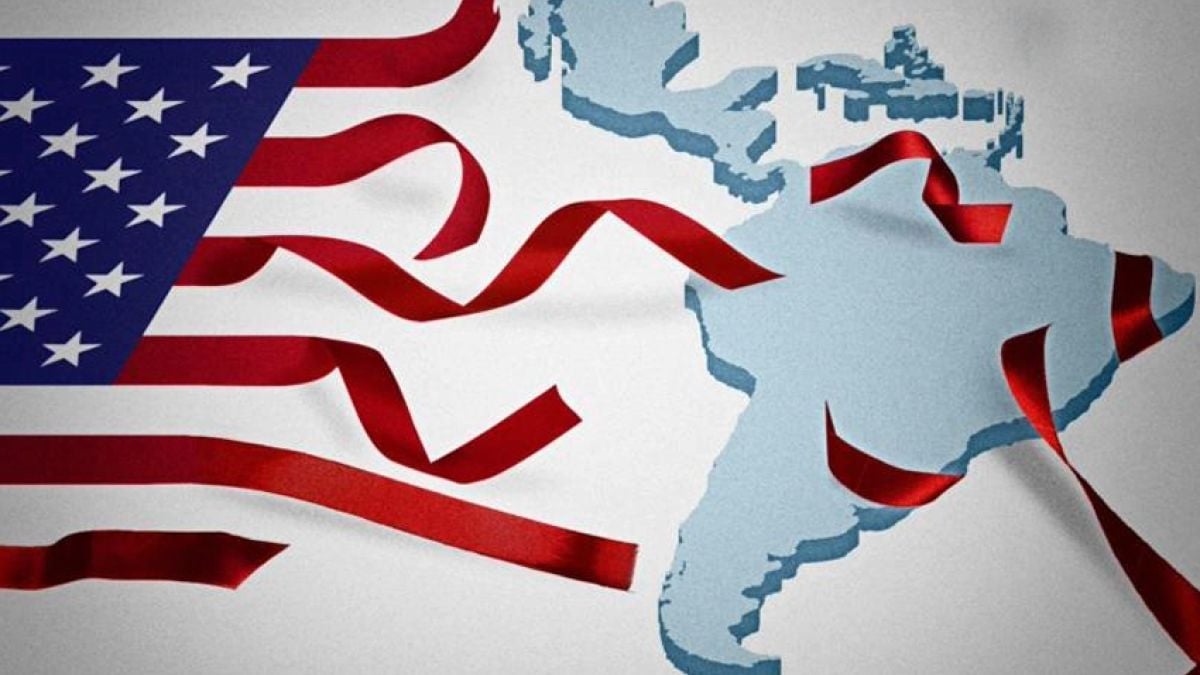
Internet
Published at: 07/11/2025 05:00 PM
Throughout the 20th century, the United States
intervened, sometimes directly, in the domestic politics of its
neighbors on the continent to protect their political and economic interests. The recent decision of the U.S. government to send warships with some
4,000 soldiers near the Venezuelan coast revives its
interventionist history in Latin America.
The danger that the
North American empire, under the leadership of Donald Trump, will intervene
militarily in the internal affairs of its neighbors to the south is based on history.
Throughout the 20th century, that nation acted in several countries in the
region and supported coups that allowed
governments related to Washington's interests to come to power. Now, despite the
background, the US president decided to authorize the
Central Intelligence Agency (CIA) to infiltrate Venezuela in order to put an end to
the Bolivarian Revolution.
It is rare that it is now, after having intervened at least 10 Latin American countries, that they publicly report that the CIA is carrying out covert activities in another country; in the rudest way, by pretending that they have the right to enter any territory as if they were really part of their territory, or their backyard.
To support this theory, here are some examples of U.S. interference in Latin American countries, without announcing it at press conferences or press releases:
Guatemala:
In 1951, the leftist Jacobo
Arbenz was elected president after the first elections with
universal suffrage in the history of the Central American country. The president announced the
implementation of Decree 900, which detailed a comprehensive
agrarian reform.
Arbenz focused
his attention on the United Fruit Company, a company linked to the
White House and owner of approximately 40% of Guatemala's land,
and its enormous economic and political power led to the country being known as
a “banana republic”.
In the middle of the Cold War, the United States
accused Arbenz of being close to the Soviet Union and, for this reason,
launched Operation PBSuccess, with the objective of fomenting a
coup against the new Guatemalan president , to protect his
political and economic interests.
The defense and military analyst, Luis Alberto Villamarín, explained that “this intervention sought to protect both political and economic interests, the United States could not accept that the power of its companies in Latin America was limited, and Guatemala was not going to be the exception,” he explained. On June 27, 1954, a series of CIA operations led to the resignation of President Arbenz, who was forced to seek refuge in the Mexican embassy.
The elected government was replaced by a pro-Washington military junta led by Carlos Castillo Armas, marking the beginning of nearly four decades of civil war between 1960 and 1996. This US action in Guatemala became the example of a policy of the North American country that seeks to protect its national interests over respect for democracy and the sovereignty of peoples.
Cuba:
After the Cuban Revolution in
1959, the fear of the United States that Cuba would become the first
country of the Soviet Bloc in America led the CIA to carry out covert
operations on the island. According to journalist William Blum, the US
agency did “everything in its power” to
prevent the Fidel Castro government from succeeding.
So the CIA financed and supplied weapons to the Cuban exiles who staged the failed 1961 Bay of Pigs invasion. The agency led the attack on the Spanish ship Sierra Aránzazu in 1964. Later, in 1976, he collaborated in the terrorist attack against Cubana de Aviación Flight 455, carried out by Cuban exiles who would have links with the agency.
Dominican Republic:
In 1962, Juan Bosch,
of the Dominican Revolutionary Party (left-wing Social Democrat) was elected president.
This election marked the country's exit from a period
of political instability, marked by the assassination of dictator Rafael
Leónidas Trujillo, a political figure who came to power with the support of the
United States, but whom the CIA helped to eliminate.
Bosch was
overthrown by a military coup seven months later, which marked the
beginning of a struggle between the ruling military and left-wing forces. Then,
in April 1965, left-wing fighters took several places in the
capital and a civil war began between the constitutionalists, in favor of Bosch,
and the military junta.
Faced with the possibility of Juan Bosch's return to power, the United States launched Operation Power Pack. Within a few days, thousands of U.S. soldiers were deployed to the island to regain control of the situation. The American occupation, the second in the country's history, lasted 17 months, and in the end an anti-communist government came to power. The operation was the second U.S. occupation of the Dominican Republic from 1965 to 1966.
Brazil:
The military dictatorship of that
country lasted two decades, from the coup d'etat of March 31, 1964, to
March 1985. That military uprising overthrew the democratic government of
President João Goulart and established a military dictatorship headed by Humberto de Alencar Castelo Branco.
In 1964, Goulart was overthrown in a US-backed coup, which
installed a military government that remained in power until the 1980s.
The US agency financed campaigns of parliamentarians opposed
to the government and also propaganda that weakened its image.
Bolivia:
Before ending Che, the CIA had financed and supported the military coup against President Víctor Paz Estenssoro in 1964. According to declassified documents, the agency financed former right-wing soldier René Barrientos Ortuño, who would preside over the country between 1964 and 1965, and from 1966 to 1969.
That now at this time, the U.S. government
declares that it authorizes the CIA to intervene in countries to
overthrow their governments, shows the lack of respect that country has for Latin American
countries, especially when we remember the
interventionist behavior that, since the creation of this organization, has served to
twist the paths of peoples in the construction of their destiny sovereign.
AMELYREN BASABE/Mazo News Team