The use of the dollar as an instrument of war
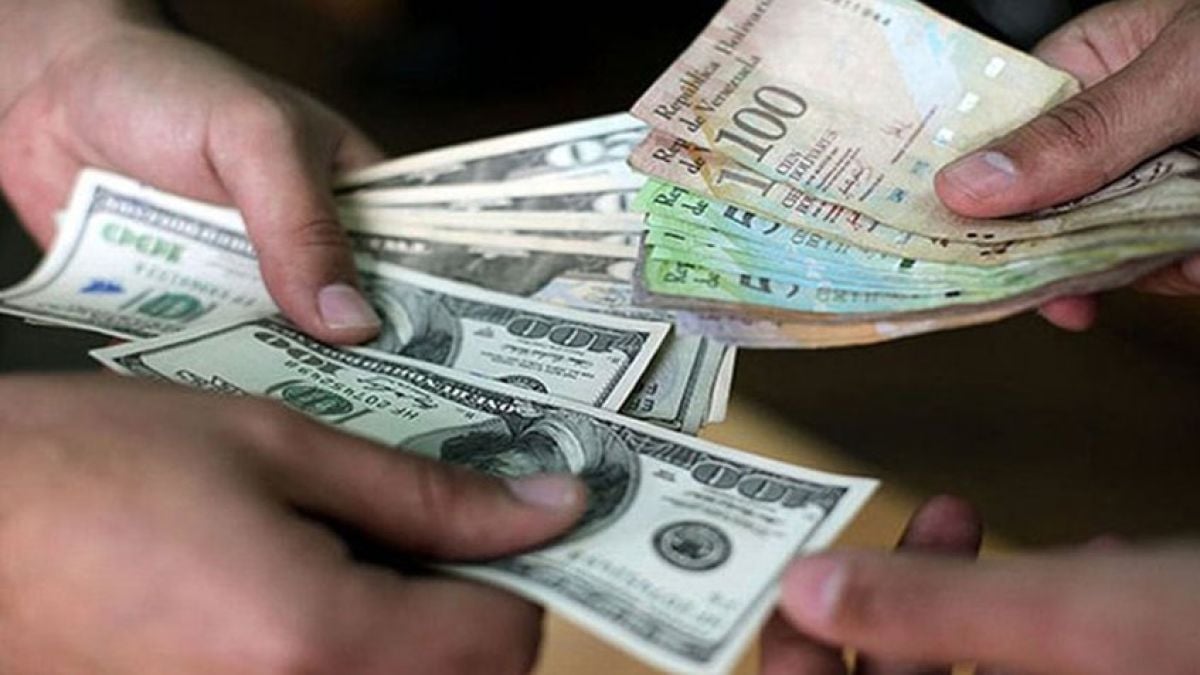
Internet
Published at: 04/07/2025 05:05 PM
As part of the attacks that Venezuela is experiencing in the context of economic sanctions, the parallel dollar has been promoted as an extortion element of the exchange rate, becoming a reference for a significant number of transactions in the country.
This
phenomenon has been the subject of analysis by economic experts,
including Alejandro Rivas, an economist specializing in emerging markets.
In an interview conducted by the news portal Espiga, in March of this year, Rivas
explained that “the so-called parallel dollar is nothing more than the value of the
U.S. dollar determined by supply and demand in a market not
intervened by the State.” This is a basic definition of economic theory
that does not express the distortions that, in a context of silent war, currency
is used as a tool to attack national stability, in
order to maintain discontent in the population and directly hit the purchasing
power of citizens.
On this subject,
economist Emeterio Gómez pointed out in his book The Market Economy, published in 1991, that “theoretically, the excessive issuance of money by the Central Bank or the public institution responsible for the monetary policy of a country, without the support of international reserves, generates uncontrolled inflation and a
decrease
in the purchasing power of the currency local”.
However, years later, Gómez explained, at a conference organized in July 2014 by the Center for the Dissemination of Knowledge for Freedom (CEDICE) on inflation, that “in the Venezuelan context, the price of the dollar has stopped responding to traditional variables such as international reserves or monetary liquidity to become an intervention tool Politics, in any normal economy, the change in the exchange rate is associated with the amount of money in circulation and the strength of reserves. But in our country, the exchange rate has become an instrument of interference and sabotage, sponsored even from abroad.”
Regarding this framework, Gómez commented that “large price makers are companies with a dominant position in strategic sectors and act as catalysts for inflation. An example of this is the company Polar, which has a pricing capacity that carries over the rest of the chain. It's not about competition, but about obedience to the behavior of the strongest actor. Everyone else ends up replicating that behavior so as not to be left out of the market.”
In that same interview, Gómez added that this phenomenon is known in economics as a self-fulfilling prophecy,
and has been used on platforms such as Dollar Monitor that serve as the perfect input
to justify price increases, “when a page
publishes a new dollar rate, the big oligopolies incorporate it as a reference and transfer it to their structure
of costs. Thus, that quote
ends up becoming a reality, even if it is not backed by any significant
transaction.”
On the other hand, there are
patterns of deliberate manipulation. In research by economist Jesús Fária Tortosa, as revealed in an interview conducted in 2017 by VTV on the Al Aire program, the peaks of the parallel dollar
systematically coincide with key political events, such as “presidential elections,
referendums, protests organized from abroad... Every major
event is accompanied by an artificial escalation of the dollar. The most notorious case was
in November 2014, when opposition leaders were granted the right to speak in the
National Assembly. At that time, the
parallel exchange rate reached its highest peak in the entire decade.”
Both Gómez and Fanía agree that “the parallel exchange rate is not fixed according to market
dynamics, but as a result of coordinated political operations, there is
no methodological transparency and we often observe
price changes at times when there is no commercial activity, such as Saturday nights.
That's absurd.”
Faced with these attacks, the
Bolivarian Government, after carrying out research and studying strategies to
reverse the damage to the national economy, has undertaken an operation led
by the Minister of Interior, Justice and Peace, Diosdado Cabello Rondón, in which,
as explained by the Mission Truth portal, it is “Black Friday” for
informal business operations governed by the
parallel dollar in the country.
In recent days, the “blackout”
of several parallel markers of the US currency, as a result of police
actions carried out by the Venezuelan Government, has led to the
arrest of at least 25 people in several states, who were part of a
network of “financial terrorism” associated with the manipulation of the price of the parallel dollar.
According to the also sectoral vice-president of Politics, Public Security and Peace, Cabello,
the investigations that have led to these arrests have been compiled for
more than a year, when they began to investigate the funding channels of María Corina Machado's
“commandos”. The political links of
these operators clearly and clearly indicate the congruence between the variations
of the parallel dollar and the calendar of political events.
Thus, we have seen how since the presidential elections of July 28 last year, the differential gap between the parallel
scoreboard and the rate of the Central Bank of Venezuela (BCV) increased, which created a climate of economic uncertainty
. It is
then sought to ensure that the price of the dollar in formal transactions
governed by the exchange system reaches a balance that allows correcting
the distortions generated by the attack on the national currency.
AMELYREN BASABE/Mazo News Team