Voter Turnout: Did the Opponents Listen to María Corina Machado?
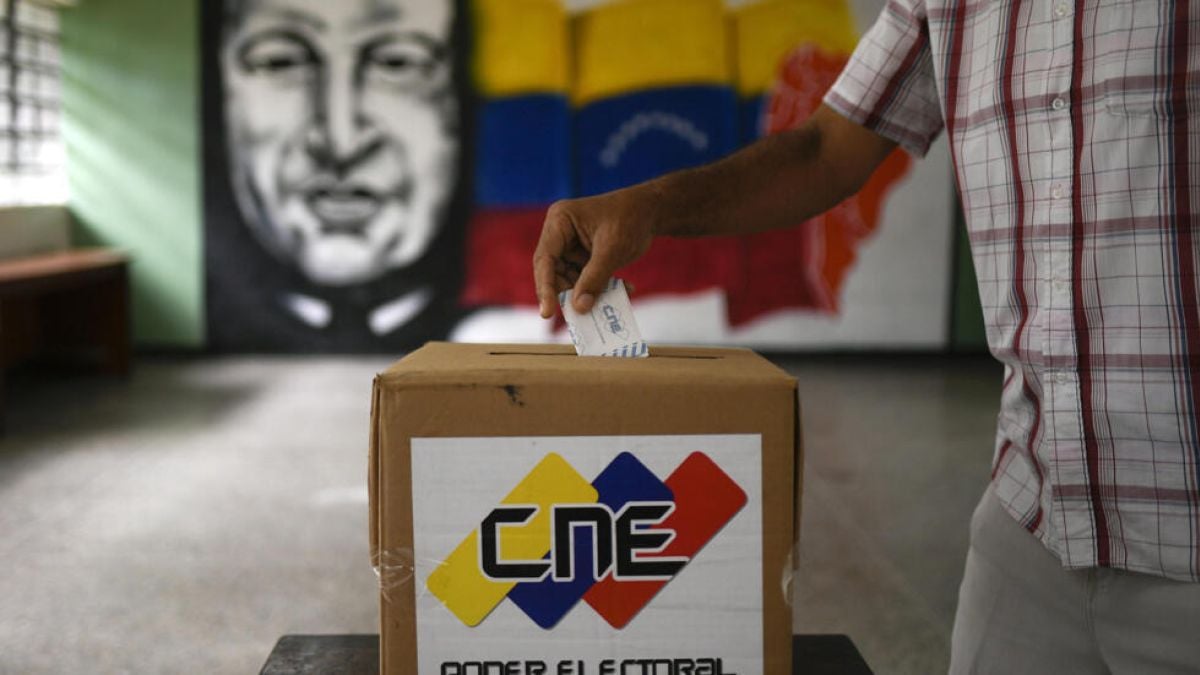
Internet
Published at: 30/05/2025 04:40 PM
During the electoral
campaign period of the regional elections held on May 25, the fascist right,
represented by María
Corina Machado, called for the non-participation of its followers; this in
order to delegitimize the democratic process.
However, historically, political and electoral
participation in democracies constitutes one of the privileged
fields of study of
political science and sociology, which has allowed us to study the behavior of voters in
different electoral processes.
After years of political
instability and dictatorships, the return of free and fair elections
in Latin America raised expectations
of a possible regional wave of enthusiasm for democratic processes.
Several generations of voters who had lost the right to vote were able to
return to the polls.
Despite the enthusiasm that
accompanied the period of restoration of democracy in the countries of the region,
contrary to expectations, it did not translate into high levels of citizen participation.
Researchers Mateo Díaz
and Payne in 2007 commented that “when
comparing voter turnout in Latin America with that of other regions
of the world, it is concluded that the regional average is not low, but it is not very
high either.”
Studies on the subject
revealed that there is a progressive trend in the region that showed a
significant decline in electoral participation, researchers Díaz and Payne explained that “over a period of twenty years, the average
participation rate in presidential elections in the countries of the region
lost about 5 percentage points, going from approximately 75 percent to a little less than 70.
This decline was even more noticeable in
legislative elections, where the regional average went from the same 75 percent to less than
65, a drop of 10 percentage points.”
This coincides with the
results of research by Carmen
Pérez Baralt, professor at the University of Zulia , called “Changes in
Venezuelan electoral participation: 1998-2000” in which she explained that “since the establishment of democracy in 1958, Venezuela has been
characterized by massive electoral participation,
close to 90%. Since the
late 80s, abstention began to appear with great force,
first in regional processes, where abstention is around 50%
. In national elections, the first significant increase in
abstention occurred between 1988 and 1993, when it went from 18% to 40%”.
Pérez Baralt added that “in 1998, the abstention registered in the
presidential election fell a few points, to 36.2%. However, the
calls for referendums, both the one convening the National Constituent Assembly (ANC) and the one that approved the
new Constitution, as well as the election of the members of the ANC, were barely answered by two out of
five registered in the Electoral Register.
Abstention is consolidated as a permanent element of Venezuelan electoral
behavior in the 2000 elections, when it reached 43.5% of
the registered population.”
The year 1999 was
politically dedicated to the achievement of the new constitution: on April 25, a referendum
was held to convene a National Constituent Assembly, on July 25, the
members of this Assembly were elected, and finally, on December 15, the new constitutional
text was approved through a new referendum. These processes, which
consolidated the figure of President Chávez,
were marked by high levels of abstention: 62.2%, 53.7% and 55.6%
respectively, different from when presidential elections were held.
As for
national discontent with the political system, which was a factor that motivated part of the abstention in previous
electoral processes, this time it lost part of its effect when
an important sector of those who felt
dissatisfied saw in Chávez a viable
option for change, encouraging their participation.
Years
later, the International Observatory for Participatory Democracy (OIDP)
evaluated the same process and found that during the
2017 regional elections, the United Socialist
Party of Venezuela (PSUV) won 17
of the country's 23
states, according to official results announced by the National Electoral Council
(CNE).
According to the CNE, opposition candidates
won in five states, the
turnout was 61.14%, 7% more than in the previous regional elections.
On that occasion, the Venezuelan opposition, grouped in the Bureau of Democratic Unity (MUD), did not
recognize the results of the regional elections.
Later, during the 2021 regional
elections, the BBC Mundo portal published an
article written by journalist Daniel
Pardo, in which he detailed that “with a participation of 40% of the
electoral register, the Venezuelan opposition demonstrated its crisis and Chavism
confirmed its power, of the 23 governorates in dispute, the governing party prevailed in 20,
while the opposition parties won in 3
states, according to the results published by the National Electoral Council”
The regional and
municipal elections of November 21 were the first elections in four years
in which the majority of the opposition forces participated, who boycotted
previous elections on the grounds that there was no guarantee.
The election was
observed by several international bodies, including the United Nations and the European Union, and came after
an unprecedented renewal of the directors of the CNE in search of greater equity.
Pardo added that “the elections took their toll on the mistakes of the
opposition: they lost
electoral muscle in four years of boycott, they announced
participation too close to the date of the contest and came to it divided and quarreled.
In addition, a part of the opposition, the one
led by Leopoldo López and Juan Guaidó, called on their followers not to participate.
Anti-Chavism, in addition to being divided, suffers from a crisis of
representation as Venezuelans who want change
disregard politics and concentrate their efforts on resolving their daily lives.”
Given this, we can conclude
that electoral participation decisions are associated with the type of election
(whether it is presidential or not); and that in the case of regional elections,
participation has maintained the same behavior over the past 20 years;
which overthrows the discourse of some opposition spokespersons when
they say that Venezuelans answered their call not to participate.
This time, thanks to the political
errors of that Venezuelan opposition, the Bolivarian Government won 23 of the 24 governorates, as well as 82.68%
of the seats in the National Assembly; which will make
it possible to make profound changes in national politics and make the Revolution
increasingly irreversible.
AMELYREN BASABE/Mazo News Team