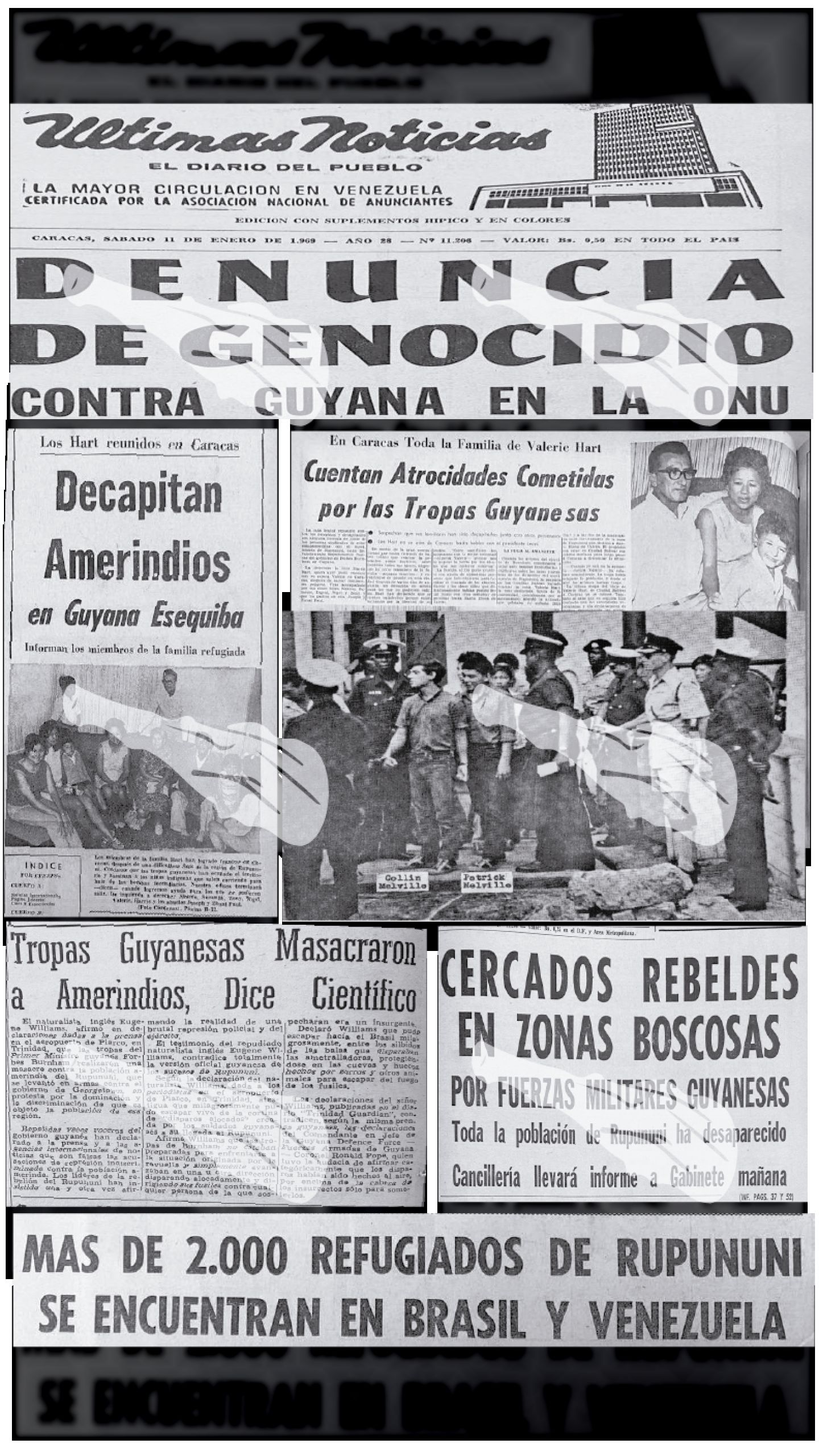
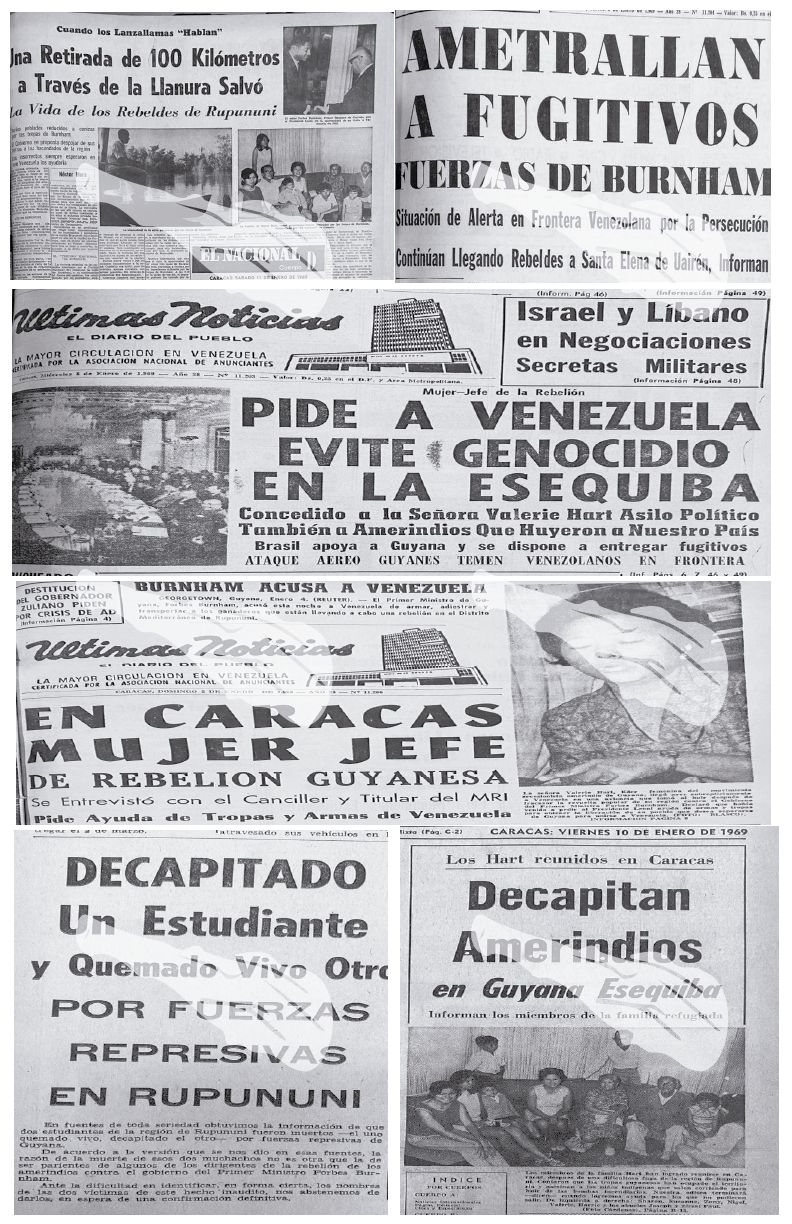
“When flamethrowers talk” THE RUPUNUNI MASSACRE
Published at: 20/05/2026 09:00 PM
(El Nacional, Latest News and Week, January 1969)
- Those were the days when the presidential band was handed over by Raúl Leoni to Rafael Caldera, when more than 15,000 people, belonging to the original Wapishana, Iokono and Makushu tribes, ancient ethnic groups from the Essequibo, were victims of the genocidal onslaught of the Guyana Army, led by the British Colonel Ronald Pope.
- The Wapishana, Iokono and Makusho, ancient Amerindians from Southwest Essequibo, organized together with ranchers from the area in a peaceful rebellion against policies of racial discrimination, eviction of their land and ignorance of their citizen rights under the government of Guyanese Prime Minister Burham.
- The strategic objective of the “Rupununi Rebellion” was to seize the runways of the Rupununi plains to prevent government troops from landing and to proclaim an independent Amerindian State. This action to assert their rights was destroyed with flamethrowers, machine guns, incendiary bombs and grenades.
- The troops commanded by Colonel Pope and the Guyanese Lt. Granger, burned down, among others, the town of San Rafael, shooting down and beheading the survivors. This genocide perpetrated in the immensity of the Essequiba jungle and, which has gone almost unnoticed for decades, is known as “The Rupununi Massacre”.
- A group of more than 2,000 people managed to cross 100 kilometers of swampy jungle to find refuge in the border towns of Santa Elena de Uarién, Venezuela and Boa Vista, Brazil. Valerie Hart, leader of the Amerindian National Party, came to Caracas to denounce the genocide that occurred at the hands of the Guyanese Army, under Pope's command.
- The towns of Karasabai, Anai and Pirara, which refused to evacuate in search of refuge, were reduced to ashes, through the bombing and flamethrowers of Guyanese troops. These villages were inhabited entirely by indigenous people. In Anai, one of the bloodiest struggles for the survival of indigenous tribes was waged, with an as yet unquantifiable toll of innocent lives lost.
- During the flight to the Venezuelan border, two young students were taken prisoner by Guyana's repressive forces, one was beheaded with axes and the other burned alive.
- Valerie Hart, one of the leaders of the Essequiban population of Lethen, who managed to escape, unsuccessfully tried to attract the attention of the Venezuelan government to prevent the ongoing genocide. The indifference, both of Leoni and Caldera, resulted in a brutal racist massacre against children and adults, in addition to the flight of thousands of them, mainly to the state of Bolívar.
- Chief Rupununi, Valerie Hart, stated: “We the Rupununi inhabitants and therefore Venezuelans by birth, according to article 35 of the National Constitution, make a strong appeal to the Government, the People and the Armed Forces of Venezuela to help and prevent the hordes of the Prime Minister of Guyana from massacring us”.
- Declaration that describes the call for help of a defenceless people who have lived for more than a century under the shadow of the racism of the Afro-Hindustani majorities against the original Amerindian inhabitants of Guyana. Practices of systematic persecution and discrimination that persist today with the consequent expropriation of the territories that have traditionally belonged to them.
- British officer Ronald Pope, who was then Commander of the Guyana Defense Forces, did not blink an eye to commit the most atrocious murders of entire families who raised their voices against the racist government of Forbes Burham. In all these crimes against humanity, the then Lt. Granger, who years later and under the same sign of racial tensions between Afro-descendants, Hindus and Amerindians would be Prime Minister of Guyana (2015-2020).
- Everything that happened was confirmed by the English scientist and naturalist Eugene Williams, who stated that “Prime Minister Forbes Burham's troops carried out a massacre against the entire Amerindian population of Rupununi”. Williams said that he was able to miraculously escape amid the whistles of bullets fired by Guyanese Army machine guns, which aimed their weapons at everything that moved.
- The “Rupununi Rebellion” broke out on Thursday, January 2, 1969, as a result of racial discrimination, insecurity and the constant threats faced by the Amerindians of that region of being robbed of their property by the despotic government in office.
Mazo News Team