Human trafficking, another American enterprise
Internet
Published at: 09/05/2025 06:47 PM
Human trafficking is one
of the crimes that get lost in the sea of news about undocumented migrants.
But wherever it is consumed, in all cases it has something in common: it meets demand across
the border in the United States as a result
of imperial politics, in which they promote a structural crisis in the economies of Latin American countries and create suffocation in
the peoples, forcing them to make the decision to emigrate.
Because the United States is projected to the world as the
solution to the economic problems of any citizen and that everyone can
live the American dream, it has become the receiving country of a high percentage
of migrants; therefore, it is also the largest market for trafficking in persons for
different purposes.
The Human Trafficking Institute argues
that in the United States, immigrants are at greater risk of human trafficking when they
seek employment and end up in forced labor, in fact, “there are a high number of cases
of immigrant women in Texas and
California, who do not have
citizenship, or do not speak the English language and their passports are withheld for keep the victims as the property of the trafficker”.
Also, the United Nations Office on Drugs and Crime explained on its website that “trafficking in persons is a global crime that exchanges people of all genders, ages and backgrounds exploited for profit, and this takes three forms: for sex trafficking, to obtain work or services from a person through the use of force, fraud or coercion for the purpose of enslaving them and for marketing with the sale of organs such as kidneys and parts of the liver”.
How does the business of marketing people work?
The Office to Monitor and Combat Trafficking in Persons detailed in a document what the business is like: “Traffickers take advantage of people who, without employment opportunities, with an unstable life or with a history of sexual or physical abuse, seek a better life through migration. These criminals promise them high-paying work, opportunities and then use physical and psychological violence to control them.”
The document adds that “
human traffickers are often part of sophisticated criminal networks and
operate within complex global networks that require
sophisticated infrastructure and they contact their victims through
local advertisements, social networks or through direct contacts with recruiters,
who may be former victims or people of trust within the victim's community.
These criminal networks are highly organized and often
function as mobile units or specialized groups. Its main
actors include intermediaries who coordinate logistics, recruit medical
professionals, in the case of organ removal and prepare
fraudulent documents.”
Victims of trafficking often come from vulnerable backgrounds.
Organized criminal groups specifically target this social segment: the unemployed, immigrants, asylum
seekers and refugees.
Another report by the Office to Monitor and Combat Trafficking
in Persons published in June 2024 detailed that “trafficking in
persons for the purpose of organ removal is one of the least
known and most understood forms of trafficking, however, experts believe that it may be on the
rise.”
Like trafficking in
persons for the purpose of sexual exploitation and labor trafficking, this is,
ultimately, a crime that exploits human beings for
economic benefits, in addition to the business for the purpose of organ extraction, it is a
way in which an individual is exploited to obtain their organs, even
through coercion, deception and abuse of a situation of vulnerability.
The report describes that “
sometimes, crime is confused with organ trafficking; however, organ trafficking
refers more broadly to the illicit trade or exchange of
organs for profit or otherwise. In organ trafficking, the
focus is on the organ itself; on the contrary, in the case
of trafficking in persons for the purpose of organ removal, the focus is on the person.
The main global instrument against trafficking in persons is the Palermo Protocol, which defines
exploitation to include, at a minimum, 'the extraction of organs', together
with sexual exploitation, forced labour and slavery or practices similar to slavery.
”
In 2022, the United Nations Office on Drugs
and Crime (UNODC) published a Global Report on Trafficking in Persons, stating that trafficking
in persons is “frequently described as modern
slavery, constitutes a serious violation of human rights and
takes its worst form when the physical integrity of the victim is violated,
stealing parts of her body and exposing her to the danger of death, in addition to causing harm.
devastating psychological, often irreparable. The most common
victims of this crime are women and children, since they tend to
be very vulnerable and can be better used for some of the most common
purposes of human trafficking, such as sexual exploitation
and servitude. It should also be noted that indigenous people and migrants are among
the favorite prisoners, due to their greater social vulnerability caused by
racism, marginalization and their precarious economic status. Thus, their body
is transformed into a tradable product.”
Regarding this issue, the sectoral
vice-president of Politics, Citizen Security and Peace of Venezuela, Diosdado Cabello Rondón, called for national unity to face what he described
as a criminalization campaign against Venezuelan migrants by the U.S. government and its allies.
Cabello
assured that this strategy seeks to stigmatize and persecute Venezuelans
abroad, linking them to criminal organizations and thereby justifying their kidnapping.
Cabello added that “they have declared Venezuelans war objectives, referring to the recent application of the Foreign Enemy
Act of 1798, which allows the imprisonment and deportation of people without prior judicial process, and now with
the declared theft of children, it is
the closest thing to European fascism, with
fierce methods of persecution that seeks to divide Venezuelan families.”
Accordingly, it is no accident that the U.S.
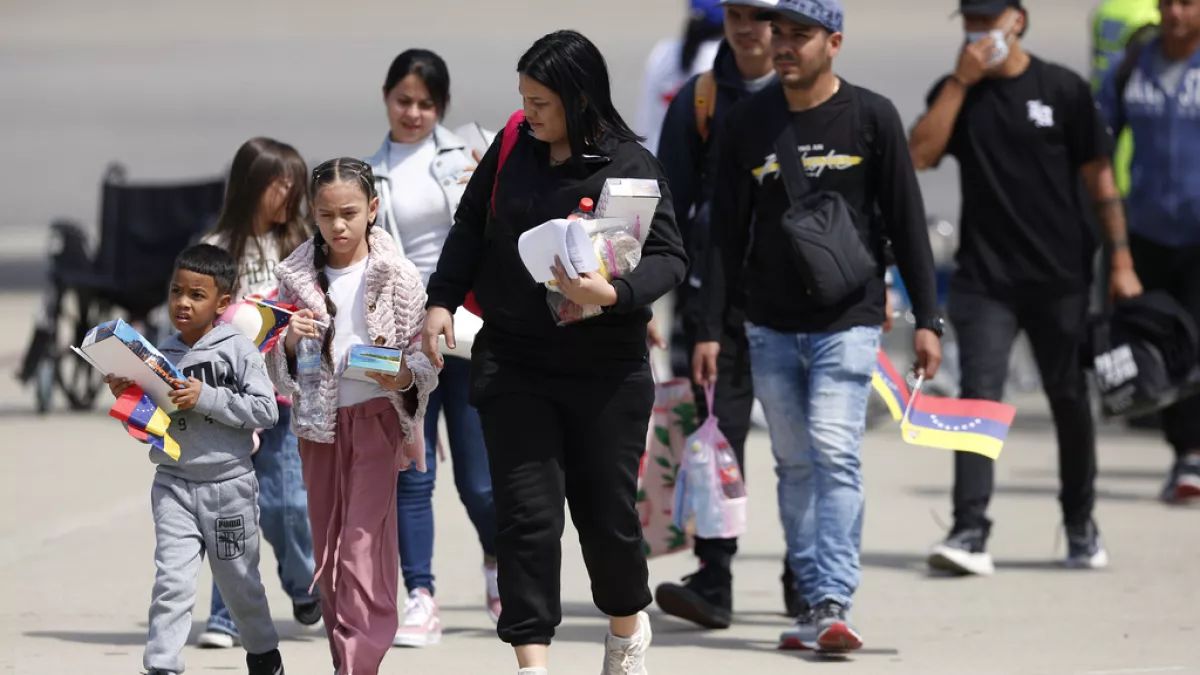
refusal to allow Venezuelan
migrants, especially women and children, to return is related to
this shady business.
AMELYREN BASABE/Mazo News Team