From the Angostura Speech to the Blue Book: The History of Bolivarian Resistance
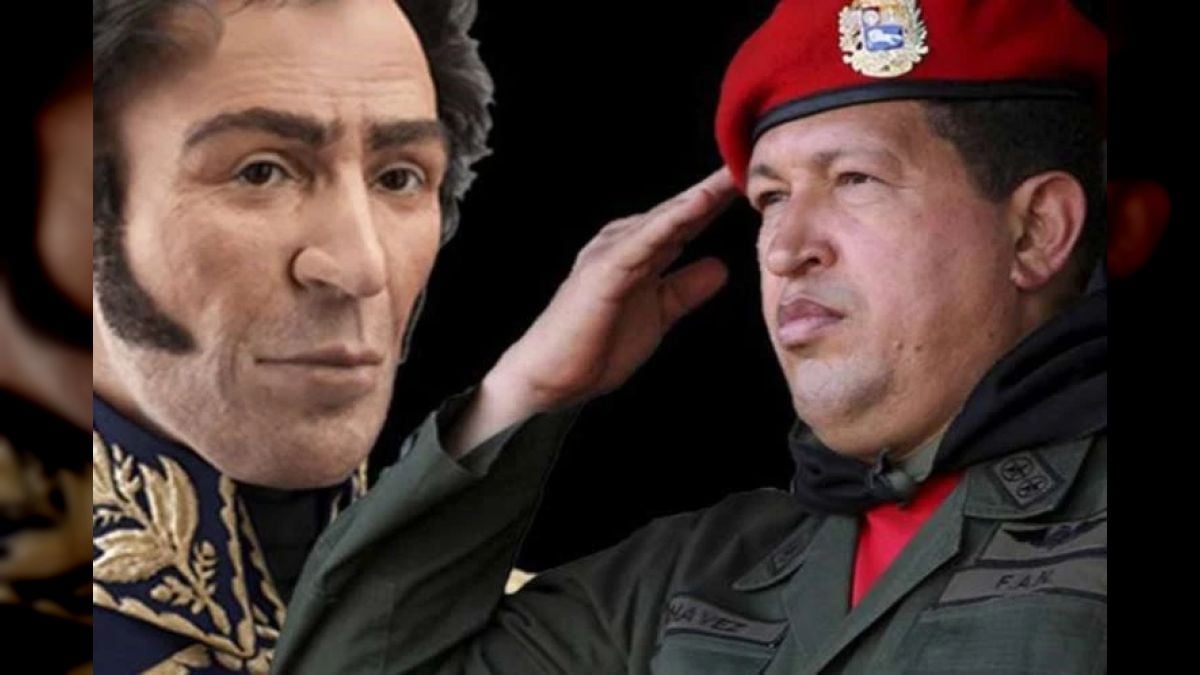
Internet
Published at: 15/02/2025 12:26 PM
The Fight for True Independence
From the Angostura Speech of 1819 to Hugo Chávez's Blue Book in 1991, Venezuela has been a territory in dispute between two historic projects: that of popular emancipation and that of submission to imperialism and oligarchies. Simon Bolivar laid the foundations of a just and sovereign nation, but his ideals were betrayed by the Creole bourgeoisie, who turned the Republic into a tool of oppression for the humblest.
More than a century later, Hugo Chávez retook the Bolivar flag and proposed, in The Blue Book, the refounding of the country with a new political model based on participatory democracy, social justice and Latin American union. Today, more than ever, it is essential to remember that historical connection and to reaffirm the commitment to the Bolivarian Revolution.
The Angostura Speech: Bolivar and the Foundation of a Just Homeland
On February 15, 1819, at the Congress of Angostura, Simon Bolivar presented his vision for a free and united Venezuela that was being born in the midst of the independence struggle. His words were not only a government plan, but a call to build a truly sovereign nation, where the people were the protagonists of the Republic's destiny.
The keys to the Angostura Speech:
Education and morals as the basis of the Republic: Bolívar understood that without conscience, the people would be dominated again.
Latin American unity against empires: His dream was Gran Colombia, a strong and indivisible nation.
• Rejection of caudillism and corruption: The Republic should be at the service of the people, not of individual interests.
Balanced political system: A strong but just government that will guarantee stability and progress for all.
However, after the death of the Liberator, his ideals were betrayed. The oligarchies seized power, dismantled their project and surrendered the homeland to foreign interests.
Twentieth Century: The Bourgeois Republic and the Surrender of Sovereignty
Twentieth century Venezuela was dominated by oil rentism and by governments that acted as simple administrators of imperialist interests. The so-called “representative democracy” was nothing more than a farce, where economic elites controlled the country behind the people's backs.
Key moments of the political crisis in the 20th century:
Oil dependence: Instead of being an engine of development, governments used oil to enrich a minority.
The Fixed Point Pact (1958): An agreement between political elites to take turns of power and exclude the people from decisions.
Neoliberalism: The surrender of strategic companies, the privatization and the plunder of national resources.
Popular uprisings: From the Caracazo in 1989 to the military rebellion of Chávez in 1992, the people began to wake up.
While the elites were lining their pockets, the majority of the people lived in misery. Popular indignation was growing, and a new leadership was emerging from the bowels of the homeland.
The Blue Book: Hugo Chávez and the Resurrection of Bolivarian Thought
In 1991, a young soldier named Hugo Chávez Frías wrote The Blue Book, a document that would serve as the basis for the Bolivarian Revolution. In it, Chávez not only denounces the corruption of the political system, but also proposes an alternative model based on Bolívar's true legacy.
The pillars of The Blue Book:
Refounding the State: The need for a new Constitution that would return power to the people.
Participatory and leading democracy: A model where the people govern directly.
Sovereignty over natural resources: Rescuing control of oil for the benefit of all Venezuelans.
Social justice and wealth distribution: There can be no free homeland if people live in poverty.
Latin American integration: Following Bolívar's dream with alliances such as ALBA and CELAC.
The Blue Book was not just a theoretical reflection, but the starting point of a movement that would change the history of Venezuela. In 1998, with the electoral triumph of Chávez, these ideas became concrete policies that transformed the reality of the country.
From Bolivar to Chávez: The Continuity of a Liberation Project
The Bolivarian Revolution is not an isolated event in history, but rather the continuation of a process that began with Bolivar and that was rescued by Chávez.
Sovereignty: Bolivar fought against Spanish colonialism, while Chávez confronted modern imperialism and its internal lackeys.
Democracy: Bolívar dreamed of a stable and strong government, while Chávez materialized participatory democracy.
Education and morals: Bolívar insisted on the formation of citizens, and Chávez promoted a revolutionary conscience for the people.
Latin American Unity: Bolívar created Gran Colombia, and Chávez strengthened ALBA and CELAC as an alternative to imperial hegemony.
The Bolivar ideal is still alive in the Bolivarian Revolution. History has shown us that the enemy remains the same: imperialism and its internal accomplices.
History is a Living Struggle
The Bolivarian Revolution is not just a government, it is the expression of a historic struggle that comes from Bolivar and that Chávez knew how to materialize in a real project of transformation.
Today, the fight continues:
Against imperialist sanctions that seek to subdue the people.
• Against the attempts of the oligarchy to recover its privileges.
• For the defense of sovereignty and the right to independent development.
As Commander Chávez said:
“History calls us, and we cannot fail the people.”
Mazo News Team